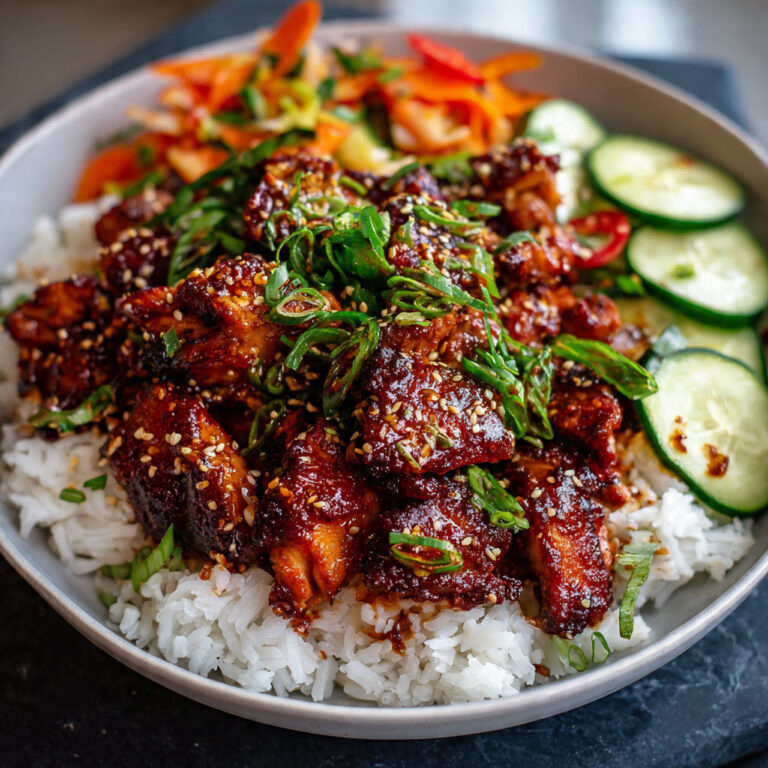
Ingredients
For the Spicy Korean Chicken:
- 1.5 lbs boneless, skinless chicken thighs, cut into bite-sized pieces
- 3 tablespoons gochujang (Korean red chili paste)
- 2 tablespoons soy sauce
- 2 tablespoons honey or brown sugar
- 1 tablespoon sesame oil
- 1 tablespoon rice vinegar
- 4 cloves garlic, minced
- 1 tablespoon fresh ginger, grated
- 1 tablespoon gochugaru (Korean red pepper flakes) – optional
- 2 tablespoons vegetable oil for cooking
- 2 green onions, sliced (for garnish)
For the Sesame Rice:
- 1½ cups jasmine or short-grain white rice
- 2¾ cups water or chicken broth
- 2 tablespoons sesame oil
- 2 tablespoons toasted sesame seeds
- 1 tablespoon soy sauce
- ½ teaspoon salt
- 2 green onions, finely chopped
For the Vegetables:
- 2 cups broccoli florets
- 1 red bell pepper, sliced into strips
- 1 cup snap peas or snow peas
- 1 medium carrot, julienned or thinly sliced
- 2 tablespoons sesame oil
- 2 cloves garlic, minced
- 1 tablespoon soy sauce
- 1 teaspoon sesame seeds
- Salt and pepper to taste
Garnish:
- Extra sesame seeds
- Sliced green onions
- Fresh cilantro (optional)
- Lime wedges
Instructions
- Prepare the spicy Korean sauce: In a medium bowl, whisk together gochujang, soy sauce, honey, sesame oil, rice vinegar, minced garlic, grated ginger, and gochugaru if using. The sauce should be thick, glossy, and deep red. Taste and adjust sweetness or heat as desired.
- Marinate the chicken: Cut chicken thighs into bite-sized pieces (about 1-inch cubes). Add to the sauce and toss until every piece is completely coated. Let sit for 10 minutes at room temperature, or marinate up to 2 hours in the refrigerator for deeper flavor.
- Start the sesame rice: Rinse rice under cold water until water runs clear to remove excess starch. In a medium saucepan, combine rice, water or broth, 1 tablespoon sesame oil, soy sauce, and salt. Bring to a boil over high heat, then reduce to low, cover tightly, and simmer for 15-18 minutes without lifting the lid.
- Cook the spicy Korean chicken: Heat vegetable oil in a large skillet or wok over medium-high heat until shimmering. Add marinated chicken in a single layer (work in batches if necessary to avoid overcrowding). Cook for 5-6 minutes, stirring occasionally, until chicken is golden brown, caramelized, and reaches an internal temperature of 165°F. The sauce should be thick and sticky.
- Stir-fry the vegetables: In another large skillet, heat sesame oil over high heat. Add minced garlic and stir-fry for 30 seconds until fragrant. Add broccoli and carrots first, stir-frying for 2-3 minutes. Then add bell pepper and snap peas, cooking for another 2 minutes until all vegetables are tender-crisp and vibrant. Season with soy sauce, salt, pepper, and sesame seeds.
- Finish the sesame rice: Once rice has absorbed all liquid, remove from heat and let stand covered for 5 minutes. Fluff with a fork, then gently fold in the remaining tablespoon of sesame oil, toasted sesame seeds, and chopped green onions. The rice should be aromatic and infused with nutty sesame flavor.
- Assemble the bowls: Create a base of sesame rice in each serving bowl. Arrange the colorful stir-fried vegetables on one side. Top with the spicy Korean chicken, making sure to drizzle any remaining sauce over everything.
- Garnish and serve: Garnish generously with extra sesame seeds, sliced green onions, and fresh cilantro if using. Serve immediately with lime wedges on the side for a bright citrus squeeze.
Notes
Ingredient Substitutions:
- Chicken: Use chicken breast (reduce cooking time by 2 minutes), tofu, tempeh, or shrimp for alternatives
- Gluten-Free: Replace soy sauce with tamari or coconut aminos; ensure gochujang is certified gluten-free
- Rice: Brown rice (adjust cooking time to 40-45 minutes), cauliflower rice for low-carb, or quinoa
- Gochujang: If unavailable, mix 2 tbsp sriracha + 1 tbsp miso paste + 1 tbsp tomato paste as emergency substitute
- Vegetables: Use any quick-cooking vegetables like bok choy, zucchini, mushrooms, cabbage, or asparagus
Spice Level Guide:
- Mild: 2 tablespoons gochujang, omit gochugaru
- Medium (as written): 3 tablespoons gochujang, 1 tablespoon gochugaru optional
- Hot: 4 tablespoons gochujang, 1 tablespoon gochugaru
- Extra Hot: 4 tablespoons gochujang, 2 tablespoons gochugaru, add sliced fresh chilies
Pro Tips:
- Toast sesame seeds in a dry skillet for 2-3 minutes until golden and fragrant for maximum flavor
- Use freshly grated ginger, not jarred, for authentic Korean taste
- Don’t skip the rice rinsing step—it removes excess starch for fluffier grains
- Cook chicken in batches to maintain high heat for proper caramelization
- Reserve a bit of marinade before adding to raw chicken to drizzle over final dish
Storage & Meal Prep:
- Refrigerate: Store chicken, rice, and vegetables separately in airtight containers for up to 4 days
- Freeze: Chicken freezes beautifully for 3 months; rice for 2 months; vegetables best enjoyed fresh
- Reheat: Microwave rice with 1-2 tbsp water; reheat chicken in skillet with splash of water; stir-fry vegetables quickly
- Make-Ahead: Marinate chicken up to 24 hours ahead; prep vegetables the night before; make sauce in bulk for 2 weeks storage
Serving Variations:
- Top with a fried egg or soft-boiled egg for extra richness
- Serve in lettuce wraps for a low-carb option
- Add kimchi on the side for authentic Korean accompaniment
- Drizzle with spicy mayo or gochujang aioli for extra creaminess
- Serve over glass noodles instead of rice for variety
Where to Find Korean Ingredients:
- Gochujang and gochugaru are available at most major grocery stores (international aisle), Asian markets, or online
- Popular gochujang brands: Mother-in-Law’s, CJ, Chung Jung One
- Store gochujang in refrigerator after opening—it lasts 6+ months
- Prep Time: 15 minutes
- Cook Time: 20 minutes
- Category: Main Course
- Method: Stir-Frying
- Cuisine: Asian Fusion, Japanese, Korean-Inspired
- Diet: Gluten-containing, High-Protein