Beef Bulgogi Recipe: 7 Tips For Authentic Flavor
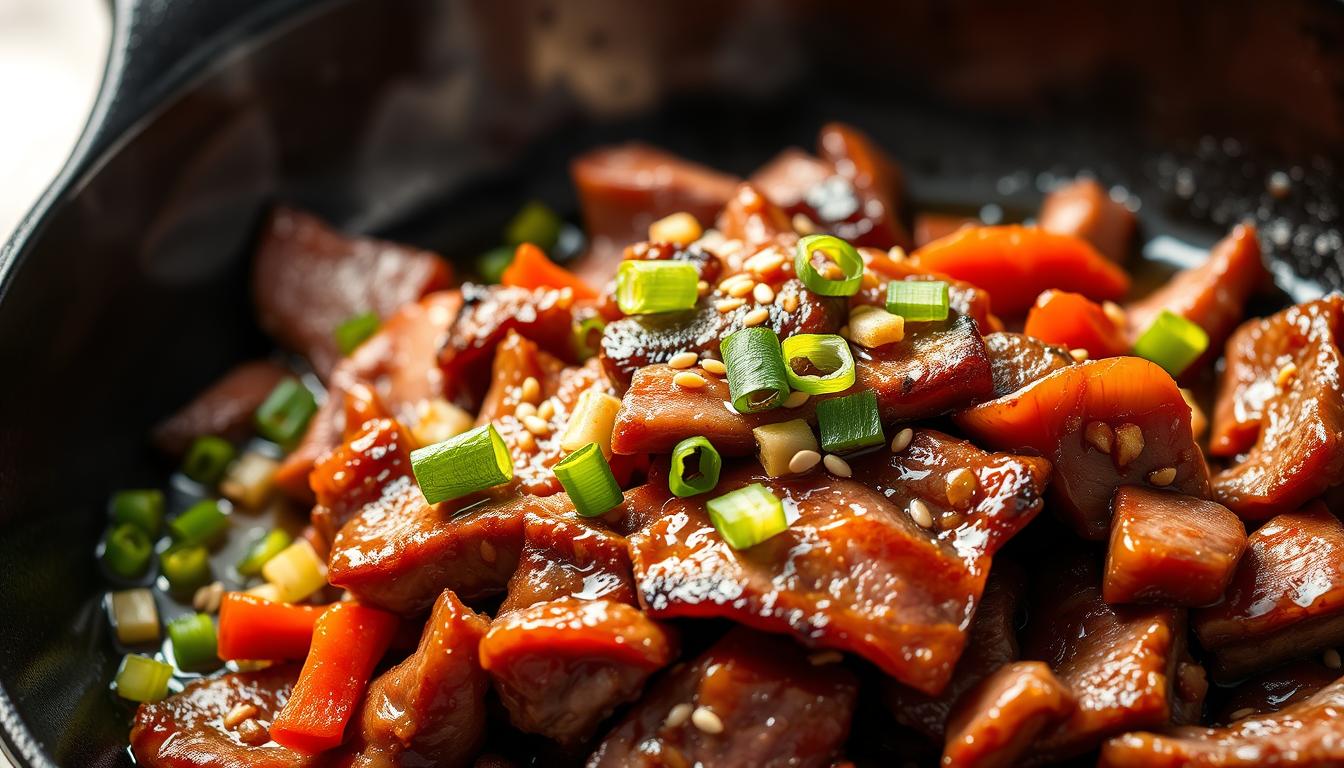
Imagine enjoying a dish that’s both sweet and savory. It has tender slices of marinated meat that just melt in your mouth. You’re about to start a culinary journey to Korea with a classic dish that will become a favorite.
Authentic Korean cuisine is famous for its bold flavors and spices. One of its most beloved dishes is a staple in many Korean restaurants. This dish has a rich history and is more than just food.
As you dive into Korean cooking, you’ll learn the secrets of this mouth-watering dish. With a few simple tips and tricks, you can make authentic Korean flavors at home.
Key Takeaways
- Discover the rich history and cultural significance of a beloved Korean dish.
- Learn the secrets to achieving authentic flavors in your cooking.
- Explore simple tips and tricks for recreating Korean cuisine at home.
- Understand the importance of marinades in Korean cooking.
- Get ready to impress your friends and family with a delicious Korean-inspired meal.
The Rich History of Beef Bulgogi in Korean Cuisine
Beef Bulgogi has been a favorite in Korea for centuries. It started as a special dish for important events. Today, it’s a key part of Korean food.
Origins of Bulgogi in Ancient Korea
Bulgogi, or “fire meat,” comes from the Goguryeo era (37 BC–668 AD). It was first mentioned in “Dongguk Yiji Sangguk-ji.” Back then, it was for the nobility, with thinly sliced meat and seasonings.
The first recipe was simple. It used local ingredients like meat, veggies, and spices. Over time, it got more complex with new flavors and methods.
Evolution into Modern Korean Barbecue
As Korean food changed, so did Bulgogi. In the Joseon Dynasty (1392–1910), it became popular with everyone, not just the rich. New ingredients and cooking ways made it even better.
Now, Beef Bulgogi is a key part of Korean BBQ. It’s known for its tasty flavors. People love cooking it on a grill at the table.
Cultural Significance in Korean Food Traditions
Beef Bulgogi is very important in Korean traditions. It’s often at family events and big celebrations. It’s a dish that brings people together.
| Aspect | Description | Significance |
|---|---|---|
| Historical Roots | Originated in the Goguryeo era | Rich cultural heritage |
| Culinary Evolution | Evolved over centuries | Adaptability and resilience |
| Social Impact | Central to family gatherings | Fosters community and sharing |
Knowing the history and cultural value of Beef Bulgogi makes you appreciate it more. When you make this Korean beef recipe, you’re part of a long tradition.
Complete Beef Bulgogi Recipe for Beginners
Beef Bulgogi is a favorite in Korean cooking that’s easy to make at home. It’s known for its sweet and savory taste. You only need a few ingredients and simple steps to prepare it.
Ingredient List and Measurements
To make Beef Bulgogi, you’ll need the following ingredients:
| Ingredient | Quantity |
|---|---|
| Thinly sliced beef (ribeye or sirloin) | 1 pound |
| Asian pear, grated | 1/2 pear |
| Garlic, minced | 3 cloves |
| Onion, finely chopped | 1/2 cup |
| Soy sauce | 1/4 cup |
| Ginger, grated | 1 tablespoon |
| Sugar | 2 tablespoons |
| Sesame oil | 2 tablespoons |
| Black pepper | To taste |
| Green onions, chopped (optional) | 1/4 cup |
| Sesame seeds (optional) | 1 tablespoon |
Step-by-Step Preparation Instructions
To prepare Beef Bulgogi, start by mixing the sliced beef, Asian pear, garlic, onion, soy sauce, ginger, sugar, and sesame oil in a large bowl. Make sure the beef is well-coated with the marinade. Then, cover the bowl and refrigerate for at least 2 hours or overnight for better flavor.
After marinating, remove the beef and let any extra liquid drip off. You can now cook the Beef Bulgogi by grilling or stir-frying it.
Basic Cooking Method Overview
To cook like a Korean, use a tabletop grill or a cast-iron skillet. Heat it over medium-high and cook the beef for 3-5 minutes on each side. Serve hot, topped with green onions and sesame seeds if you like.
By following these steps, you can make a delicious beef bulgogi recipe that will wow your guests. The secret to great Bulgogi is in the marinade. Feel free to try different ingredients to make your own easy bulgogi marinade or homemade bulgogi marinade.
Tip #1: Selecting the Perfect Cut of Beef
Choosing the right beef is key to making great Bulgogi. The perfect cut can make your Bulgogi tender and delicious.
Traditional Korean Beef Choices
In Korea, Bulgogi is made with top-quality beef. Koreans often use ribeye or sirloin for its tenderness and flavor. These cuts are lean and juicy, thanks to their marbling.
American Alternatives for Authentic Results
In the U.S., finding the exact Korean cuts might be hard. But, you can still get great results with American beef. Look for beef ribeye or top sirloin at your local butcher or high-end grocery store. These cuts will give you the tender, flavorful Bulgogi you want.
Proper Slicing Techniques for Tenderness
After picking your beef, slice it right. Slice the beef against the grain into thin strips for tenderness. Aim for slices about 1/4 inch thick for the best taste.
- Use a sharp knife for clean cuts.
- Slice the beef when it’s partially frozen for easier handling.
- Cut against the grain to maximize tenderness.
By choosing the right beef and slicing it right, you’ll make a delicious Bulgogi dish. Your family and friends will love it.
Tip #2: Creating an Authentic Bulgogi Marinade
The heart of authentic Bulgogi is its marinade. It tenderizes the beef and adds deep, complex flavors. To make an easy bulgogi marinade, you need to know the traditional ingredients and techniques.
Essential Traditional Ingredients
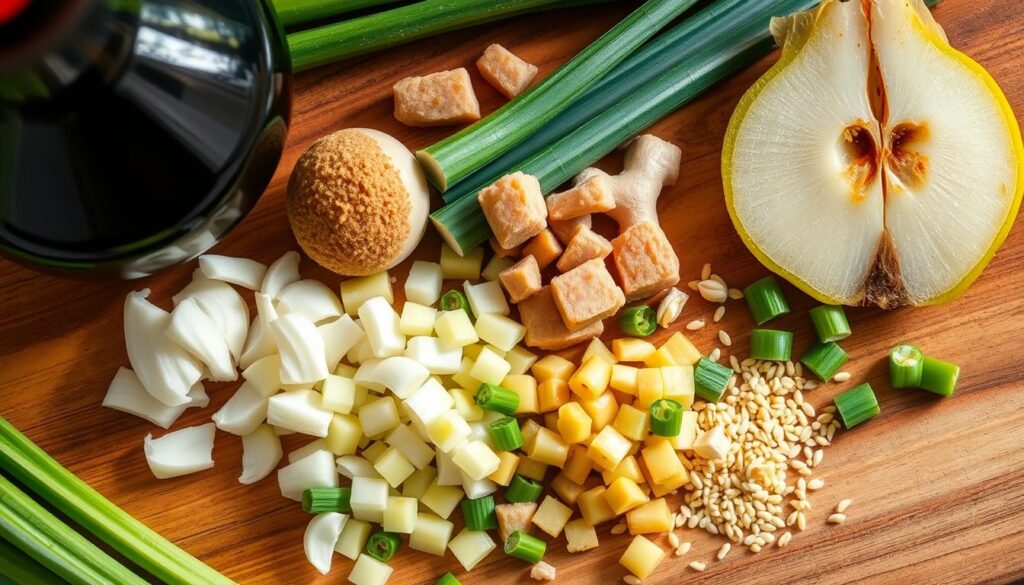
A traditional Bulgogi marinade has soy sauce, garlic, ginger, sugar, and sesame oil. These ingredients blend to create a rich, savory taste. Start with a basic recipe and adjust it to your liking, adding or swapping ingredients.
The Role of Asian Pear in Tenderizing
Asian pear is a key ingredient in traditional Bulgogi marinade. It tenderizes the beef with enzymes that break down proteins. To add Asian pear to your homemade bulgogi marinade, just grate it and mix it with the other ingredients.
Balancing Sweet, Savory, and Umami Flavors
Getting the flavors right in your Bulgogi marinade is key. You need to balance sweet, savory, and umami flavors. Soy sauce and garlic give a savory taste, while sugar adds sweetness. Umami comes from soy sauce and sesame oil.
By following these tips and using the right ingredients, you can make a delicious authentic bulgogi marinade. It will take your Korean BBQ to the next level.
Tip #3: Mastering the Marination Process
To enjoy a true Korean Beef Bulgogi, you must master marination. This step is key to a great Beef Bulgogi. It adds deep, complex flavors to the meat.
Optimal Marination Times for Maximum Flavor
The marination time greatly affects your Beef Bulgogi’s taste and texture. For the best results, marinate the beef for at least 2 hours. But, for even more flavor, marinate it overnight (8-12 hours) in the fridge.
- Minimum Marination Time: 2 hours
- Ideal Marination Time: 8-12 hours (overnight)
- Maximum Marination Time: 24 hours
Temperature Considerations for Food Safety
It’s important to keep the beef at a safe temperature while marinating. Always marinate in the fridge, not at room temperature. The fridge should be at or below 40°F (4°C).
Tip: Use a refrigerator thermometer to check your fridge’s temperature.
Container and Coverage Techniques
The type of container and how you cover it matter. Use a non-reactive container like glass or stainless steel. These won’t add unwanted flavors to your Beef Bulgogi. Cover the container with plastic wrap or a lid to prevent contamination and ensure even marination.
| Container Type | Reactivity | Suitability for Marination |
|---|---|---|
| Glass | Non-reactive | Highly Recommended |
| Stainless Steel | Non-reactive | Highly Recommended |
| Aluminum | Reactive | Not Recommended |
Mastering marination will help you make a delicious Beef Bulgogi. It will truly capture the essence of Korean cuisine.
Tip #4: Traditional Korean Cooking Methods
Cooking bulgogi is an art that uses traditional Korean methods. These methods bring out the dish’s unique flavors. You can make an authentic Korean barbecue at home by using these techniques.
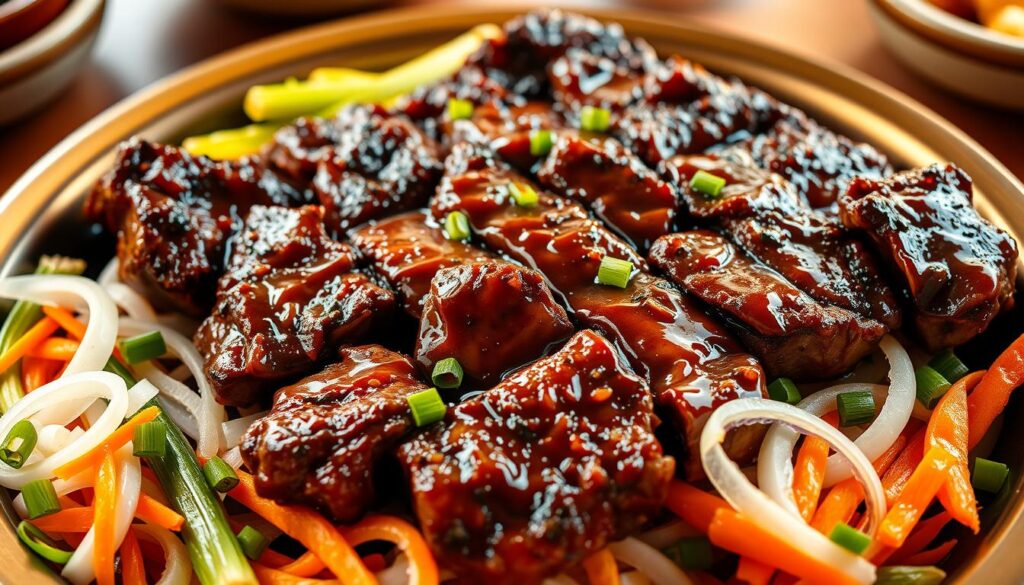
Tabletop Korean BBQ Approach
Grilling bulgogi on a tabletop Korean BBQ is iconic. It lets everyone help cook the marinated beef. This makes the meal fun and interactive.
To do this at home, use an electric or gas grill with a tabletop design. Preheat it well before adding the beef. This method gives a nice char on the outside and keeps the inside tender.
Cast Iron and Wok Alternatives
If you can’t have a tabletop BBQ, a cast iron skillet or wok works well. They cook evenly and at high heat, perfect for bulgogi beef stir fry. Preheat them over high heat, add oil, and then cook the beef quickly.
Cook the beef fast to get a great caramelization. Stir it often to avoid burning and ensure even cooking.
Heat Management for Perfect Caramelization
Managing heat is key when cooking bulgogi. You want a nice caramelization on the outside. This boosts flavor and texture. Use a best bulgogi sauce to add flavor during cooking.
Keep the heat high and cook in batches if needed. This prevents overcrowding and ensures a good sear. By controlling the heat, you’ll make a delicious traditional Korean bulgogi dish.
Tip #5: Achieving Restaurant-Quality Texture
Making your Beef Bulgogi taste like it’s from a restaurant is easier than you think. The secret is in its tender, caramelized outside and juicy inside. To get this right, watch for the signs of perfectly cooked Bulgogi, avoid common mistakes, and adjust your cooking methods.
Signs of Perfectly Cooked Bulgogi
Perfect Bulgogi has a caramelized crust outside and is tender and juicy inside. The edges should be slightly charred, giving it a smoky taste. To get this, cook the beef over high heat for a short time.
- Look for a rich, caramelized color on the surface.
- The beef should be tender and slightly firm to the touch.
- Avoid overcooking, as it can make the beef tough and dry.
Common Cooking Mistakes to Avoid
Several mistakes can ruin the texture of your Bulgogi. Overcrowding the cooking surface is a common error, as it lowers the temperature and prevents even cooking. Also, not slicing the beef against the grain can make it chewy and tough.
- Don’t overcrowd the pan; cook in batches if necessary.
- Slice the beef thinly against the grain for tenderness.
- Avoid pressing down on the meat with your spatula, as this can squeeze out juices.
Adjusting for Different Cooking Surfaces
The cooking surface greatly affects Bulgogi’s texture. Whether using a traditional Korean grill, a cast-iron skillet, or a non-stick pan, you need to make adjustments for the best results.
| Cooking Surface | Heat Level | Cooking Time |
|---|---|---|
| Korean Grill | High | 2-3 minutes per side |
| Cast-Iron Skillet | Medium-High | 3-4 minutes per side |
| Non-Stick Pan | Medium | 4-5 minutes per side |
Tip #6: Authentic Korean Serving Traditions
To enjoy Beef Bulgogi like Koreans do, you need to understand the authentic serving traditions. Serving this dish is not just about placing food on a plate. It’s about creating an immersive culinary experience.
Essential Banchan Side Dishes
In Korean cuisine, banchan (side dishes) are key to complementing the main course. For Beef Bulgogi, typical banchan include kimchi (spicy fermented vegetables), kongnamul (soybean sprouts), or oi-sobagi (cucumber salad). These dishes add variety and balance to the meal.
Ssam-Style Lettuce Wraps
A quintessential way to enjoy Beef Bulgogi is by wrapping it in lettuce leaves, known as ssam. This interactive dining experience lets you bundle the marinated beef with rice, kimchi, and other banchan. It creates a flavorful bite. The freshness of the lettuce contrasts beautifully with the savory beef.
Rice and Noodle Pairings
Beef Bulgogi can be enjoyed on its own, but it’s often paired with steamed rice or noodles. Japchae (stir-fried glass noodles with vegetables) is a popular choice. It complements the sweet and savory flavors of bulgogi. The combination of textures and tastes elevates the dining experience.
By embracing these authentic Korean serving traditions, you can transform your Beef Bulgogi into a feast. It becomes both delicious and culturally rich.
Tip #7: Modern Twists on the Classic Beef Bulgogi Recipe
Beef Bulgogi is great because it can be changed to fit different tastes and diets. Once you get the hang of the original recipe, you can try new flavors and ingredients. This way, you can make it your own.
Bulgogi Fusion Dishes
One cool way to update Beef Bulgogi is by mixing it with other foods. For instance, you can put the bulgogi beef in tacos. Add kimchi salsa and cilantro for more taste. Or, mix it into a Japanese ramen bowl with soft-boiled eggs and green onions.
- Add bulgogi beef to a Korean-style bibimbap rice bowl.
- Use the marinated beef in a bulgogi sandwich with Asian pear slaw.
- Create a bulgogi pizza with mozzarella cheese, green onions, and a drizzle of soy sauce.
Adapting for Dietary Restrictions
Beef Bulgogi can be made for different diets. Vegetarians and vegans can use mushrooms or tofu instead of beef. Just make sure the soy sauce is gluten-free for those avoiding gluten.
“The key to adapting Beef Bulgogi is in the marinade. By keeping the core flavors and adjusting the protein, you can cater to different dietary requirements without losing the essence of the dish.”
Make-Ahead and Meal Prep Options
Beef Bulgogi is perfect for meal prep. Marinate the beef ahead of time and keep it in the fridge for up to 24 hours. Cooked bulgogi can be stored in the fridge for up to 3 days or frozen for longer. A quick sear in a hot pan can bring back the caramelized flavor when reheating.
| Meal Prep Option | Storage Time | Reheating Tip |
|---|---|---|
| Marinated Beef | Up to 24 hours | Let it come to room temperature before cooking |
| Cooked Bulgogi | Up to 3 days | Sear in a hot pan to restore caramelization |
| Frozen Bulgogi | Up to 2 months | Thaw overnight in the refrigerator before reheating |
Conclusion: Your Journey to Authentic Korean Bulgogi
Now, you know the rich history and how to make traditional Korean Bulgogi. Follow the 7 tips from this article to make authentic bulgogi at home.
The secret to great Korean beef is using high-quality ingredients and making a good marinade. Choose the right beef and mix flavors well for that sweet and savory taste.
Keep trying and adding your own twist to the traditional recipe. Whether it’s for a quick dinner or a big event, bulgogi will impress everyone. So, get your ingredients ready and start making delicious, traditional Korean Bulgogi.
FAQ
What is Beef Bulgogi?
Beef Bulgogi is a Korean dish. It’s made with thin slices of beef, like ribeye or sirloin. The beef is marinated in a sweet and savory mix before grilling or stir-frying.
What cut of beef is best for Bulgogi?
Koreans often use ribeye or sirloin for Bulgogi. In the US, you can choose ribeye, top sirloin, or even filet mignon for a fancy version.
How do I slice beef for Bulgogi?
To get tender slices, freeze the beef for 30 minutes. Then, slice it thinly against the grain with a sharp knife.
What are the essential ingredients in a Bulgogi marinade?
A good Bulgogi marinade has soy sauce, sugar, garlic, ginger, and Asian pear. The pear tenderizes the meat. The other ingredients add sweet, savory, and umami flavors.
How long should I marinate the beef?
Marinate the beef for at least 2 hours. But, for the best flavor, marinate it overnight (8-12 hours) in the fridge. Keep it covered and flip the meat halfway.
Can I make Bulgogi without a grill?
Yes, you can make Bulgogi without a grill. Use a cast iron skillet or wok on the stovetop or oven broiler. Just control the heat for perfect caramelization.
How do I achieve restaurant-quality texture in Bulgogi?
For the perfect texture, cook the Bulgogi over high heat for a short time. Stir constantly. It should be caramelized outside and juicy inside.
What are traditional Korean serving traditions for Bulgogi?
In Korea, Bulgogi is served with banchan (side dishes), ssam-style lettuce wraps, and steamed rice. You can also pair it with noodles for a filling meal.
Can I adapt Bulgogi for dietary restrictions?
Yes, you can make Bulgogi for different diets. For gluten-free, use gluten-free soy sauce. For low-carb, serve it with cauliflower rice or reduce sugar in the marinade.
How can I make Bulgogi ahead of time?
Marinate the beef ahead of time and store it in the fridge for up to a day. Cook it just before serving for the best texture and flavor.