
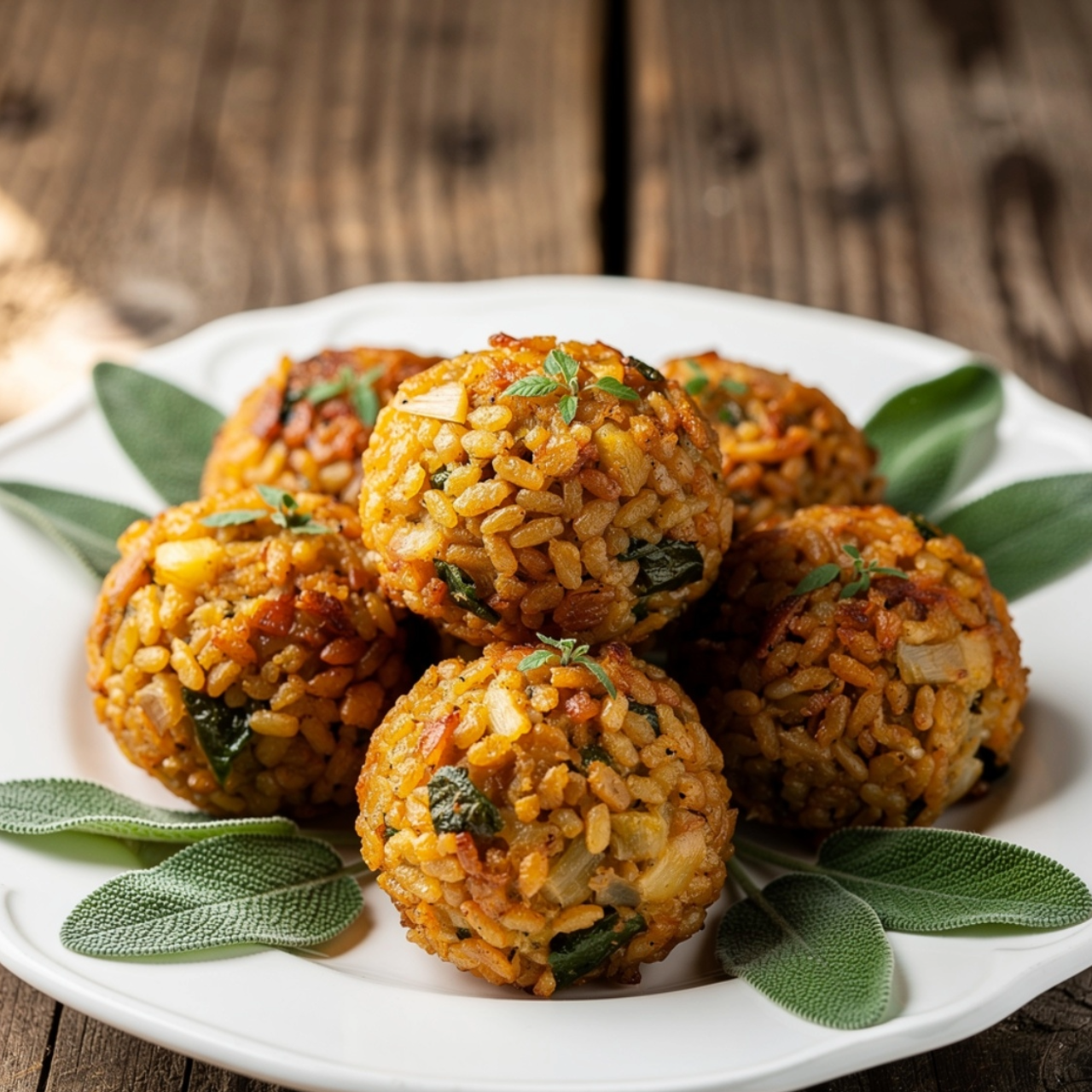
Have you ever wondered why traditional bread-based stuffing often leaves you feeling sluggish and bloated after a big holiday feast? Most of us settle for the same old recipes because they are familiar, but what if you could enjoy all the savory, herbaceous flavors you crave without the heavy, refined-carb aftermath? Enter the Bulgur Wheat Sage and Onion Stuffing Balls, a fiber-rich alternative that transforms your dinner plate.
By swapping out processed breadcrumbs for nutrient-dense, nutty bulgur wheat, you create a texture that is both satisfying and light. These Bulgur Wheat Sage and Onion Stuffing Balls are not just a healthier side dish; they are a culinary upgrade that adds incredible depth to your roasted poultry, vegetarian mains, or festive holiday spreads.
Table of Contents
Ingredients List

To create these flavor-packed bites, you will need high-quality pantry staples. The secret lies in the freshness of the herbs.
- 1 cup dry bulgur wheat (fine or medium grind works best).
- 2 cups vegetable or chicken stock (for a richer flavor profile).
- 1 large yellow onion, finely diced.
- 2 cloves garlic, minced.
- 2 tablespoons fresh sage, finely chopped (or 1 tsp dried).
- 1/2 cup chopped walnuts or pecans for extra crunch.
- 1 large egg (or a flax egg for a vegan substitute).
- 1/2 cup grated Parmesan cheese (optional, use nutritional yeast for vegan).
- Salt and black pepper to taste.
- Olive oil for sautéing.
Substitution Tip: If you are gluten-free, ensure your bulgur is replaced with quinoa, though note that the nutty flavor profile will shift slightly.
Timing
Efficiency is key in the kitchen. This recipe takes approximately 45 minutes from start to finish. This is about 30% faster than traditional bread-based stuffing recipes that require long soaking and baking times.
- Preparation time: 15 minutes.
- Cooking time: 30 minutes.
- Total time: 45 minutes.
Step-by-Step Instructions
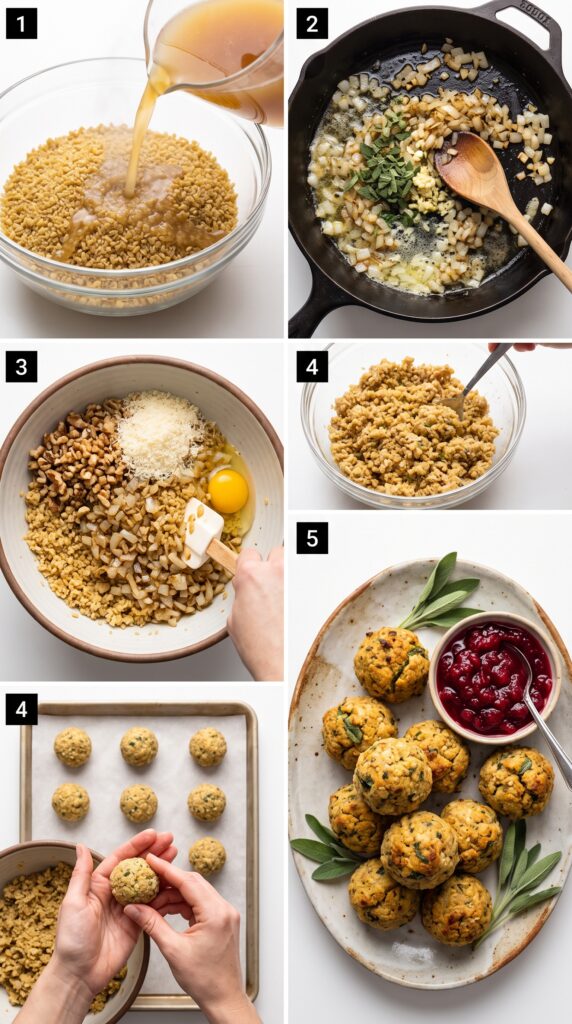
Step 1: Hydrate the Bulgur
Bring your stock to a boil in a small saucepan. Add the bulgur, remove from heat, cover, and let it stand for 15-20 minutes. The grains should be tender but still retain a slight “al dente” bite. Drain any excess liquid if necessary.
Step 2: Sauté the Aromatics
In a large skillet, heat a splash of olive oil over medium heat. Add the onions and cook until translucent and slightly caramelized, about 8 minutes. Stir in the garlic and fresh sage, cooking for another minute until fragrant. This base is essential for the Bulgur Wheat Sage and Onion Stuffing Balls to taste authentic.
Step 3: Mix and Bind
In a large mixing bowl, combine the cooked bulgur, onion mixture, chopped nuts, and cheese. Add the egg and stir thoroughly. The mixture should hold together when squeezed. If it feels too dry, add a tablespoon of water or broth.
Step 4: Shape and Bake
Preheat your oven to 375°F (190°C). Roll the mixture into balls about the size of a golf ball. Place them on a lined baking sheet. Bake for 20-25 minutes, turning halfway through, until they are golden brown and crispy on the outside.
Nutritional Information
Unlike standard bread stuffing, which is primarily refined carbohydrates, our Bulgur Wheat Sage and Onion Stuffing Balls are packed with complex carbohydrates and dietary fiber. A single serving (2 balls) contains approximately 180 calories, 6g of protein, and 5g of fiber, making it a satiating choice that helps stabilize blood sugar levels during a heavy meal.
Healthier Alternatives for the Recipe
If you are looking to lower the sodium content, replace store-bought stock with homemade vegetable broth or water infused with aromatics. To boost the protein content further, consider adding finely chopped mushrooms, which provide a savory “umami” punch that mimics the texture of meat while staying entirely plant-based.
Serving Suggestions
These stuffing balls are incredibly versatile. Serve them alongside a classic roast chicken or turkey, or arrange them on a platter with a side of cranberry reduction or a balsamic glaze. They also work beautifully as a vegetarian appetizer served with a creamy mushroom dipping sauce or a dollop of Greek yogurt mixed with fresh herbs.
Common Mistakes to Avoid
- Over-soaking the bulgur: Always check the package instructions. If the bulgur becomes mushy, the balls will fall apart in the oven.
- Skipping the sauté: Do not just toss raw onions into the mix. Caramelizing them is what brings out the sweetness that balances the earthy sage.
- Ignoring the binder: If you forget the egg, the balls will crumble. Ensure the mixture is sticky enough before rolling.
Storing Tips for the Recipe
These stuffing balls store exceptionally well. Keep them in an airtight container in the refrigerator for up to 4 days. To reheat, place them in an air fryer or oven at 350°F for 5-7 minutes to regain that signature crispy exterior. You can also freeze them raw on a tray, then transfer to a bag for up to 3 months.
Conclusion
The Bulgur Wheat Sage and Onion Stuffing Balls offer a sophisticated, nutrient-dense way to enjoy a holiday staple. With their perfect balance of texture and flavor, they are sure to become a new favorite in your household.
Are you ready to elevate your dinner menu? Try this recipe this weekend and let us know how it turned out in the comments below! If you enjoyed this post, don’t forget to subscribe to our newsletter for more healthy, seasonal recipe inspiration.

Bulgur Wheat Sage and Onion Stuffing Balls
Course: SnacksCuisine: Mediterranean, AmericanDifficulty: Easy4
servings15
minutes30
minutes180
kcalBulgur Wheat Sage and Onion Stuffing Balls – a healthy, fiber-rich alternative to traditional bread stuffing. Golden, crispy, and packed with savory herb flavor. Perfect for holidays or any roast dinner.
Ingredients
For the bulgur:
1 cup dry bulgur wheat (fine or medium grind)
2 cups vegetable or chicken stock
For the aromatics:
1 large yellow onion, finely diced
2 cloves garlic, minced
2 tbsp fresh sage, finely chopped (or 1 tsp dried)
2 tbsp olive oil (for sautéing)
For the binder and texture:
½ cup chopped walnuts or pecans
1 large egg (or flax egg for vegan)
½ cup grated Parmesan cheese (or nutritional yeast for vegan)
Salt and black pepper to taste
Substitutions:
Bulgur → Quinoa (gluten-free option, flavor will shift)
Parmesan → Nutritional yeast (dairy-free/vegan)
Egg → Flax egg (1 tbsp flaxmeal + 3 tbsp water)
Directions
- Step 1 – Hydrate the bulgur
- Bring stock to a boil in a small saucepan. Add bulgur, remove from heat, cover, and let stand for 15-20 minutes until tender but still al dente. Drain excess liquid if needed.
- Step 2 – Sauté the aromatics
- Heat olive oil in a large skillet over medium heat. Add onions and cook until translucent and slightly caramelized (about 8 minutes). Stir in garlic and fresh sage, cooking for 1 minute until fragrant.
- Step 3 – Mix and bind
- In a large bowl, combine cooked bulgur, onion mixture, chopped nuts, cheese, and egg. Mix thoroughly. Mixture should hold together when squeezed; add a splash of water or broth if too dry.
- Step 4 – Shape and bake
- Preheat oven to 375°F (190°C). Roll mixture into golf ball-sized balls. Place on a lined baking sheet. Bake for 20-25 minutes, turning halfway, until golden brown and crispy on the outside.
- Step 5 – Serve
- Serve warm with cranberry reduction, balsamic glaze, or creamy mushroom dipping sauce.
Notes
- Don’t oversoak bulgur – Check package instructions; mushy bulgur = balls that fall apart.
Don’t skip the sauté – Caramelizing onions brings out sweetness that balances earthy sage.
Don’t ignore the binder – Egg (or flax egg) is essential; ensure mixture is sticky before rolling.
Toast nuts first – For extra flavor, toast walnuts/pecans in a dry pan before adding.