Canned Salmon Rice Bowl Recipe
Did you know that nearly 68% of Americans skip lunch or opt for nutrient-poor fast food, missing out on essential omega-3 fatty acids that support brain and heart health? Enter the Canned Salmon Rice Bowl Recipe—a game-changing solution that transforms your lunch routine in just five minutes while delivering 25 grams of protein per serving. This budget-friendly powerhouse meal combines the convenience of pantry staples with restaurant-quality flavor, proving that healthy eating doesn’t require hours in the kitchen or a hefty grocery bill.
Whether you’re navigating busy workdays, meal-prepping for the week ahead, or simply craving a nutritious meal that doesn’t compromise on taste, this canned salmon rice bowl recipe delivers on all fronts. With roots in Japanese sushi-inspired cuisine and a viral TikTok following, this dish has captured hearts (and taste buds) worldwide by offering the perfect balance of creamy, spicy, and fresh flavors in one satisfying bowl.
Ingredients List
For the Salmon Mixture
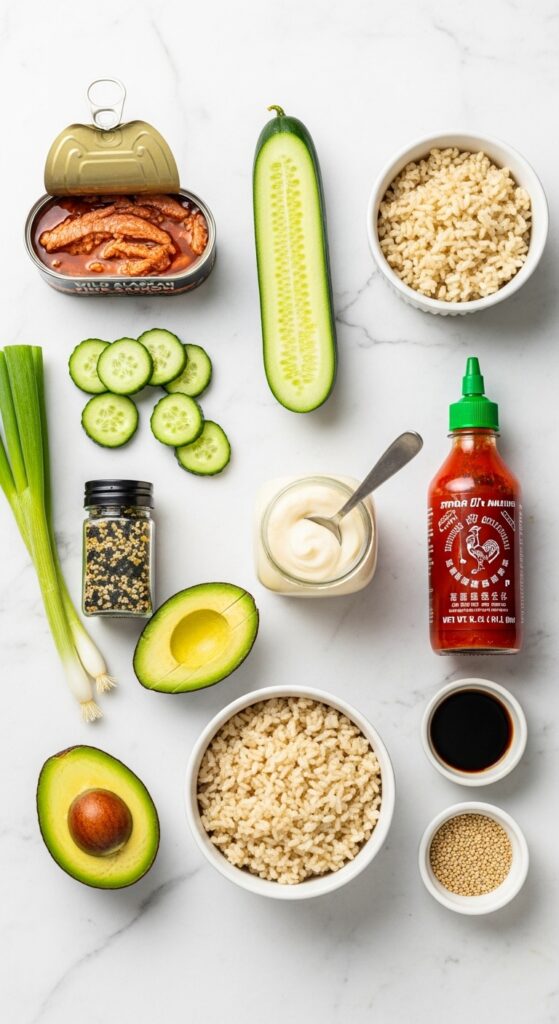
- 1 can (5-6 oz) wild-caught salmon, drained and flaked (preferably Alaskan pink or sockeye salmon for maximum omega-3 content)
- 2 tablespoons light mayonnaise or Greek yogurt (Greek yogurt offers a protein boost and tangy flavor)
- 1-2 teaspoons sriracha sauce (adjust to your heat preference—start small if you’re spice-sensitive)
- 2 tablespoons finely chopped scallions, white parts only (reserve greens for garnish)
- Pinch of kosher salt and black pepper to taste
For the Bowl Base
- 1½ cups cooked brown rice (or substitute with white rice, cauliflower rice, quinoa, or leftover rice from your fridge)
- Alternatively, use frozen microwaveable rice for ultimate convenience (ready in 90 seconds!)
Fresh Toppings & Garnish
- ½ Persian cucumber, diced (no peeling needed—the thin skin adds crunch and fiber)
- ½ ripe avocado, sliced or diced (adds creamy texture and heart-healthy fats)
- 2 tablespoons scallion greens, finely sliced (for a fresh, oniony bite)
- 1 tablespoon furikake seasoning or crumbled nori sheets (Japanese seaweed seasoning with sesame seeds—find it on Amazon or in Asian markets)
- 1 teaspoon toasted sesame seeds (optional, for extra nutty flavor)
- Extra sriracha or soy sauce for drizzling
Smart Substitutions
- No canned salmon? Use leftover cooked salmon, canned tuna, grilled chicken, or cooked shrimp
- Dairy-free? Swap mayo for vegan mayo or tahini
- Low-carb diet? Replace rice with cauliflower rice or zucchini noodles
- Extra veggies? Add shredded carrots, edamame, bell peppers, or radishes for color and nutrition
Timing
Preparation Time: 5 minutes (ISO 8601: PT5M)
Cooking Time: 0 minutes if using pre-cooked rice; 15-20 minutes if cooking rice from scratch (ISO 8601: PT0M or PT15M)
Total Time: 5 minutes with pre-cooked rice; 20-25 minutes total if cooking rice (ISO 8601: PT5M or PT25M)
Recipe Yield: 1 generous serving (easily doubled for meal prep)
Time-saving insight: This recipe clocks in at just 5 minutes when using frozen microwaveable rice—that’s 75% faster than the average rice bowl recipe and quicker than most takeout orders! If you’re cooking rice fresh, use a rice cooker to cut your active prep time to under 10 minutes.
Step-by-Step Instructions
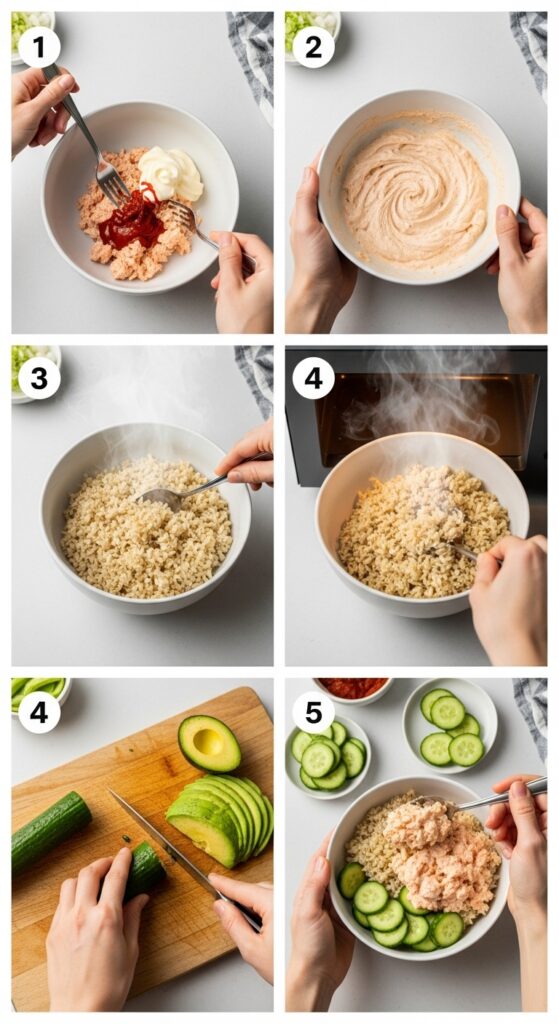
Step 1: Prepare Your Salmon Mixture
Open your can of salmon and drain the liquid completely using a fine-mesh strainer. Transfer the salmon to a small mixing bowl and use a fork to flake it into bite-sized pieces, breaking up any large chunks. If your canned salmon includes bones (which are completely edible and calcium-rich), gently crush them with your fingers—they’ll integrate seamlessly into the mixture.
Add the mayonnaise, sriracha, finely chopped scallion whites, and a pinch of salt and pepper. Stir vigorously until the salmon is evenly coated in the creamy, spicy dressing. The mixture should look cohesive and slightly fluffy.
Pro tip: For make-ahead convenience, prepare this salmon salad up to 2 days in advance and store it in an airtight container in the refrigerator. The flavors will meld beautifully overnight!
Step 2: Heat Your Rice
If using frozen rice, follow the package microwave instructions (typically 90 seconds on high). For leftover rice, place it in a microwave-safe bowl, cover with a damp paper towel, and heat for 1-2 minutes until steaming hot. If you prefer crispy rice, heat it in a nonstick skillet with a drizzle of sesame oil over medium-high heat for 3-4 minutes.
For freshly cooked rice, prepare according to package directions. Brown rice takes about 45 minutes in a pot or 20 minutes in a rice cooker, while white rice cooks faster at 15-18 minutes.
Chef’s secret: The viral TikTok version uses an ice cube trick—place an ice cube on top of leftover rice and salmon before microwaving to create steam that prevents drying. While optional, it adds incredible moisture!
Step 3: Prep Your Fresh Vegetables
While your rice heats, dice the Persian cucumber into small, uniform cubes (about ¼-inch). Slice or dice the avocado and have it ready. Finely slice the scallion greens for garnish. This fresh vegetable prep takes less than 2 minutes and adds essential crunch, vitamins, and fiber to your bowl.
Customization idea: Not a cucumber fan? Swap it for shredded carrots, thinly sliced radishes, or blanched edamame for different textures and flavors.
Step 4: Assemble Your Beautiful Bowl
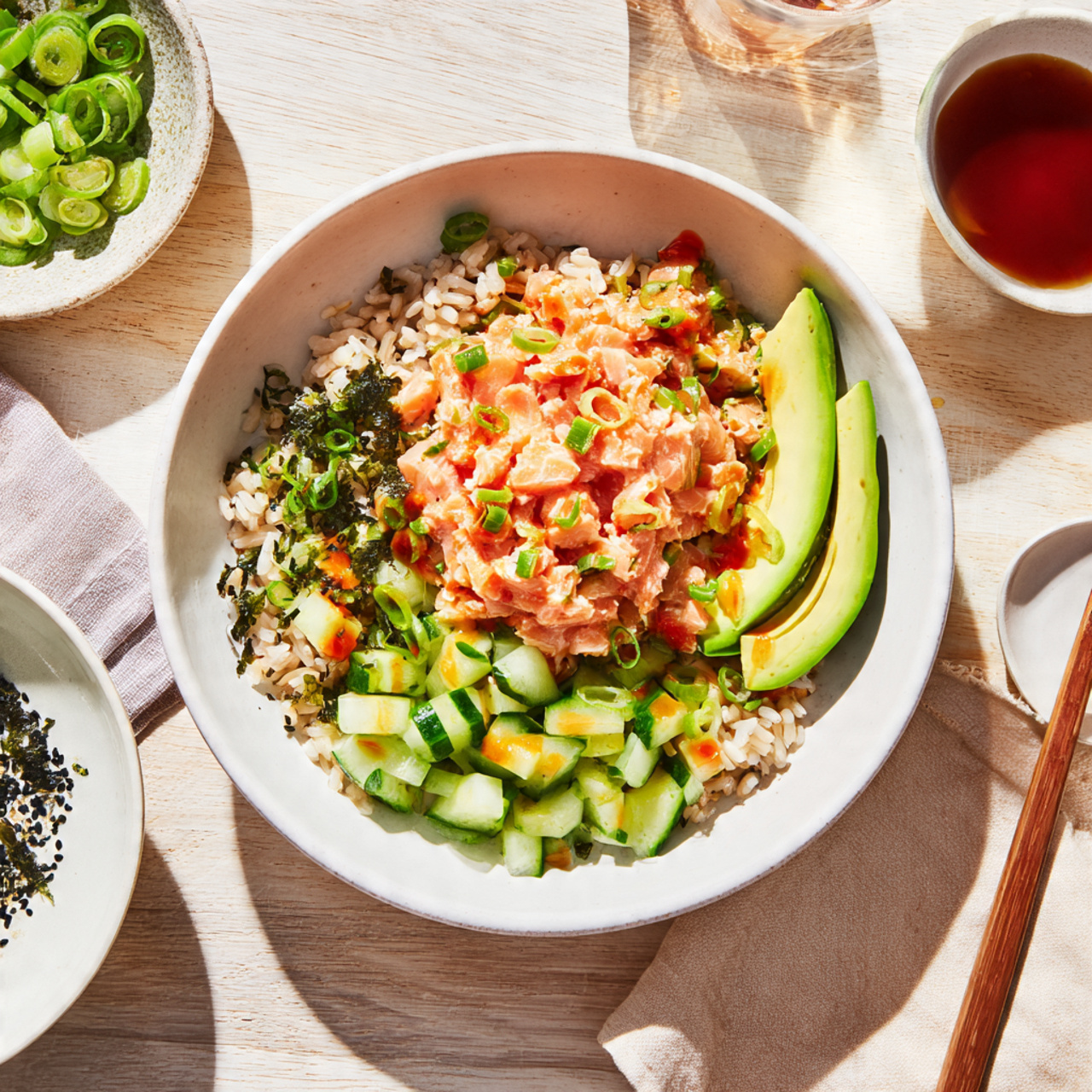
In your serving bowl (choose a wide, shallow bowl for Instagram-worthy presentation), place the warm rice as your foundation. Spoon the creamy salmon mixture directly on top of the rice. Artfully arrange the diced cucumber and avocado slices around the salmon.
Sprinkle generously with furikake seasoning or crumbled nori sheets, then scatter the sliced scallion greens over everything. Add toasted sesame seeds if using, and finish with an artistic drizzle of sriracha or a splash of soy sauce.
Presentation hack: Arrange ingredients in sections rather than mixing them together—it looks stunning in photos and allows you to customize each bite!
Step 5: Mix, Taste, and Enjoy
Before diving in, use your fork to gently mix the warm rice with the salmon salad, allowing the creamy dressing to coat the grains. The heat from the rice will slightly soften the avocado and release the aromatic flavors of the furikake.
Take your first bite using a nori sheet as a makeshift sushi wrap—scoop some rice, salmon, and veggies onto the seaweed and fold it into a little taco. This interactive eating experience is half the fun!
Flavor balance tip: Taste after mixing and adjust seasoning. Add more sriracha for heat, soy sauce for saltiness, or a squeeze of fresh lime juice for brightness.
Nutritional Information
Per Serving (Based on Recipe as Written)
- Calories: 389-420 kcal
- Protein: 25-27g (50% of daily value for most adults)
- Total Fat: 14-16g
- Saturated Fat: 1.5-2g
- Monounsaturated Fat: 7-8g (from avocado and salmon)
- Polyunsaturated Fat: 4-5g (including omega-3s)
- Omega-3 Fatty Acids (EPA + DHA): 1.5-2g per serving (exceeds daily recommended intake!)
- Carbohydrates: 39-42g
- Dietary Fiber: 4-6g
- Sugars: 2-4g
- Cholesterol: 65-70mg
- Sodium: 500-757mg (varies by canned salmon brand)
- Key Vitamins & Minerals:
- Vitamin D: 110% DV (canned salmon is one of few natural food sources)
- Vitamin B12: 80% DV (essential for energy and nerve function)
- Calcium: 15-21% DV (especially from salmon bones)
- Selenium: 60% DV (powerful antioxidant)
- Potassium: 20% DV
- Iron: 10% DV
Data-backed insight: Studies show that consuming just two servings of fatty fish per week (like this bowl twice weekly) can reduce cardiovascular disease risk by up to 30% due to the anti-inflammatory properties of omega-3 fatty acids.
Macronutrient Breakdown: This bowl provides an ideal 40-30-30 balance of carbohydrates, protein, and healthy fats, making it perfect for sustained energy without blood sugar spikes. The 25g of protein promotes satiety and helps maintain muscle mass, while the complex carbohydrates from brown rice provide slow-releasing energy for 3-4 hours.
Healthier Alternatives for the Recipe
Lower-Calorie Options
Swap regular mayo for Greek yogurt: This simple substitution reduces calories by 60 per serving while adding 5g of extra protein and beneficial probiotics for gut health. The tangy flavor of Greek yogurt also brightens the overall dish.
Use cauliflower rice instead of brown rice: Cut carbs by 75% and calories by nearly 200 while increasing fiber and vitamin C content. Cauliflower rice works beautifully with the creamy salmon mixture.
Heart-Healthy Upgrades
Choose wild-caught Alaskan salmon: Wild salmon contains 30% more omega-3 fatty acids than farmed varieties and has a superior omega-6 to omega-3 ratio (1:1 vs. 14:1). Look for “wild-caught” labels from sustainable fisheries.
Add extra vegetables: Double your vegetable portions with additions like shredded purple cabbage, julienned carrots, snap peas, or spiralized zucchini. Each addition boosts antioxidants, fiber, and micronutrients without significantly increasing calories.
Dietary Restriction Adaptations
Keto-friendly version: Replace rice with cauliflower rice and increase the avocado to a full avocado. Add a tablespoon of full-fat mayo instead of light mayo. This modification delivers 8g net carbs while maintaining 30g of healthy fats.
Whole30 compliant: Use compliant mayo (made with avocado oil) and coconut aminos instead of soy sauce. Skip the furikake if it contains sugar, and use plain nori sheets instead.
Vegan alternative: Replace canned salmon with marinated and baked chickpeas or store-bought vegan “salmon” (made from carrots or hearts of palm). Add nutritional yeast for a savory, umami boost and consider omega-3 supplementation from algae oil.
Sodium Reduction
Rinse your canned salmon: This removes up to 40% of the sodium content without affecting omega-3 levels (omega-3s are fat-soluble, not water-soluble). Choose low-sodium canned salmon when available, and use reduced-sodium soy sauce or coconut aminos for finishing.
Serving Suggestions
Meal Prep Mastery
Batch-cook for the week: Prepare 4-5 salmon mixtures in individual containers on Sunday evening. Store rice separately from the salmon and fresh vegetables. Each morning, grab one portion of each, microwave the rice with the salmon for 2 minutes, and add fresh toppings. This strategy gives you five lunches in under 30 minutes of prep time.
Bento box style: Pack components separately in a compartmentalized container—rice in the largest section, salmon mixture in a smaller container with an ice pack, and vegetables in another section. Combine just before eating for maximum freshness.
Creative Serving Ideas
Sushi hand roll party: Serve all components separately and let everyone build their own hand rolls using nori sheets. This interactive presentation works beautifully for family dinners or casual gatherings.
Rice bowl trio: Make three different flavor profiles—classic spicy (this recipe), miso ginger (add miso paste and grated ginger to the salmon), and curry-spiced (mix in curry powder and coconut milk). Serve in small portions for a tasting experience.
Loaded rice bowl bar: Set up a DIY bowl station with multiple protein options (canned salmon, shredded chicken, edamame), grain choices (white rice, brown rice, quinoa), and 8-10 colorful toppings. Perfect for potlucks or family dinners where everyone has different preferences.
Side Dish Pairings
While this bowl is nutritionally complete on its own, consider these complementary sides:
- Miso soup: Adds warmth and probiotics; ready in 3 minutes
- Seaweed salad: Extra minerals and oceanic flavor
- Pickled ginger and wasabi: Classic sushi accompaniments that aid digestion
- Crispy vegetable spring rolls: For added crunch and vegetables
Beverage Pairings
Green tea or matcha: The antioxidants complement the omega-3s and provide sustained energy without jitters. Sparkling water with yuzu or lemon: Refreshing citrus cuts through the creamy richness. Kombucha: Adds probiotics and a slightly sweet-tart contrast to the savory bowl.
Common Mistakes to Avoid
Mistake #1: Using Dry, Overcooked Rice
The problem: Rice that’s been refrigerated for more than 3 days becomes dry, hard, and unappetizing, even after reheating. Overcooked rice turns mushy when microwaved.
The solution: Cook rice to al dente (slightly firm) texture if meal-prepping. When reheating, always add moisture—use the damp paper towel method, add a tablespoon of water before microwaving, or use the ice cube steam trick. Fresh-frozen rice from stores like Trader Joe’s eliminates this issue entirely.
Data insight: Properly stored cooked rice maintains optimal texture for 4-5 days when kept at 40°F or below, but quality starts declining after day 3.
Mistake #2: Choosing Low-Quality Canned Salmon
The problem: Not all canned salmon is created equal. Some brands use farmed salmon with lower omega-3 content, excessive sodium (over 400mg per serving), or include BPA-lined cans that may leach chemicals into your food.
The solution: Look for labels that specify “wild-caught,” “BPA-free can liner,” and “sustainably harvested.” Alaskan pink and sockeye salmon are top choices. While boneless, skinless options are convenient, salmon with bones delivers 36% more calcium—and the bones mash easily with a fork.
Quality tip: Store your unopened cans in a cool, dark pantry, and use within 2-3 years of the “best by” date for optimal flavor and nutrition.
Mistake #3: Skimping on Fresh Elements
The problem: Some cooks save time by skipping the fresh cucumber, avocado, and scallions, making the bowl one-dimensional and less nutritious.
The solution: The fresh vegetables aren’t optional—they provide crucial textural contrast, hydration, fiber, and vitamins that balance the richness of the salmon mixture. Even adding just cucumber makes a significant difference. If short on time, use pre-cut vegetables from the salad bar.
Mistake #4: Incorrect Seasoning Balance
The problem: Going too heavy on sriracha can overpower the delicate salmon flavor, while too little makes the dish bland. Over-salting is common since canned salmon, soy sauce, and furikake all contain sodium.
The solution: Start with 1 teaspoon of sriracha and taste before adding more. Don’t add salt until the very end after all other seasonings are incorporated. Remember: you can always add more, but you can’t take it away.
Pro technique: Acidity brightens flavors—if your bowl tastes flat but not necessarily bland, add a squeeze of lime or lemon juice rather than more salt.
Mistake #5: Not Rinsing High-Sodium Canned Salmon
The problem: Some canned salmon contains 600-800mg of sodium per serving, which is 35% of the daily recommended limit in just one component of your meal.
The solution: Rinse your drained salmon under cold running water for 15-20 seconds, then pat dry with paper towels. This removes up to 40% of the sodium without affecting the omega-3 content or protein levels (both are fat/protein-bound, not water-soluble).
Mistake #6: Poor Storage Practices
The problem: Assembling the entire bowl and storing it leads to soggy rice, brown avocado, and wilted vegetables within hours.
The solution: Always store components separately. Rice and salmon mixture can be combined and refrigerated for up to 3 days. Store cut avocado with the pit still in it, face-down in lemon water to prevent oxidation. Keep cucumber and scallions in separate airtight containers with a paper towel to absorb excess moisture.
Storing Tips for the Recipe
Short-Term Storage (1-3 Days)
Salmon mixture: Store the prepared salmon salad in an airtight glass or plastic container in the coldest part of your refrigerator (usually the back of the bottom shelf) for up to 3 days. The flavors actually improve after 24 hours as the ingredients meld together.
Cooked rice: Transfer cooled rice to an airtight container and refrigerate for up to 5 days. To prevent bacterial growth, cool rice quickly by spreading it on a baking sheet before containerizing. Always reheat to 165°F internal temperature.
Fresh vegetables: Store diced cucumber and sliced scallions in separate containers lined with paper towels to absorb moisture. They’ll stay crisp for 2-3 days. Store cut avocado in an airtight container with a piece of onion (the sulfur compounds slow oxidation) or submerged in water, changing water daily.
Assembled bowls: If you must store a fully assembled bowl, it will keep for 24 hours maximum, but expect some textural changes. The avocado may brown and the cucumber may release water.
Meal Prep Strategy
Sunday prep routine (30 minutes):
- Cook a large batch of rice (3-4 cups dry yields 9-12 cups cooked)
- Prepare 4-5 portions of salmon mixture in small containers
- Pre-slice scallions and store in a jar
- Portion rice into individual containers
- Throughout the week, simply reheat rice and salmon together, then add fresh veggies daily
Freezing options: While the complete bowl doesn’t freeze well due to the mayonnaise and fresh vegetables, you can freeze cooked rice in individual portions for up to 3 months. Thaw overnight in the refrigerator or microwave directly from frozen. The salmon mixture is not recommended for freezing as the texture deteriorates.
Food Safety Essentials
Temperature danger zone: Never leave assembled bowls at room temperature for more than 2 hours (1 hour if ambient temperature exceeds 90°F). Bacteria multiply rapidly between 40°F and 140°F.
Reheating guidelines: Always reheat rice and salmon to steaming hot (165°F) to eliminate any potential bacteria. Microwave on high for 2-3 minutes, stirring halfway through, until steam visibly rises from the food.
Signs of spoilage: Discard if you notice any sour or “off” smells, visible mold, sliminess on the rice, or if the salmon develops a gray or greenish color. When in doubt, throw it out.
Leftover Transformation Ideas
If you have components that need using up:
- Extra salmon mixture: Spread on whole grain crackers, stuff into avocado halves, or mix into a green salad
- Leftover rice: Make fried rice, add to soup, or use in stuffed peppers
- Unused vegetables: Toss into smoothies (cucumber), make guacamole (avocado), or add to scrambled eggs (scallions)
Conclusion
The Canned Salmon Rice Bowl Recipe represents the perfect intersection of nutrition, convenience, and flavor—delivering restaurant-quality satisfaction in just 5 minutes without sacrificing your health goals or budget. With 25g of protein, 2g of omega-3 fatty acids, and enough vitamins and minerals to fuel your most demanding days, this bowl transforms the humble can of salmon into a gourmet experience that supports heart health, brain function, and sustained energy.
Whether you’re meal-prepping for busy work weeks, seeking quick post-workout nutrition, or simply craving something delicious that nourishes your body, this versatile recipe adapts to your lifestyle while keeping your taste buds excited. The beauty lies in its simplicity—quality ingredients combined thoughtfully create something far greater than the sum of their parts.
Ready to Transform Your Lunch Routine?
Try this recipe today and discover why millions have made it their go-to meal! Share your beautiful bowl creations with us in the comments below—we love seeing your creative variations and hearing how you’ve personalized this recipe. Did you add unexpected vegetables? Discover a new flavor combination? Develop a meal-prep hack? Drop your tips in the review section!
Don’t miss out on more quick, nutritious recipes like this one. Subscribe to our newsletter for weekly meal ideas, nutrition tips, and exclusive recipes delivered straight to your inbox. Join our community of home cooks who prove that healthy eating doesn’t have to be complicated or time-consuming.
Leave a comment sharing your experience with this Canned Salmon Rice Bowl Recipe—your feedback helps us create even better content for food lovers like you! 🍚🐟✨
FAQs
Q1: Can I use fresh salmon instead of canned salmon for this rice bowl?
A: Absolutely! Fresh or leftover cooked salmon works beautifully in this recipe. Simply flake 4-6 ounces of cooked salmon (skin and bones removed) and mix it with the mayonnaise, sriracha, and scallions just as you would with canned. The texture will be slightly different—fresher and more delicate—but equally delicious. Keep in mind that fresh salmon has a shorter shelf life than the canned version, so prepare only what you’ll eat within 1-2 days. If using fresh, you’ll miss out on the calcium boost from edible canned salmon bones, so consider pairing your bowl with other calcium-rich foods.
Q2: Is this canned salmon rice bowl suitable for meal prep?
A: Yes, this recipe is ideal for meal prep with proper component separation! Prepare the salmon mixture and rice in bulk (up to 5 servings), then store them in individual airtight containers for 3-5 days. The key to success is storing fresh vegetables separately and adding them just before eating to maintain crunch and prevent sogginess. Each morning or the night before, combine one portion of rice and salmon in a container, keeping cucumbers, avocado, and scallions separate until you’re ready to eat. This method gives you 5 nutritious lunches from about 30 minutes of Sunday prep time.
Q3: What are the best substitutes if I don’t have furikake seasoning?
A: Furikake adds authentic Japanese flavor with sesame seeds, seaweed, and sometimes bonito flakes, but several substitutes work well:
- Nori sheets: Crumble or cut toasted seaweed sheets into small pieces
- DIY blend: Combine toasted sesame seeds + crumbled nori + a pinch of salt
- Everything bagel seasoning: Offers a different but equally tasty flavor profile
- Toasted sesame seeds alone: Simpler but still adds nutty flavor and crunch
- Gomashio: Japanese sesame salt available in health food stores
You can find authentic furikake on Amazon, at Asian grocery stores, or increasingly in the international aisle of regular supermarkets. Popular brands include JFC, Mishima, and Nori Komi.
Q4: How can I make this recipe lower in sodium?
A: Several strategies significantly reduce sodium without sacrificing flavor:
- Rinse canned salmon: Under cold water for 15-20 seconds, removing up to 40% of sodium
- Choose low-sodium salmon: Look for brands specifically labeled “no salt added” or “low sodium”
- Use coconut aminos: Instead of soy sauce (coconut aminos has 73% less sodium)
- Make homemade furikake: Control salt content in your seasoning blend
- Skip added salt: The salmon and furikake already provide plenty
- Greek yogurt instead of mayo: Many Greek yogurts are lower in sodium than mayonnaise
Implementing all these strategies can reduce total sodium from 750mg to under 300mg per serving.
Q5: Can I make this recipe vegan or vegetarian?
A: Yes! The bowl structure adapts beautifully to plant-based proteins:
- Chickpeas: Mash 1 cup of chickpeas and season similarly to the salmon
- Hearts of palm: Shred for a flaky, fish-like texture
- Marinated tofu: Press and crumble extra-firm tofu, then mix with the seasonings
- Vegan “salmon”: Made from carrots, available at specialty stores
- Tempeh: Crumble and season with nori for oceanic flavor
Use vegan mayonnaise (like Just Mayo or Vegenaise) and ensure your furikake doesn’t contain bonito (fish) flakes. Add dulse or kelp flakes for oceanic flavor and omega-3s from algae oil supplements complement the meal nutritionally.
Q6: How long does the assembled bowl last in the refrigerator?
A: A fully assembled bowl should be consumed within 24 hours for optimal quality and food safety. The avocado will oxidize and turn brown, cucumber releases water making the rice soggy, and the creamy dressing can separate. However, if you store components separately—rice and salmon mixture together (3-5 days), fresh vegetables separate (2-3 days)—you can enjoy fresh-tasting bowls all week long. Always reheat rice and salmon to 165°F before adding cold fresh vegetables.
Q7: What’s the best type of rice to use for this recipe?
A: Multiple rice varieties work beautifully, each offering different benefits:
- Brown rice: Highest fiber (4g per serving), nutty flavor, ideal for satiety
- White rice: Quicker cooking, softer texture, traditional for sushi bowls
- Jasmine rice: Fragrant and slightly sticky, aromatic complement to salmon
- Sushi rice: Authentic choice, seasoned with rice vinegar, salt, and sugar
- Forbidden black rice: Highest antioxidants, stunning visual presentation
- Cauliflower rice: Lowest carb option (5g vs. 45g), keto-friendly
Frozen microwaveable rice saves time and works perfectly for this quick recipe. Trader Joe’s frozen brown rice is a popular choice among home cooks.
Q8: Is canned salmon as healthy as fresh salmon?
A: Yes, canned salmon is nutritionally comparable to fresh and even offers some advantages! Both provide similar amounts of high-quality protein (20-25g per serving), omega-3 fatty acids (1-2g EPA+DHA), and B vitamins. Canned salmon actually contains MORE calcium (up to 275mg per serving) because the canning process softens bones, making them edible. The main difference is sodium content—canned salmon often has more due to added salt as a preservative, though rinsing reduces this. Choose wild-caught Alaskan salmon (pink or sockeye) in BPA-free cans for maximum health benefits at a fraction of the fresh fish cost.
Q9: Can I eat this salmon rice bowl cold?
A: Absolutely! This bowl is delicious served warm, at room temperature, or cold, making it extremely versatile for different preferences and situations. Many people actually prefer it cold during summer months or for packed lunches when reheating isn’t convenient. For best results when eating cold, allow the rice to come to room temperature before mixing with the salmon (straight-from-fridge hard rice doesn’t mix well with the creamy salmon). The cold version emphasizes the fresh cucumber and avocado, creating a refreshing, sushi-like experience perfect for warm weather.
Q10: How can I add more vegetables to this recipe without changing the flavor profile?
A: Several vegetables integrate seamlessly while maintaining the Japanese-inspired flavor:
- Shredded carrots: Add crunch and sweetness
- Edamame: Protein boost with mild flavor
- Thinly sliced radishes: Peppery crunch
- Julienned bell peppers: Sweetness and color
- Baby spinach: Nutrient boost, wilts slightly from warm rice
- Shredded purple cabbage: Dramatic color, cruciferous benefits
- Bean sprouts: Traditional in Asian bowls, crunchy texture
- Snap peas: Sweet and crisp
Start with small amounts (2-3 tablespoons) of each vegetable to avoid overwhelming the salmon. The goal is complementing, not competing with, the star ingredient.
Print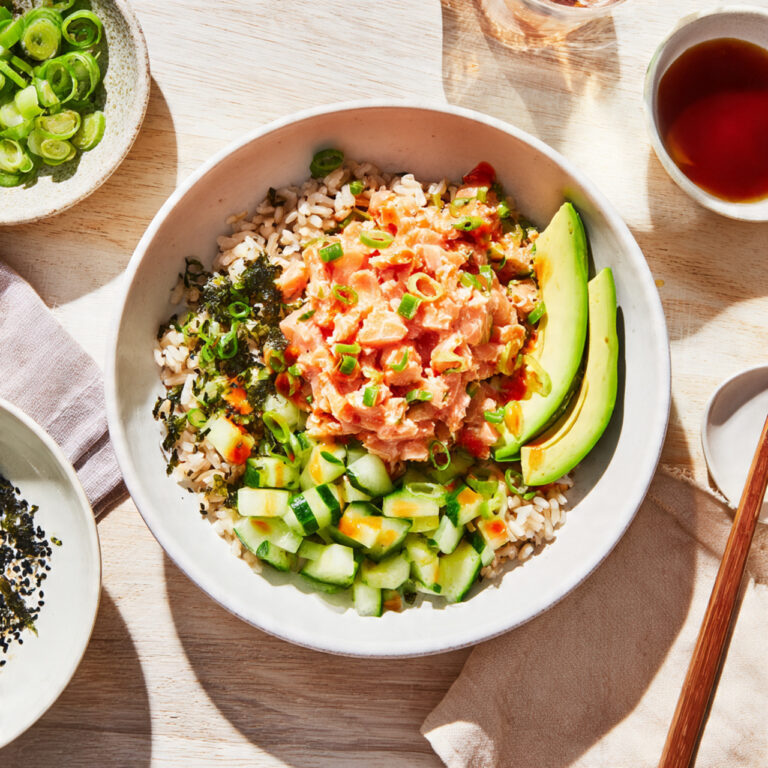
Canned Salmon Rice Bowl Recipe
Discover the viral Canned Salmon Rice Bowl Recipe that’s taking TikTok by storm! This 5-minute healthy lunch delivers 25g of protein, 2g of omega-3 fatty acids, and restaurant-quality flavor using simple pantry staples. Perfect for meal prep, busy weekdays, or anyone craving a nutritious bowl that tastes like takeout. With creamy spicy salmon, fluffy rice, fresh vegetables, and savory furikake seasoning, this budget-friendly recipe transforms canned salmon into a gourmet experience. No cooking required when using pre-cooked rice—just mix, assemble, and enjoy!
- Total Time: 5 minutes
- Yield: 1 generous serving
Ingredients
For the Salmon Mixture:
- 1 can (5-6 oz) wild-caught salmon, drained and flaked
- 2 tablespoons light mayonnaise (or Greek yogurt for higher protein)
- 1-2 teaspoons sriracha sauce (adjust to taste)
- 2 tablespoons scallions, white parts finely chopped
- Pinch of kosher salt and black pepper
For the Bowl Base:
- 1½ cups cooked brown rice (or white rice, cauliflower rice, or quinoa)
Fresh Toppings:
- ½ Persian cucumber, diced
- ½ ripe avocado, sliced or diced
- 2 tablespoons scallion greens, finely sliced
- 1 tablespoon furikake seasoning (or crumbled nori sheets)
- 1 teaspoon toasted sesame seeds (optional)
- Extra sriracha or soy sauce for drizzling
Instructions
- Prepare the Salmon Mixture: Drain canned salmon completely and transfer to a small bowl. Use a fork to flake the salmon into bite-sized pieces, crushing any edible bones. Add mayonnaise, sriracha, chopped scallion whites, salt, and pepper. Stir vigorously until smooth and creamy. Set aside.
- Heat the Rice: Microwave frozen or leftover rice according to package directions (typically 90 seconds for frozen, 1-2 minutes for refrigerated). Cover with a damp paper towel to retain moisture. Alternatively, heat in a skillet with a drizzle of sesame oil for crispy rice texture.
- Prep Fresh Vegetables: While rice heats, dice the Persian cucumber into small ¼-inch cubes. Slice the avocado and finely slice the scallion greens. Have all toppings ready for quick assembly.
- Assemble the Bowl: Place warm rice in a wide, shallow serving bowl. Spoon the creamy salmon mixture directly on top of the rice. Arrange diced cucumber and avocado slices artfully around the salmon.
- Add Final Touches: Sprinkle generously with furikake seasoning or crumbled nori sheets. Scatter the sliced scallion greens over everything. Add toasted sesame seeds if using. Drizzle with extra sriracha or soy sauce to taste.
- Mix and Enjoy: Gently mix the warm rice with the salmon using a fork, allowing the creamy dressing to coat the grains. Taste and adjust seasoning as needed. Serve immediately, or use nori sheets to create hand-roll wraps for an interactive eating experience!
Notes
Storage Tips: Store salmon mixture and rice separately in airtight containers for up to 3 days. Keep fresh vegetables separate and add just before serving to maintain crunch.
Substitutions:
- Use Greek yogurt instead of mayo for extra protein and tang
- Swap canned salmon for tuna, cooked chicken, or tofu
- Replace brown rice with cauliflower rice for low-carb option
- Use vegan mayo for dairy-free version
Meal Prep: Prepare 4-5 salmon mixtures on Sunday. Store rice portions separately. Each day, combine and microwave rice with salmon for 2 minutes, then add fresh toppings.
Sodium Reduction: Rinse canned salmon under cold water for 15-20 seconds to remove up to 40% of sodium. Choose “no salt added” canned salmon brands.
Spice Level: Start with 1 teaspoon sriracha and add more to taste. For mild version, use only ½ teaspoon or substitute with a dash of paprika.
- Prep Time: 5 minutes
- Cook Time: 0 minutes (with pre-cooked rice) / 15 minutes (if cooking rice from scratch)
- Category: Dinner Entree, Lunch Bowl, Main Course, Meal Prep
- Method: Microwave, Mixing, No-Cook Assembly
- Cuisine: Asian Fusion, Contemporary American, Japanese-inspired
- Diet: Low Calorie