chicken piccata recipe: 5 steps for zesty Italian flavor
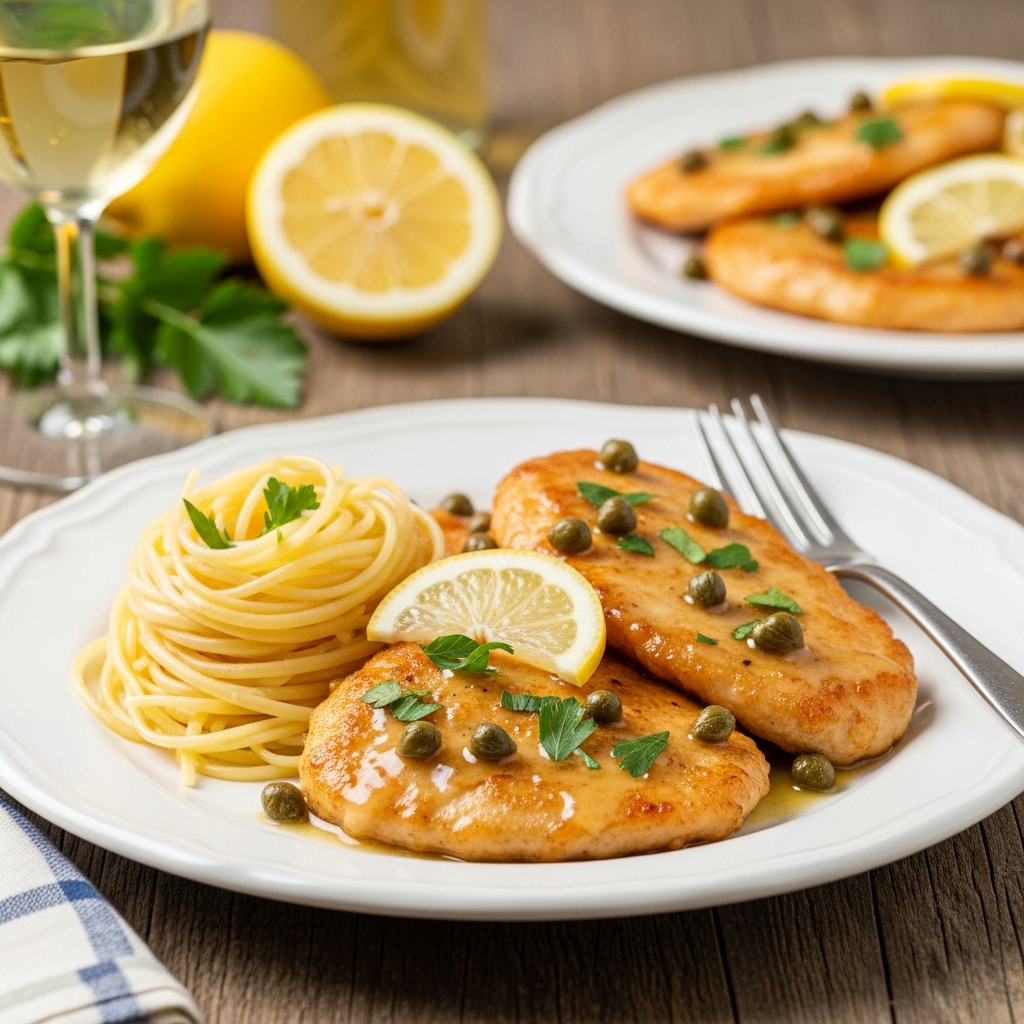
If the average home-cooked dinner takes around 35–40 minutes, why do so many home cooks assume that a restaurant-quality Italian chicken dish must take all night? This chicken piccata recipe breaks that myth with bright lemon, briny capers, and a rich pan sauce—ready in about 30 minutes, all in one skillet.
In this post, you’ll learn exactly how to make a classic chicken piccata recipe with just 5 simple steps. We’ll cover ingredients, timing, nutrition, healthy swaps, and expert tips so you can serve a zesty Italian favorite that tastes like your favorite trattoria—but fits a busy weeknight.
Along the way, we’ll also touch on related ideas like lemon chicken, easy Italian chicken dinners, and one-pan skillet recipes to help you personalize this dish to your taste.
Ingredients List

This chicken piccata recipe serves 4 and uses simple pantry staples. The magic is in the balance of tangy lemon, salty capers, and silky butter sauce.
Core ingredients
- 2 large boneless, skinless chicken breasts (about 1.5–2 lbs / 700–900 g total), sliced horizontally into 4 thin cutlets
- 1/2 cup all-purpose flour, for dredging
- 1 teaspoon fine sea salt
- 1/2 teaspoon freshly ground black pepper
- 1/2 teaspoon garlic powder (optional, for extra savory depth)
- 3 tablespoons olive oil (or a neutral oil with high smoke point)
- 3 tablespoons unsalted butter, divided
- 3 cloves garlic, minced
- 1/2 cup dry white wine (like Pinot Grigio or Sauvignon Blanc)
- 3/4 cup low-sodium chicken broth
- 1/4 cup freshly squeezed lemon juice (about 1–2 lemons, plus extra wedges for serving)
- 1–2 teaspoons lemon zest
- 2–3 tablespoons capers, drained and rinsed
- 2 tablespoons fresh parsley, finely chopped
Ingredient substitutions and variations
- Chicken:
- Use boneless, skinless chicken thighs for a juicier, richer twist.
- For smaller portions, use chicken tenders, just reduce cooking time slightly.
- Flour (for dredging):
- Gluten-free all-purpose blend works well.
- Almond flour gives a low-carb, slightly nutty spin (browns faster—watch the pan).
- Butter:
- Use ghee for a slightly nuttier flavor and higher smoke point.
- For dairy-free, use a plant-based butter or add a splash of extra olive oil.
- White wine:
- Replace with extra chicken broth plus 1–2 teaspoons white wine vinegar or more lemon juice if you prefer no alcohol.
- For a slightly sweeter sauce, use a splash of dry vermouth.
- Capers:
- Swap with finely chopped green olives if you don’t have capers.
- If you dislike brininess, reduce to 1 tablespoon and add more lemon instead.
- Herbs:
- Flat-leaf parsley is classic, but basil or thyme also work beautifully in lemon chicken dishes.
The beauty of this Italian-inspired lemon caper chicken is how forgiving and customizable it is—perfect for weeknights and dinner parties alike.
Timing
One reason this chicken piccata recipe is so popular is that it delivers restaurant-level flavor fast.
- Prep time: 15 minutes
- Cook time: 15 minutes
- Total time: 30 minutes
Many traditional chicken piccata recipes take 35–45 minutes. By slicing the chicken into thin cutlets and keeping everything in one skillet, you cut the total time by roughly 20–30% without sacrificing flavor.
That makes this one-pan Italian chicken dinner ideal when you want something special on a busy weeknight.
How to Make This Chicken Piccata Recipe in 5 Steps
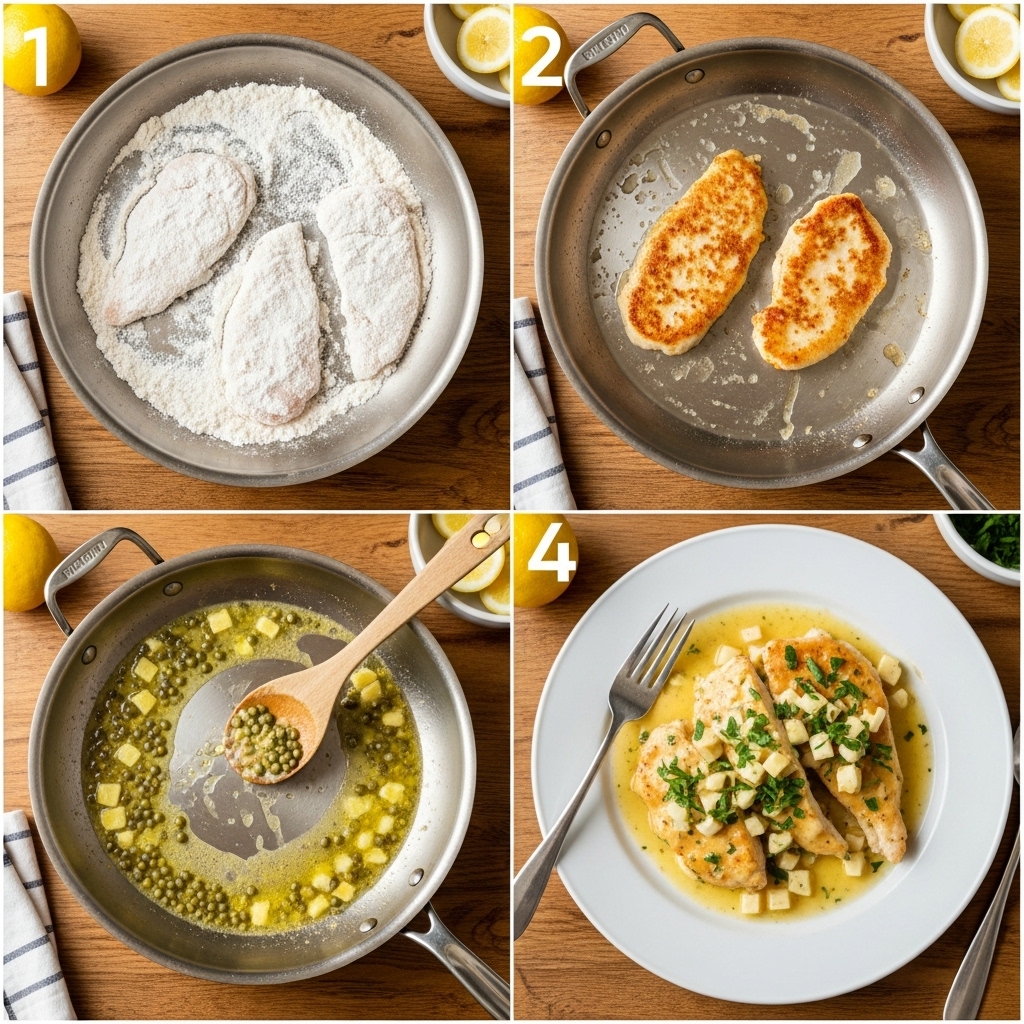
Step 1 – Prep and dredge the chicken
Lay the chicken breasts flat on a cutting board. Carefully slice horizontally to create 4 thin cutlets of even thickness—about 1/2 inch. This helps them cook quickly and evenly.
Pat the chicken dry with paper towels. In a shallow dish, combine flour, salt, pepper, and garlic powder. Lightly coat each cutlet in the seasoned flour, shaking off the excess.
Pro tip: Dry chicken + light dredge = better browning and a sauce that clings beautifully.
Step 2 – Sear the chicken until golden
Heat 2 tablespoons of olive oil and 1 tablespoon of butter in a large skillet over medium-high heat.
When the fat is hot and shimmering, add the chicken in a single layer (work in batches if needed to avoid crowding). Sear for about 3–4 minutes per side, until golden brown and just cooked through.
Transfer the cooked chicken to a plate and tent lightly with foil to keep warm.
Pro tip: If the pan looks dry between batches, add a drizzle of oil. Browned bits on the bottom (fond) are liquid gold for your lemon butter pan sauce—don’t wipe them away.
Step 3 – Build the lemon-garlic base
Reduce the heat to medium. Add the remaining 1 tablespoon of olive oil if needed.
Stir in the minced garlic and sauté for 30–60 seconds, just until fragrant. Avoid browning the garlic—it turns bitter quickly.
Pour in the white wine, scraping up all the browned bits from the bottom of the pan. Let the wine simmer and reduce by about half, 2–3 minutes. This concentrates the flavor and cooks off most of the alcohol.
Pro tip: If you’re skipping wine, use extra broth plus a teaspoon of vinegar or extra lemon juice for brightness. The key is balancing acidity and richness.
Step 4 – Finish the silky piccata sauce
Add the chicken broth, lemon juice, lemon zest, and capers. Stir and bring the mixture to a gentle simmer.
Let it cook for 3–4 minutes until slightly reduced and glossy. Turn off the heat and swirl in the remaining 2 tablespoons of butter until fully melted and the sauce looks smooth and slightly thickened.
Taste and adjust seasoning—add a pinch of salt, more lemon, or a few extra capers to dial in your perfect balance of tangy, salty, and rich.
Pro tip: For an extra-luxurious sauce, whisk in a teaspoon of flour or cornstarch mixed with cold water before adding the final butter. Simmer briefly to thicken.
Step 5 – Return the chicken and serve
Nestle the seared chicken cutlets back into the skillet, spooning the lemon-caper sauce over the top. Simmer on low for 2–3 minutes to warm through and let the flavors marry.
Sprinkle with chopped parsley and serve immediately, spooning plenty of sauce over each piece.
This final step transforms simple pan-seared chicken into a classic Italian chicken piccata recipe that feels worthy of a special occasion—but is easy enough for a Tuesday night.
Nutritional Information
Nutritional values will vary slightly based on exact ingredients and portion sizes, but here’s an approximate breakdown per serving (1/4 of the recipe):
- Calories: ~420 kcal
- Protein: ~35 g
- Carbohydrates: ~18 g
- Fiber: ~1 g
- Sugars: ~1 g
- Fat: ~22 g
- Saturated fat: ~8 g
- Cholesterol: ~135 mg
- Sodium: ~650–750 mg (varies with broth, butter, and added salt)
This chicken piccata recipe is:
- High in protein, supporting muscle maintenance and satiety
- Moderate in fat, primarily from olive oil and butter
- Naturally low in sugar
- Relatively low in carbs, especially if served with vegetables or a salad instead of pasta
To significantly reduce sodium or saturated fat, see the healthier alternatives below.
Healthier Alternatives for the Recipe
Want to enjoy all the bright, zesty flavor of chicken piccata while lightening things up? Try these smart swaps:
- Reduce saturated fat:
- Use 1 tablespoon butter plus 2–3 tablespoons olive oil instead of more butter.
- Or skip the finishing butter and whisk in 2 tablespoons of plain Greek yogurt off the heat for creaminess.
- Lower sodium:
- Use low- or no-salt-added chicken broth.
- Rinse capers thoroughly and use slightly less salt in the dredge.
- Taste the sauce before adding any final salt—capers are naturally salty.
- Gluten-free chicken piccata:
- Use a gluten-free flour blend for dredging.
- Or try finely ground almond flour or rice flour.
- Lower carb / keto-friendly:
- Use almond flour or skip dredging and just sear well-dried chicken in olive oil.
- Serve over sautéed spinach, zucchini noodles, or cauliflower mash instead of pasta.
- Dairy-free version:
- Replace butter with a high-quality dairy-free butter or additional olive oil.
- Add richness with a splash of full-fat coconut milk (just a tablespoon or two) if desired.
With these tweaks, you can adapt this chicken piccata recipe to fit Mediterranean-style eating, low-carb lifestyles, and gluten-free or dairy-free needs—without losing that lemon-caper magic.
Serving Suggestions
One reason this Italian lemon chicken is a weeknight hero is its versatility. Try serving your chicken piccata recipe with:
- Classic pairings:
- Al dente angel hair, spaghetti, or linguine tossed with olive oil and Parmesan
- Creamy mashed potatoes to soak up the lemon butter sauce
- Buttered egg noodles with fresh parsley
- Lighter sides:
- Steamed or roasted broccoli, asparagus, or green beans with lemon
- A simple arugula salad with olive oil, lemon, and shaved Parmesan
- Cauliflower rice or mashed cauliflower for a low-carb option
- Entertaining ideas:
- Serve on a warm platter, topped with extra lemon slices and a shower of parsley.
- Pair with a crisp white wine such as Pinot Grigio or Sauvignon Blanc.
- Add crusty bread on the side for dipping into the sauce.
Personalize it: if your family loves big flavor, add red pepper flakes to the sauce. For kids who prefer milder food, pull their pieces before adding extra capers or acidity.
Common Mistakes to Avoid
Even an easy chicken piccata recipe can go wrong if you’re not careful. Here’s what to watch for:
- Chicken too thick
- Thick pieces cook unevenly and dry out. Slice breasts into thin cutlets or pound them to even thickness.
- Overcrowding the pan
- Crowding = steaming, not searing. Cook in batches so each cutlet develops a golden crust.
- Burning the garlic
- Garlic should be fragrant, not dark brown. Keep heat moderate and sauté briefly before adding liquid.
- Sauce too sour or too salty
- Balance is key. Taste and adjust with more broth or a small pat of butter if it’s too sharp, or water/broth if too salty.
- Overcooking the chicken
- Chicken breasts are lean and dry out fast. Pull them when just cooked through and let them finish gently in the sauce.
- Skipping the pan deglaze
- Those browned bits are flavor. Always scrape them up with wine or broth to build a deep, restaurant-style sauce.
Storing Tips for the Recipe
Piccata keeps surprisingly well, making it a great make-ahead Italian chicken dish.
- Refrigerator:
- Store chicken and sauce together in an airtight container for 3–4 days.
- Reheat gently in a covered skillet over low heat, adding a splash of broth or water to loosen the sauce.
- Freezer:
- For best texture, freeze just-cooked chicken and cooled sauce separately, up to 2 months.
- Thaw overnight in the fridge, then rewarm gently on the stovetop.
- Meal prep tips:
- Slice and dredge the chicken up to 1 day ahead; refrigerate covered.
- Juice and zest lemons, mince garlic, and chop parsley in advance to cut day-of prep time to about 10 minutes.
Proper storage ensures your lemon-caper chicken stays tender and flavorful instead of dry or rubbery.
Conclusion
This chicken piccata recipe delivers zesty Italian flavor in just 5 simple steps and about 30 minutes. Thin, golden chicken cutlets simmer in a bright lemon-caper butter sauce that tastes like your favorite restaurant. Try it tonight, then leave a review or comment on our blog and subscribe for more easy, flavor-packed recipes.
FAQs
1. Can I use chicken thighs instead of breasts?
Yes. Boneless, skinless chicken thighs work wonderfully and stay juicy. Trim excess fat, pound lightly to even thickness, and add 1–2 minutes to the searing time per side.
2. Can I make this chicken piccata recipe without wine?
Absolutely. Replace the wine with extra chicken broth plus 1–2 teaspoons white wine vinegar or additional lemon juice. You’ll still get a bright, tangy sauce without any alcohol.
3. How do I keep the chicken from getting dry?
Slice the chicken into thin, even cutlets, sear over medium-high heat, and avoid overcooking. Let the cutlets finish gently in the sauce for just a few minutes—this keeps them moist and flavorful.
4. Is this recipe kid-friendly?
Most kids enjoy the milder lemon-butter flavor. If you’re worried about capers being too briny, start with 1 tablespoon or serve them on the side. You can also reduce the lemon slightly and add a touch more broth for a softer flavor.
5. Can I double this chicken piccata recipe for a crowd?
Yes, it doubles well. Sear the chicken in batches to maintain good browning, then make a larger batch of sauce in the same pan. Use a large skillet or Dutch oven so everything fits comfortably at the end.
6. What’s the best pasta to serve with chicken piccata?
Angel hair, spaghetti, and linguine are classic choices. Toss cooked pasta with a bit of olive oil, salt, pepper, and Parmesan, then spoon the lemon-caper sauce over the top for a complete Italian-inspired meal.
7. Can I make the sauce creamier?
For a creamy twist, stir in 2–3 tablespoons of heavy cream or half-and-half after reducing the broth and lemon juice. Warm gently, then add the butter. You’ll have a rich, velvety lemon cream sauce without losing that bright piccata flavor.