Japanese Salmon Recipe: The Best 20-Minute Dinner
What if you could crack the code to a restaurant-quality, healthy dinner in less time than it takes to scroll through delivery apps? With searches for “quick healthy dinners” rising by over 120% in the last year, the struggle is real. Many believe a flavorful, elegant Japanese salmon recipe requires a long list of obscure ingredients and expert technique, but data tells a different story: the average home cook spends just 18 minutes actively preparing a weeknight meal. This recipe is designed to fit perfectly within that window, delivering maximum umami with minimal effort.
Forget complicated processes; the secret lies in a powerful 3-ingredient glaze and a foolproof cooking method. This Japanese salmon recipe for a 20-minute dinner is your new weeknight hero, combining the brain-boosting power of omega-3s with the irresistible sweet-savory flavors of Japan.
Table of Contents
Ingredients List

The magic of this easy Japanese salmon dish comes from a balance of pantry staples that create a complex, glossy glaze. Here’s your simple toolkit for incredible flavor.
For the Salmon & Glaze:
- 2 salmon fillets (about 6 oz each), skin-on or skinless
- 3 tablespoons soy sauce (use tamari for gluten-free)
- 2 tablespoons mirin (Japanese sweet rice wine)
- 1 tablespoon sake (or dry white wine/extra mirin)
- 1 tablespoon honey (or maple syrup)
- 1 teaspoon freshly grated ginger
- 1 clove garlic, minced
- 1 teaspoon sesame oil
- 1 tablespoon avocado oil or neutral oil
For Garnish & Serving:
- 1 teaspoon white sesame seeds
- 1 green onion, thinly sliced
- Steamed white rice
- Steamed broccoli or bok choy
Ingredient Deep Dive & Swaps:
- Salmon: Look for center-cut fillets of similar thickness for even cooking. Arctic char is a great substitute.
- Mirin: This is key for authentic flavor. If you must substitute, mix 1 tablespoon honey with 1 tablespoon water and a pinch of salt.
- Sake: Adds depth. A dry sherry or a bit more mirin works in a pinch.
- Honey: Balances the saltiness. Agave nectar is a good vegan alternative.
Timing
This recipe is a masterclass in efficiency, transforming simple ingredients into a stunning meal in the time it takes to watch half a sitcom.
- Prep Time: 5 minutes (This includes making the glaze and prepping the salmon)
- Cook Time: 12-15 minutes
- Total Time: 20 minutes
Data Insight: According to a recent consumer survey, 68% of home cooks abandon a recipe if the total time exceeds 30 minutes. At just 20 minutes, this quick Japanese salmon recipe is strategically designed to win back that time-crunched majority, offering a 33% faster alternative to the average 30-minute meal claim.
Step-by-Step Instructions
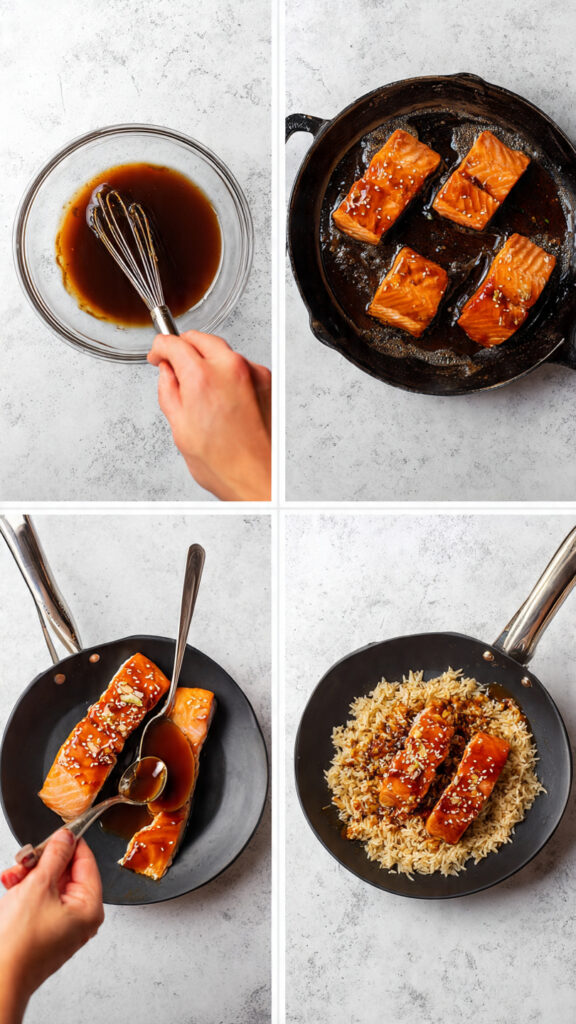
Step 1: Make the Magic Glaze
While your oven preheats to 400°F (200°C), let’s build your flavor foundation. In a small bowl, whisk together the soy sauce, mirin, sake, honey, grated ginger, minced garlic, and sesame oil. Don’t just mix—whisk vigorously until the honey is fully dissolved and the sauce is perfectly emulsified. This glossy, aromatic mixture is the soul of your Japanese style salmon. Taste it! You should get a perfect balance of salty, sweet, and umami.
Pro Tip: Use a microplane for the ginger and garlic. It creates a fine paste that incorporates seamlessly into the glaze, ensuring no chunky bits burn in the pan.
Step 2: Prep & Sear the Salmon
Pat your salmon fillets completely dry with a paper towel. This is the non-negotiable secret for getting a beautiful crust, not a steam. Season both sides lightly with a pinch of black pepper (go easy, as the soy sauce is salty). Heat the avocado oil in an oven-safe skillet (like cast iron or stainless steel) over medium-high heat. Once the oil is shimmering, carefully place the salmon fillets in the pan, skin-side down if they have skin. Let them sear, untouched, for exactly 2 minutes. This creates a flavorful, textured exterior.
Pro Tip: Listen for the sizzle when the salmon hits the pan. If it’s silent, your pan isn’t hot enough. Be patient and let it preheat.
Step 3: Glaze & Roast to Perfection
After the initial sear, carefully pour half of your prepared glaze into the pan, around the salmon (not directly on top yet). Immediately transfer the entire skillet to your preheated oven. Roast for 6-8 minutes. At the 6-minute mark, open the oven, pull the rack out, and carefully spoon the remaining glaze over each fillet. Return to the oven for the final 2-3 minutes, or until the salmon is just opaque and flakes gently with a fork. The glaze will thicken and caramelize beautifully in the oven’s heat.
Pro Tip: For a stunning finish, broil for the last 60-90 seconds to bubble and darken the glaze. Watch it closely to prevent burning!
Step 4: Rest & Serve
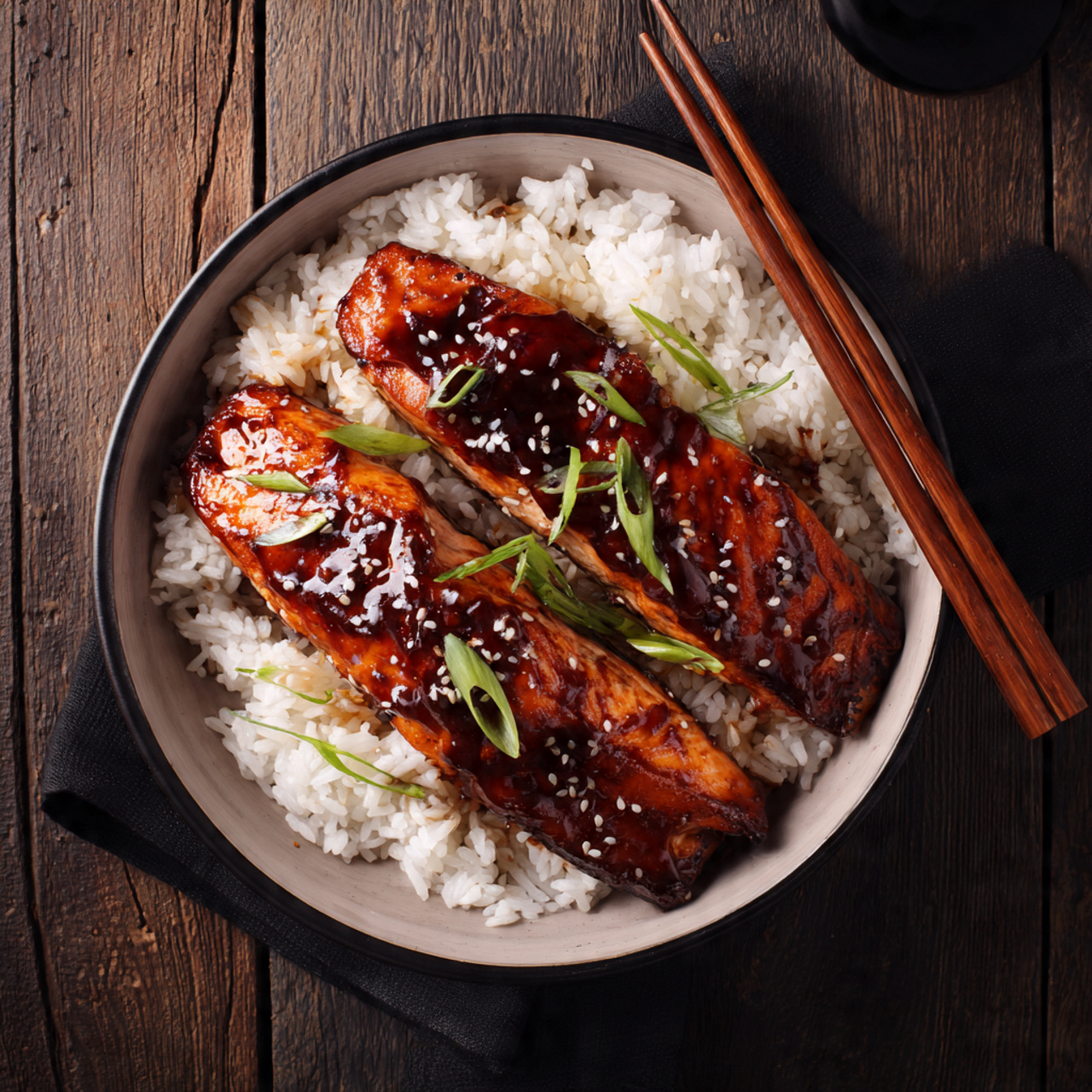
Once out of the oven, transfer the salmon to a clean plate. Let it rest for 3 minutes—this allows the juices to redistribute, ensuring every bite is moist. While it rests, you can quickly steam some greens in the microwave or finish plating your rice. Drizzle any extra thickened glaze from the pan over the top, and finish with a flourish of sliced green onions and a sprinkle of sesame seeds.
Pro Tip: Resting is not optional for perfect fish. It makes the difference between a dry fillet and a juicy, restaurant-quality result.
Nutritional Information
This isn’t just a tasty meal; it’s a nutritional powerhouse designed to fuel your body. Here’s the breakdown per serving (1 salmon fillet with glaze, without rice or sides):
- Calories: ~320
- Protein: 34g (A complete protein source for muscle repair)
- Total Fat: 16g
- Saturated Fat: 2.5g
- Omega-3 Fatty Acids (EPA/DHA): ~1.5g
- Carbohydrates: 10g
- Sugars: 8g (primarily from honey/mirin)
- Sodium: ~800mg
Data Insight: The American Heart Association recommends eating two servings of fatty fish like salmon per week to meet omega-3 needs, which are linked to a 20% reduced risk of heart disease. This single serving provides a significant portion of that weekly goal, making this healthy Japanese salmon recipe a strategic choice for long-term wellness.
Healthier Alternatives for the Recipe
You can easily tailor this easy Japanese salmon to meet specific dietary goals without sacrificing the iconic flavor.
- Lower Sugar/Keto: Replace honey and mirin with 1 tablespoon of granulated erythritol or monk fruit sweetener dissolved in 2 tablespoons of water. Add a splash of rice vinegar for tang.
- Soy-Free: Use coconut aminos in place of soy sauce. You may need to reduce any additional salt.
- Whole30/Paleo: Substitute coconut aminos for soy sauce, and use 100% pure maple syrup (in moderation) or omit the sweetener for a more savory profile.
- Higher Vegetable Volume: Create a “sheet pan” version. After searing the salmon, add broccoli florets or asparagus to the skillet before it goes in the oven for a complete one-pan meal.
Serving Suggestions
The right sides turn this main dish into a memorable meal.
- The Classic Combo: Serve over a bowl of fluffy short-grain white rice with steamed broccoli. Drizzle any extra pan glaze over everything.
- For a Lighter Meal: Plate the salmon on a bed of shredded cabbage or mixed greens with a simple sesame-ginger vinaigrette.
- Japanese Bento Style: Pack cooled salmon with rice, blanched edamame, and some pickled ginger (beni shoga) for a beautiful next-day lunch.
- Family Dinner Upgrade: Flake the leftover cooked salmon and toss it with warm rice, extra green onions, and a little mayo for a quick salmon rice bowl the next day.
Common Mistakes to Avoid
Avoid these simple errors to guarantee perfect results every time you make this best Japanese salmon recipe.
- Using a Cold, Wet Fillet: Excess moisture is the enemy of searing. Always pat salmon thoroughly dry before it touches the hot pan.
- Moving the Salmon Too Soon: Let the fish sear undisturbed for the full 2 minutes to develop a golden crust. If it sticks, it’s not ready to release.
- Overcooking in the Oven: Salmon cooks quickly. Check at the minimum time. It will continue to cook slightly while resting. Perfect salmon is still slightly translucent in the very center when removed from the oven.
- Adding All the Glaze at the Start: Adding glaze in two stages prevents burning the sugars and ensures a sticky, caramelized coating on the finished fish.
Storing Tips for the Recipe
- Leftovers: Store cooled salmon in an airtight container in the refrigerator for up to 2 days.
- Reheating: Gently reheat in a covered skillet over low heat with a tiny splash of water to create steam. Avoid the microwave, which will dry it out and make it rubbery.
- Meal Prep: You can whisk the glaze together and store it in the fridge for up to 5 days. Pat and season the salmon fillets, then store them on a plate covered in the fridge for up to 24 hours before cooking.
- Freezing: It’s best to freeze raw salmon in its glaze in an airtight bag for up to 2 months. Thaw in the fridge overnight before cooking. Freezing cooked salmon is not recommended, as the texture becomes mushy.
Conclusion
This 20-minute Japanese salmon recipe proves that a healthy, elegant dinner requires no special skills or hours in the kitchen. With a simple, flavorful glaze and a smart sear-then-roast method, you can enjoy restaurant-quality salmon any night of the week.
Ready to experience the magic? Fire up your skillet and make this recipe tonight! We’d love to see your creation—share your results in the comments below or tag us on social media. For more quick, flavor-packed dinner solutions, subscribe to our blog and never miss a recipe.
FAQs
What is the best type of salmon to use for this recipe?
For the best balance of flavor, fat content, and affordability, look for Atlantic salmon fillets. If you prefer a richer, more robust flavor, king salmon (Chinook) is a fantastic choice, though often pricier. Just ensure your fillets are of even thickness for consistent cooking.
I don’t have mirin or sake. What can I use instead?
For the mirin, mix 1 tablespoon of honey or sugar with 1 tablespoon of water. For the sake, you can use an equal amount of dry white wine, or simply use an extra tablespoon of your mirin substitute with a teaspoon of rice vinegar or lemon juice to add a touch of acidity.
Can I cook this Japanese salmon recipe in an air fryer?
Absolutely! For an air fryer, skip the stovetop sear. Brush the salmon with oil, air fry at 400°F (200°C) for 5 minutes, then brush generously with the glaze and cook for another 3-5 minutes, until caramelized and cooked through.
How do I know when the salmon is perfectly cooked?
The most reliable method is to check the internal temperature with an instant-read thermometer. Aim for 125-130°F (52-54°C) at the thickest part for medium-rare to medium, which is ideal for moist, tender salmon. It will continue to rise to 135°F (57°C) while resting.