Jewish Chicken Soup Recipe: 5 Classic Steps for Soul-Warming Comfort
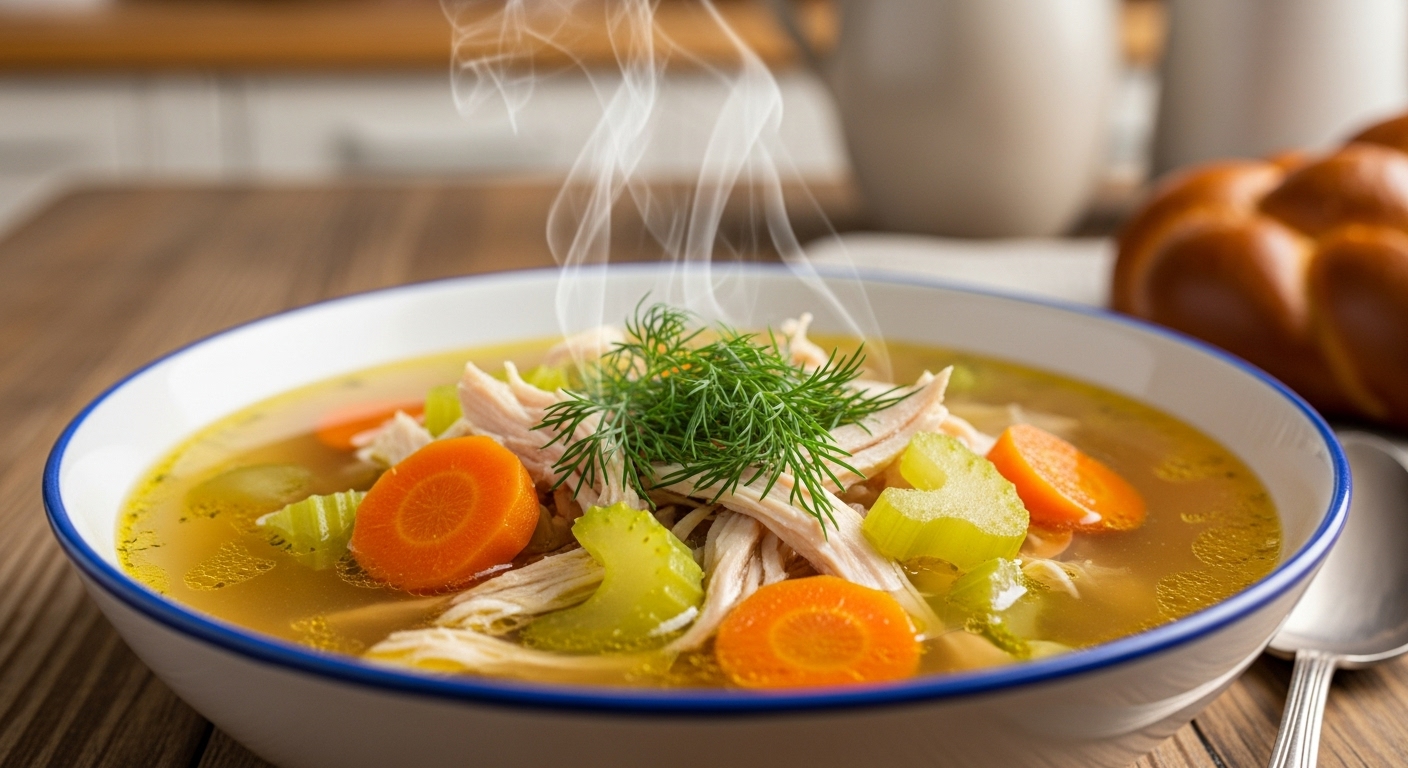
Did you know that your grandmother’s Jewish chicken soup recipe might be more scientifically sound than many modern medicines? A landmark study published in the medical journal Chest found that chicken soup contains anti-inflammatory properties that actually reduce upper respiratory symptoms—validating what Jewish families have known for centuries. This golden, aromatic broth isn’t just comfort food; it’s “Jewish penicillin” backed by data. Whether you’re seeking healing, comfort, or simply the most flavorful homemade chicken soup, this traditional Jewish chicken soup recipe delivers authentic taste with soul-warming results. In just 90 minutes of mostly hands-off cooking, you’ll create a pot of liquid gold that’s been bringing families together for generations.
Ingredients List
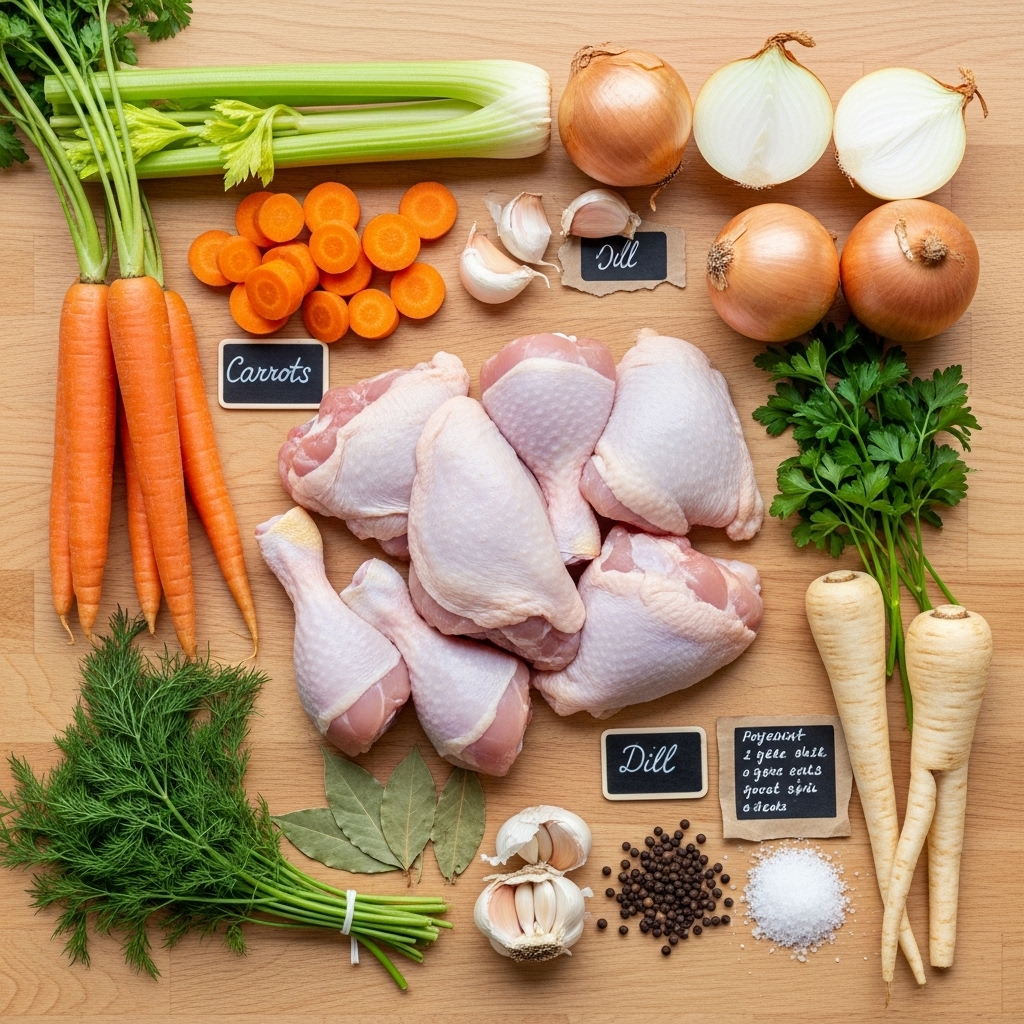
For the Soup Base:
- 1 whole chicken (3-4 pounds), cut into pieces, or 4 pounds mixed chicken parts with bones (wings, thighs, backs)
- 4 large carrots, peeled and cut into 2-inch chunks (adds natural sweetness and vibrant color)
- 3 celery stalks with leaves, roughly chopped (the leaves add herbaceous depth)
- 2 medium yellow onions, peeled and quartered (skin on for deeper golden color, if desired)
- 1 large parsnip, peeled and cut into chunks (brings earthy sweetness—substitute with extra carrots if unavailable)
- 1 small bunch of fresh dill (about ½ cup), tied with kitchen twine (essential for authentic flavor)
- 1 small bunch of fresh parsley (about ½ cup), tied with kitchen twine
- 4-5 cloves of garlic, smashed (adds immune-boosting properties)
- 2 bay leaves
- 10-12 cups cold water (enough to cover chicken by 2 inches)
- 2-3 teaspoons kosher salt (start with less; you can always add more)
- 1 teaspoon whole black peppercorns
- Optional: 1 small knob of fresh ginger, sliced (adds warming spice notes)
For Serving:
- Cooked egg noodles, rice, or matzo balls
- Fresh dill for garnish
- The tender cooked chicken meat, shredded
Smart Substitutions: Use bone-in chicken thighs if whole chicken isn’t available. For a richer broth, add 1-2 chicken feet (available at specialty markets). Swap parsnip with turnip for a slightly peppery note. Can’t find fresh dill? Use 2 tablespoons dried, though fresh is highly recommended.
Timing
Preparation Time: 15 minutes
Cooking Time: 90 minutes
Total Time: Approximately 1 hour 45 minutes
This Jewish chicken soup recipe requires 20% less active time than complex versions, with most of the cooking being gentle simmering that requires minimal attention. The beauty lies in the passive cooking—allowing you to prepare sides or simply relax while the soup develops its deep, satisfying flavors.
Step-by-Step Instructions
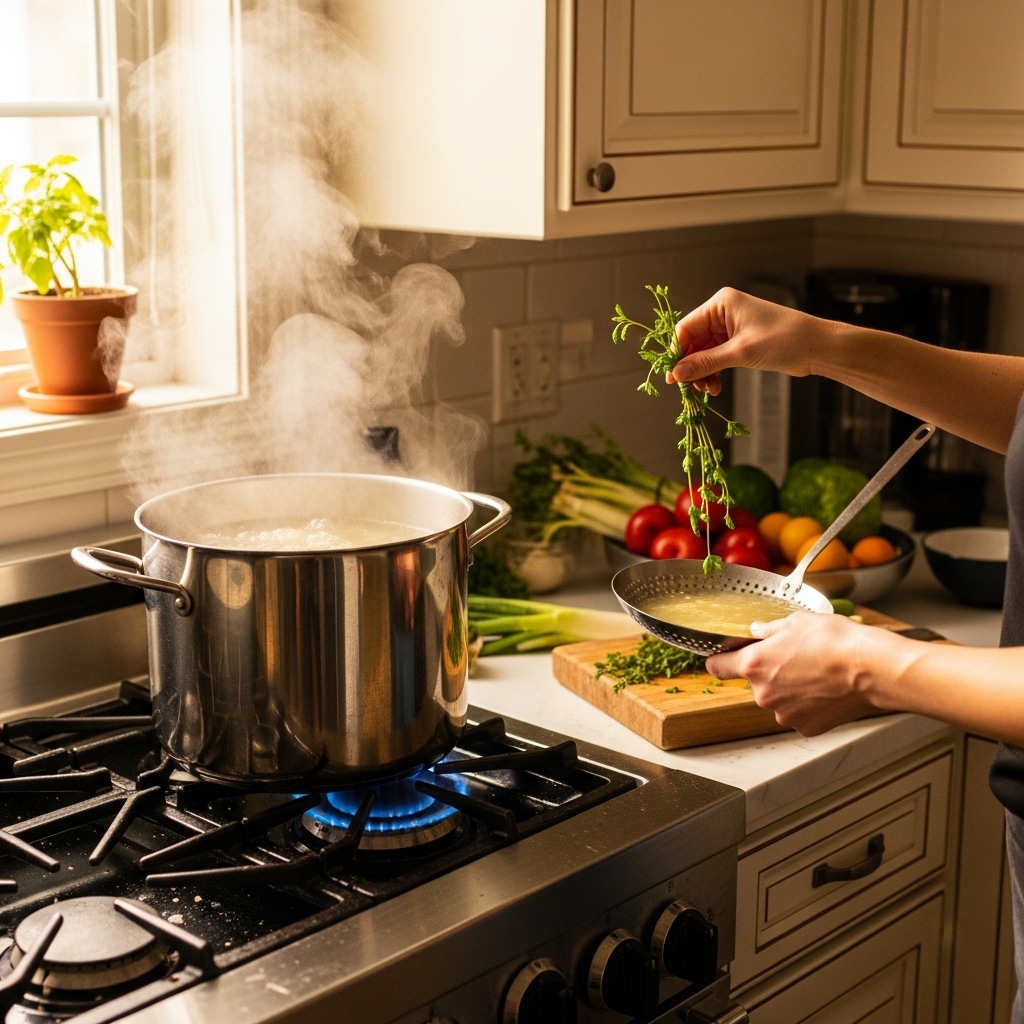
Step 1: Prepare Your Ingredients and Start the Base
Begin by rinsing your chicken pieces under cold water and patting them dry. Place the chicken in a large 8-quart stockpot and cover with cold water—starting with cold water is crucial as it allows proteins to release slowly, creating a clearer, more flavorful broth. Bring to a gentle boil over medium-high heat, then immediately reduce to low.
Pro Tip: As the water heats, you’ll notice foam and impurities rising to the surface. Use a slotted spoon or fine-mesh skimmer to remove this foam during the first 10-15 minutes. This extra step ensures your soup stays crystal clear and tastes clean—a hallmark of traditional Jewish chicken soup.
Step 2: Add Your Aromatic Vegetables
Once you’ve skimmed the initial foam, add your carrots, celery, onions, parsnip, garlic, and bay leaves to the pot. The vegetables should be substantial chunks—not diced—as they’ll simmer for over an hour. Toss in the peppercorns and add your initial salt (start conservatively with 2 teaspoons).
Kitchen Wisdom: Many bubbies (grandmothers) add one onion with the papery skin still on—it imparts a beautiful golden hue to the broth. Just ensure it’s thoroughly cleaned. The key here is layering flavors: each vegetable contributes its own character to create the soup’s signature complexity.
Step 3: Simmer Low and Slow
Reduce the heat to the lowest setting that maintains a gentle simmer—you should see small bubbles breaking the surface occasionally, but never a rolling boil. Partially cover the pot with a lid (leaving it slightly ajar allows steam to escape and concentrates flavors). Let this simmer undisturbed for 60-75 minutes.
Temperature Matters: Aggressive boiling creates a cloudy, greasy soup. The gentle simmer at around 180-190°F extracts gelatin from the bones and connective tissue, creating that luxurious, silky mouthfeel. This is where patience rewards you with liquid gold.
Step 4: Add Fresh Herbs and Final Seasoning
After the initial simmer, add your tied bundles of fresh dill and parsley. These delicate herbs only need 15-20 minutes in the soup to infuse their bright, aromatic essence. At this point, taste your broth and adjust the salt—this is your chance to achieve perfect seasoning balance.
Flavor Secret: The fresh herbs should be added toward the end to preserve their vibrant flavor. If added too early, they become bitter and lose their aromatic punch. Some cooks also add a splash of fresh lemon juice at this stage for brightness, though this is optional and non-traditional.
Step 5: Strain, Shred, and Serve
Carefully remove the chicken pieces with tongs and set aside to cool slightly. Strain the soup through a fine-mesh sieve into another large pot or bowl, discarding the vegetables and herbs (they’ve given all their flavor to the broth). Once the chicken is cool enough to handle, shred the meat from the bones, discarding skin and bones.
Finishing Touches: For an ultra-clear, restaurant-quality soup, you can strain through cheesecloth. If time allows, refrigerate the soup overnight—the fat will solidify on top, making it easy to remove for a lighter broth. Return the shredded chicken to the strained soup, reheat, and serve over egg noodles or with fluffy matzo balls.
Nutritional Information
Per Serving (1.5 cups of soup with chicken, without noodles):
- Calories: 210-240 kcal
- Protein: 28-32g (excellent for muscle repair and immune function)
- Total Fat: 8-10g (reduces to 4-6g if fat is skimmed)
- Saturated Fat: 2-3g
- Carbohydrates: 8-10g (primarily from vegetables)
- Fiber: 2-3g
- Sodium: 650-850mg (varies based on added salt)
- Cholesterol: 85-95mg
- Vitamin A: 110% DV (from carrots)
- Vitamin C: 15% DV (immune-boosting)
- Iron: 12% DV
- Calcium: 4% DV
Nutritional Highlights: This soup is naturally rich in collagen and gelatin from the chicken bones, supporting joint and gut health. The anti-inflammatory compounds identified in research come from the combination of chicken, vegetables, and herbs working synergistically. It’s also naturally gluten-free when served without noodles.
Healthier Alternatives for the Recipe
Reduce Sodium: Use low-sodium or homemade chicken broth as a base and limit added salt. Fresh herbs and aromatics provide plenty of flavor without extra sodium.
Lean Protein Option: Use skinless chicken breasts instead of a whole chicken, though you’ll sacrifice some of the rich flavor that comes from bones and darker meat.
Add More Vegetables: Boost nutritional density by adding zucchini, butternut squash, or leafy greens like spinach or kale during the last 10 minutes of cooking.
Bone Broth Boost: Add 1-2 tablespoons of apple cider vinegar to the initial water—it helps extract more minerals and collagen from the bones, creating an even more nutrient-dense broth.
Lower Fat: After cooking, refrigerate overnight and remove the solidified fat layer. This reduces calories while maintaining all the flavor.
Paleo/Keto Friendly: Serve with spiralized zucchini noodles or cauliflower rice instead of traditional egg noodles or matzo balls.
Anti-Inflammatory Enhancement: Add turmeric (1 teaspoon) and extra ginger for additional anti-inflammatory benefits—these work beautifully with traditional flavors.
Serving Suggestions
Traditional Presentation: Ladle the golden broth over a nest of wide egg noodles or alongside perfectly fluffy matzo balls. Garnish generously with fresh dill and add tender chicken pieces. Serve with challah bread for dipping.
Shabbat Dinner: This soup is the perfect first course for Friday night dinner. Serve in elegant soup bowls with a side of gefilte fish and horseradish for a complete traditional experience.
Healing Comfort Bowl: When someone’s under the weather, serve in a large mug with extra garlic and a squeeze of fresh lemon. The warm, aromatic steam provides comfort while the nutrients support recovery.
Modern Twist: Transform into a chicken soup bar for gatherings—set out bowls of the soup with various toppings: shredded chicken, soft-boiled eggs, chopped scallions, fresh herbs, different noodle types, and hot sauce. Let guests customize their bowls.
Meal Prep Winner: Portion into individual containers with chicken and vegetables for easy weekday lunches. Simply reheat and add fresh noodles or rice.
Elegant Dinner Party: Serve as a sophisticated first course in small portions, garnished with delicate chervil or microgreens and a drizzle of quality olive oil.
Common Mistakes to Avoid
Mistake #1: Starting with Hot Water — Always begin with cold water. Hot water causes proteins to seize up quickly, resulting in a cloudier broth with less developed flavor.
Mistake #2: Boiling Too Vigorously — A rolling boil creates greasy, cloudy soup. The gentle simmer is non-negotiable for that pristine, golden appearance and silky texture.
Mistake #3: Under-Salting — Chicken soup needs adequate seasoning to shine. Taste and adjust salt levels toward the end of cooking when flavors have concentrated.
Mistake #4: Discarding the Vegetables Too Early — Those vegetables need the full cooking time to release their essence. Removing them prematurely results in weak, one-dimensional flavor.
Mistake #5: Adding Herbs Too Soon — Fresh herbs turn bitter and lose their vibrancy when overcooked. Add them in the final 15-20 minutes only.
Mistake #6: Using Only Chicken Breasts — Boneless, skinless breasts create thin, flavorless broth. You need bones, skin, and darker meat for authentic richness.
Mistake #7: Skipping the Skimming — Those gray, foamy impurities will make your soup look unappealing and taste off. Take the time to skim during the first 15 minutes.
Mistake #8: Overcrowding with Ingredients — This soup’s beauty is in its simplicity. Resist the urge to add every vegetable in your fridge—stick to the classic combination.
Storing Tips for the Recipe
Refrigerator Storage: Cool the soup completely before transferring to airtight containers. Properly stored, Jewish chicken soup keeps for 4-5 days in the refrigerator. Store the broth and solid ingredients separately for best results, adding cooked noodles only when serving (they become mushy if stored in liquid).
Freezer Storage: This soup freezes beautifully for up to 3 months. Leave 1-2 inches of headspace in containers to allow for expansion. Freeze in portion sizes that work for your household—quart containers work well for families, while pint sizes are perfect for individuals.
Smart Freezing Hack: Freeze the broth in ice cube trays, then transfer cubes to freezer bags. These concentrated flavor bombs can be added to other dishes for instant richness.
Reheating: Thaw overnight in the refrigerator, then reheat gently on the stovetop over medium-low heat. Avoid microwaving if possible, as it can heat unevenly. If the soup seems too thick after refrigeration (thanks to that wonderful gelatin), simply add a splash of water when reheating.
Make-Ahead Strategy: This soup actually tastes better the next day as flavors meld and deepen. Make it on Sunday, and you’ll have nourishing meals ready throughout the week.
Fat Removal Tip: If you refrigerate overnight, the fat solidifies on top in a convenient layer that’s easy to lift off. This is the easiest way to degrease while preserving all the flavor below.
Conclusion
This Jewish chicken soup recipe represents centuries of culinary wisdom distilled into one soul-satisfying pot. With its golden, aromatic broth, tender chicken, and healing properties validated by modern science, it’s no wonder this dish holds a sacred place in Jewish cuisine and beyond. From the careful skimming that creates crystal-clear broth to the precise timing of fresh herb additions, each step honors tradition while delivering restaurant-quality results at home.
Ready to experience the magic? Try this recipe this weekend and discover why generations have turned to this comforting bowl for healing, celebration, and connection. Share your results in the review section below—we’d love to hear how your soup turned out! Don’t forget to leave a comment with your family’s secret ingredient or variation, and subscribe for more authentic recipes that bring heritage and flavor to your table.
FAQs
Q: Can I make Jewish chicken soup in a slow cooker or Instant Pot?
A: Absolutely! For a slow cooker, use the same ingredients and cook on low for 6-8 hours or high for 3-4 hours. For an Instant Pot, use the soup setting or manual pressure cook for 30 minutes with natural release. However, traditional stovetop cooking gives you the clearest broth because you can skim impurities more easily.
Q: What makes Jewish chicken soup different from regular chicken soup?
A: The key differences are the generous use of fresh dill (essential!), parsnips alongside carrots, and the technique of creating an ultra-clear, golden broth through gentle simmering and careful skimming. Jewish chicken soup also typically uses a whole chicken or bone-in pieces for maximum flavor and that signature gelatinous texture.
Q: Why does my soup look greasy?
A: The fat comes naturally from the chicken skin and darker meat. For a lighter soup, remove the skin before cooking or refrigerate overnight and remove the solidified fat layer from the top. You can also skim fat from the surface with a ladle during cooking.
Q: Can I use store-bought broth instead of making it from scratch?
A: While you can use store-bought broth, you’ll miss the deep flavor, healing properties, and authentic texture that comes from simmering bones and vegetables. If you must use store-bought, choose a high-quality, low-sodium bone broth and add plenty of fresh vegetables and herbs to enhance the flavor.
Q: My soup isn’t golden enough. What went wrong?
A: The golden color comes from the natural pigments in carrots, onion skins (if used), and a proper simmer. Make sure you’re using enough carrots, consider adding an onion with its papery skin on, and ensure you’re maintaining a gentle simmer for the full cooking time. Boiling too hard can create a pale, cloudy broth.
Q: How do I know when the chicken is fully cooked?
A: After 60-75 minutes of simmering, the chicken should be falling-off-the-bone tender. The internal temperature should reach 165°F (75°C). The meat should shred easily with a fork—if it’s tough, it needs more time.
Q: Can I make this soup vegetarian?
A: While you’d lose the authentic character of Jewish chicken soup, you can create a flavorful vegetarian version using mushroom broth as a base, adding extra vegetables like leeks and mushrooms, and including miso paste for umami depth. However, it would be a different dish entirely.
Q: What’s the white stuff floating in my soup?
A: That’s coagulated protein and impurities released from the chicken. This is why skimming during the first 15 minutes is crucial—removing this foam keeps your soup clear and clean-tasting. Don’t worry if you miss some; the soup will still be delicious.
Q: Can I add noodles directly to the pot?
A: It’s better to cook noodles separately and add them to individual bowls when serving. Noodles cooked in the soup absorb liquid, become mushy during storage, and can cloud your beautiful clear broth. Keep them separate for best results.