
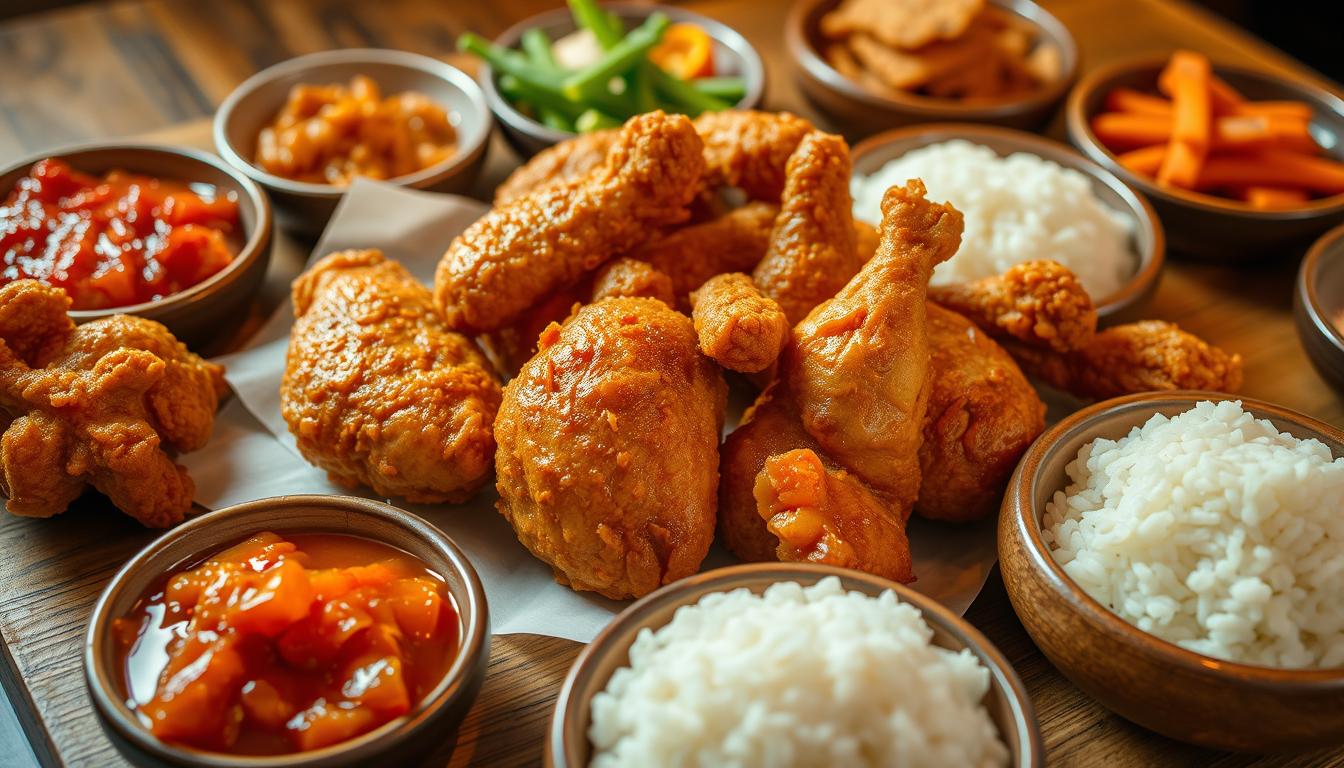
You’ve probably fallen in love with delicious Korean food. Especially the irresistible Korean Fried Chicken found in places like Union Chicken.
This dish is loved for its crispy fried chicken and true Korean tastes. If you’re craving it, you’re not alone. Many have found joy in making best Korean Fried Chicken at home.
Now, you can make this favorite dish in your kitchen. With a few simple ingredients and some tips, you’ll create mouth-watering Korean Fried Chicken. It will impress your family and friends.
Key Takeaways
- Discover the secret to making the best Korean Fried Chicken at home.
- Learn about the key ingredients that give Korean Fried Chicken its unique flavor.
- Explore simple tips for achieving crispy fried chicken.
- Find out how to pair your Korean Fried Chicken with delicious sides.
- Get inspiration for variations on the classic Korean Fried Chicken recipe.
The Crispy Phenomenon: What Makes Korean Fried Chicken Special
Korean Fried Chicken is loved for its crispy outside and juicy inside. It has become famous worldwide for its unique taste. This sets it apart from other fried chicken dishes.
Double-Frying Technique
The double-frying technique is key to Korean Fried Chicken‘s crispiness. It fries the chicken twice, with a break in between. This makes it incredibly crunchy, as experts say.
Signature Thin Crust
The signature thin crust is another highlight. It’s made with a special batter and frying method. This creates a delicate, crunchy outside that pairs well with the juicy chicken inside.
Flavor Profiles That Stand Out
Korean Fried Chicken is known for its bold flavor profiles. It offers spicy Gochujang sauce and savory soy garlic flavors. The mix of seasonings and sauces gives it a unique and delicious taste.
In summary, Korean Fried Chicken’s double-frying, thin crust, and bold flavors make it special. It has won the hearts of food lovers everywhere.
A Brief History of Korean Fried Chicken
Korean Fried Chicken has become a hit worldwide. But its roots are deep in South Korean cuisine. Exploring its history shows how it has changed over time.
Origins in South Korea
In the 1970s and 1980s, South Korea’s economy was booming. This was when the first Korean Fried Chicken restaurants opened. They offered a new take on fried chicken with double-frying and special seasonings.
Rise to Global Popularity
Korean Fried Chicken‘s popularity grew thanks to Korean diaspora communities and K-pop. As K-pop and Korean dramas won fans worldwide, so did Korean Fried Chicken. It became a favorite dish globally.
Korean Fried Chicken in American Culture
In the U.S., Korean Fried Chicken is a key part of Korean-American cuisine. Many restaurants offer their own versions. It has won over food lovers and inspired new dishes.
The history of Korean Fried Chicken shows its impact goes beyond South Korea. Now, you can find popular Korean dishes like Korean Fried Chicken near you. This is thanks to local restaurants and food delivery services.
Essential Ingredients for Authentic Korean Fried Chicken
To make authentic Korean Fried Chicken at home, you need to know the key ingredients. The quality of these ingredients greatly affects the taste and texture of the dish. Union Chicken’s menu shows how important it is to use the right ingredients and cooking methods.
Chicken Selection and Preparation
The chicken is the base of great Korean Fried Chicken. Choose fresh, high-quality chicken pieces. Many recipes use legs, thighs, wings, and breasts.
It’s important to choose the right cut and clean the chicken well before cooking. Marinating the chicken in a mix of authentic Korean flavors like garlic, ginger, and soy sauce can make it taste better.
Coating Components
The coating makes Korean Fried Chicken crunchy. A common mix includes flour, cornstarch, and spices. The type of flour, like potato starch or rice flour, affects the coating’s texture.
Adding gochugaru (Korean chili flakes) gives the chicken spicy Korean flavors. Trying different coatings can help you get the perfect crispiness.
Oil Considerations
Choosing the right oil for frying is key. You need an oil with a high smoke point to fry at high temperatures without burning. Peanut or canola oil works well.
The quality of the oil affects the taste and texture of your Korean Fried Chicken. It’s worth using a good oil. Keeping the oil at the right temperature is crucial for crispiness.
Kitchen Equipment You’ll Need
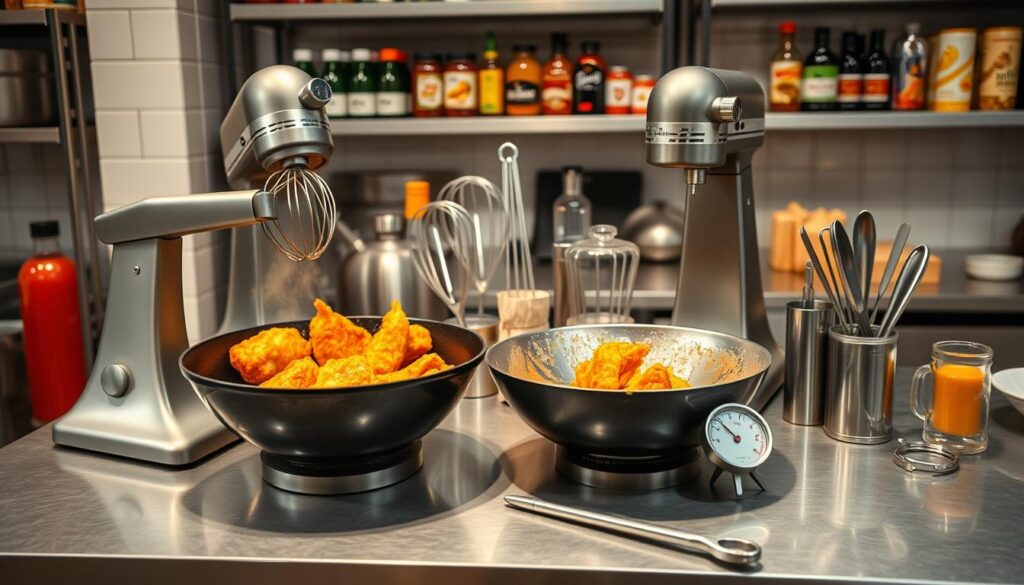
To get the perfect crispy fried chicken, you need the right tools. Korean Fried Chicken requires several steps. The right equipment can greatly improve the result.
Frying Setups
You’ll need a deep fryer or a large pot for frying chicken. The pot should be at least 3-4 inches deep. This size ensures the chicken cooks evenly without crowding.
Temperature Control Tools
Controlling the temperature is key for Korean Fried Chicken’s double-frying method. A thermometer is vital for keeping an eye on the oil’s temperature. A digital thermometer offers precise control.
Safety Equipment
When working with hot oil, safety comes first. Use tongs or a slotted spoon to handle the chicken. Keep a lid or splatter guard ready to catch oil splatters. Also, have a heat-resistant surface for cooling the fried chicken.
| Equipment | Purpose |
|---|---|
| Deep Fryer or Large Pot | Frying Chicken |
| Thermometer | Temperature Control |
| Tongs or Slotted Spoon | Handling Chicken |
| Lid or Splatter Guard | Preventing Oil Splatters |
Preparing Your Korean Fried Chicken Base
The key to great Korean Fried Chicken is in the chicken base preparation. To get authentic Korean flavors, focus on the details in this phase.
Chicken Cutting and Trimming
Begin by cutting your chicken into the right pieces. For Korean Fried Chicken, use legs, thighs, wings, and breasts. Trimming excess fat helps with even cooking and avoids greasiness. Uniform pieces ensure consistent frying.
Marination Methods
Marinating your chicken is vital for adding delicious Korean food flavors. A good marinade includes garlic, ginger, soy sauce, and sometimes Korean chili flakes (gochugaru). Let it marinate for at least a couple of hours or overnight for the best taste.
Dredging Techniques
After marinating, dredge the chicken in a coating mixture for that crunchy texture. The dredge is made of flour, cornstarch, and spices. Gently coat the chicken in the dredge, shaking off any extra. This step is key for a authentic Korean cuisine taste at home.
By following these steps, you’ll make mouth-watering Korean Fried Chicken. It’s perfect for both seasoned cooks and beginners. These techniques will help you create a dish that will surely impress.
Mastering the Double-Frying Method
To get the perfect crispy Korean Fried Chicken, you need to master the double-frying method. This technique makes Korean Fried Chicken stand out. It involves two frying sessions with a break in between for the ultimate crispiness.
First Fry: Setting the Foundation
The first fry is key. It cooks the chicken partially, keeping it juicy inside. Heat your oil to the right temperature, around 350°F (175°C). Fry the chicken pieces in batches until they are pale and slightly cooked. This step is not about crispiness but about cooking the chicken through.
Resting Period: Why It Matters
After the first fry, let the chicken rest. This step is important for a better texture in the second fry. The resting period is crucial for moisture redistribution, keeping the chicken juicy.
Second Fry: Achieving Perfect Crispiness
The second fry is where you get that perfect crispiness. Raise the oil temperature to around 375°F (190°C). Fry the chicken again in batches until it’s golden brown. This step is all about achieving that signature crunch. Be careful not to overcrowd the pot to keep the oil temperature right.
Temperature Management Throughout
Temperature control is key throughout the double-frying process. Maintaining the right oil temperature ensures the chicken is cooked right and crispy. Use a thermometer to monitor the temperature and adjust the heat as needed.
By mastering the double-frying method and focusing on temperature management, you can make Korean Fried Chicken that’s both juicy and crispy. This technique, popularized by brands like Union Chicken, will take your fried chicken to the next level.
Classic Korean Fried Chicken Sauce Varieties
To elevate your Korean Fried Chicken, try different sauces. Sauces are key, adding flavors that make the dish outstanding.
Soy Garlic (Ganjang)
The Soy Garlic sauce, or Ganjang, is a mix of soy sauce and garlic. It’s savory and aromatic, perfect for Korean Fried Chicken.
Sweet and Spicy (Yangnyeom)
For those who like spice, Sweet and Spicy sauce, or Yangnyeom, is great. It’s a mix of sugar and chili peppers, adding excitement to your chicken.
Honey Butter
Honey Butter sauce is rich and sweet, made with honey and butter. It’s perfect for those who prefer milder flavors but still want a lot of taste.
Creating Your Own Signature Sauce
Don’t just stick to classic sauces. Try making your own. Mix gochujang, soy sauce, garlic, and ginger for a unique taste.
| Sauce Type | Main Ingredients | Flavor Profile |
|---|---|---|
| Soy Garlic (Ganjang) | Soy sauce, garlic | Savory, aromatic |
| Sweet and Spicy (Yangnyeom) | Sugar, chili peppers | Sweet, spicy |
| Honey Butter | Honey, butter | Rich, sweet, creamy |
By trying these classic sauces and making your own, you’ll enjoy a more authentic Korean Fried Chicken experience.
Step-by-Step Guide to Making Korean Fried Chicken at Home
Making Korean Fried Chicken at home is easier than you think. This guide will help you enjoy crispy, flavorful chicken quickly. The process includes several key steps, from preparation to the final coating, ensuring perfect results.
Preparation Phase
Start by cutting your chicken into bite-sized pieces and patting them dry. This step is crucial for achieving that perfect crispiness. Next, prepare your marinade by mixing spices, herbs, and sometimes yogurt or buttermilk. The marinade adds flavor and tenderizes the chicken.
For the coating, mix flour, cornstarch, and spices. The flour to cornstarch ratio affects crispiness. Some recipes add garlic powder or paprika for extra flavor.
First Frying Stage
The first fry cooks the chicken through without burning the exterior. Heat your oil to 350°F and add marinated chicken pieces in batches. Fry until the chicken is cooked but not yet crispy.

Sauce Preparation
While your chicken rests, prepare the sauce. Korean Fried Chicken sauces can be sweet and spicy or soy garlic and honey butter. Choose your favorite or try different combinations. Most sauces mix soy sauce, garlic, ginger, sugar, and chili flakes, simmered until thick.
Second Frying and Coating
Increase the oil temperature for the second fry. Fry the chicken pieces in batches until golden brown and crispy. Immediately toss the chicken in your prepared sauce to coat evenly. This step ensures the sauce sticks well to the crispy exterior.
Serve your delicious Korean food hot, garnished with sesame seeds and chopped green onions. Enjoy the fruits of your labor and the satisfaction of making best Korean Fried Chicken at home.
Regional Korean Fried Chicken Variations
As you explore Korean Fried Chicken, you’ll find different styles in each region. This shows how versatile and creative Korean cuisine is.
Seoul-Style Chicken
Seoul’s version of Korean Fried Chicken is known for its crispy outside and juicy inside. It often comes with a variety of sauces. You might taste spicy gochujang or sweet honey butter.
Busan Coastal Influences
Busan, a coastal city, adds fresh seafood to its Korean Fried Chicken. You might see dishes with seafood seasoning or spicy seafood sauce. This reflects Busan’s rich sea culture.
American-Korean Fusion Styles
In the U.S., Korean Fried Chicken meets American flavors. You’ll find dishes like spicy Korean BBQ chicken wings or kimchi coleslaw. These mix traditional Korean methods with American ingredients.
| Region | Characteristics | Popular Variations |
|---|---|---|
| Seoul | Balanced crispiness and juiciness | Gochujang, Honey Butter |
| Busan | Seafood influences | Seafood seasoning, Spicy seafood sauce |
| American-Korean Fusion | Blend of Korean and American flavors | Spicy Korean BBQ wings, Kimchi coleslaw |
Trying these regional variations can deepen your love for Korean Fried Chicken. It also encourages you to experiment with new flavors at home.
Troubleshooting Your Korean Fried Chicken
Korean Fried Chicken can sometimes be tricky. But knowing how to fix common problems can make a big difference. Whether you’re new to cooking or have lots of experience, learning to troubleshoot is key.
Soggy Coating Issues
A soggy coating is a bummer. To prevent it, make sure your chicken is dry before you coat it. Also, don’t put too much chicken in the fryer at once. Using oils like peanut or avocado helps keep it crispy.
Undercooked or Overcooked Chicken
To cook the chicken just right, keep an eye on your oil temperature. Use a thermometer to keep it at the perfect level. And don’t skip the resting time between frying steps. It helps the chicken cook evenly.
Sauce Consistency Problems
If your sauce is too thick, add a little water or vinegar. If it’s too thin, simmer it to thicken it up. The secret to a great sauce is finding the right balance of taste and texture.
Reheating Without Losing Crispiness
To reheat Korean Fried Chicken without losing its crunch, use an oven or air fryer. Heat it to 375°F (190°C) and reheat for 10-15 minutes. This way, you keep the outside crispy and the inside hot.
By tackling these common problems, you’ll be on your way to making crispy fried chicken that’s full of authentic Korean flavors. Enjoy your cooking journey!
Conclusion: Enjoying Your Homemade Korean Fried Chicken Experience
You’ve made delicious Korean Fried Chicken at home. Now, it’s time to enjoy what you’ve created. Restaurants like Union Chicken are known for their Korean Fried Chicken. But, with this guide, you can make it at home too.
Sharing your homemade Korean Fried Chicken with family and friends is fun. The crispy outside and juicy inside, with flavorful sauces, make it a great treat. It’s perfect for a snack or as part of a meal.
So, gather your loved ones and enjoy your homemade Korean Fried Chicken. With every bite, you’ll feel proud of your hard work.
FAQ
What is Korean Fried Chicken?
Korean Fried Chicken is a tasty Korean dish. It has a crispy outside and juicy inside. Chicken pieces are double-fried and often covered in different sauces.
What makes Korean Fried Chicken different from regular fried chicken?
Korean Fried Chicken stands out because of its double-frying method. It also has a thin crust and unique flavors. These features make it a special culinary experience.
Where did Korean Fried Chicken originate?
Korean Fried Chicken started in South Korea. It’s now a favorite in Korean cuisine and loved worldwide.
What type of chicken is best for Korean Fried Chicken?
For the best Korean Fried Chicken, use high-quality chicken. Legs, thighs, wings, and breasts work well. Make sure the chicken is fresh and not frozen before.
What are some common sauces used for Korean Fried Chicken?
Popular sauces include soy garlic, sweet and spicy, and honey butter. Each sauce adds a special flavor to the crispy chicken.
Can I make Korean Fried Chicken at home?
Yes, you can make delicious Korean Fried Chicken at home. It’s a fun way to share this tasty dish with loved ones.
How do I achieve the perfect crispiness for Korean Fried Chicken?
To get the perfect crispiness, master the double-frying method. Keep the oil at the right temperature. Also, don’t overcrowd the frying basket.
What are some common issues when making Korean Fried Chicken, and how can I troubleshoot them?
Issues like soggy coating and uneven cooking are common. To fix these, adjust your frying technique and cooking times. Also, tweak your sauce recipe.
Are there regional variations of Korean Fried Chicken?
Yes, there are many regional styles. Seoul-style, Busan coastal, and American-Korean fusion are just a few. Each offers a unique take on the dish.
How do I reheat Korean Fried Chicken without losing crispiness?
To reheat without losing crispiness, use an oven or air fryer. These methods keep the outside crunchy while warming the chicken inside.