Mardi Gras King Cake (Sweet, Colorful & Festive)
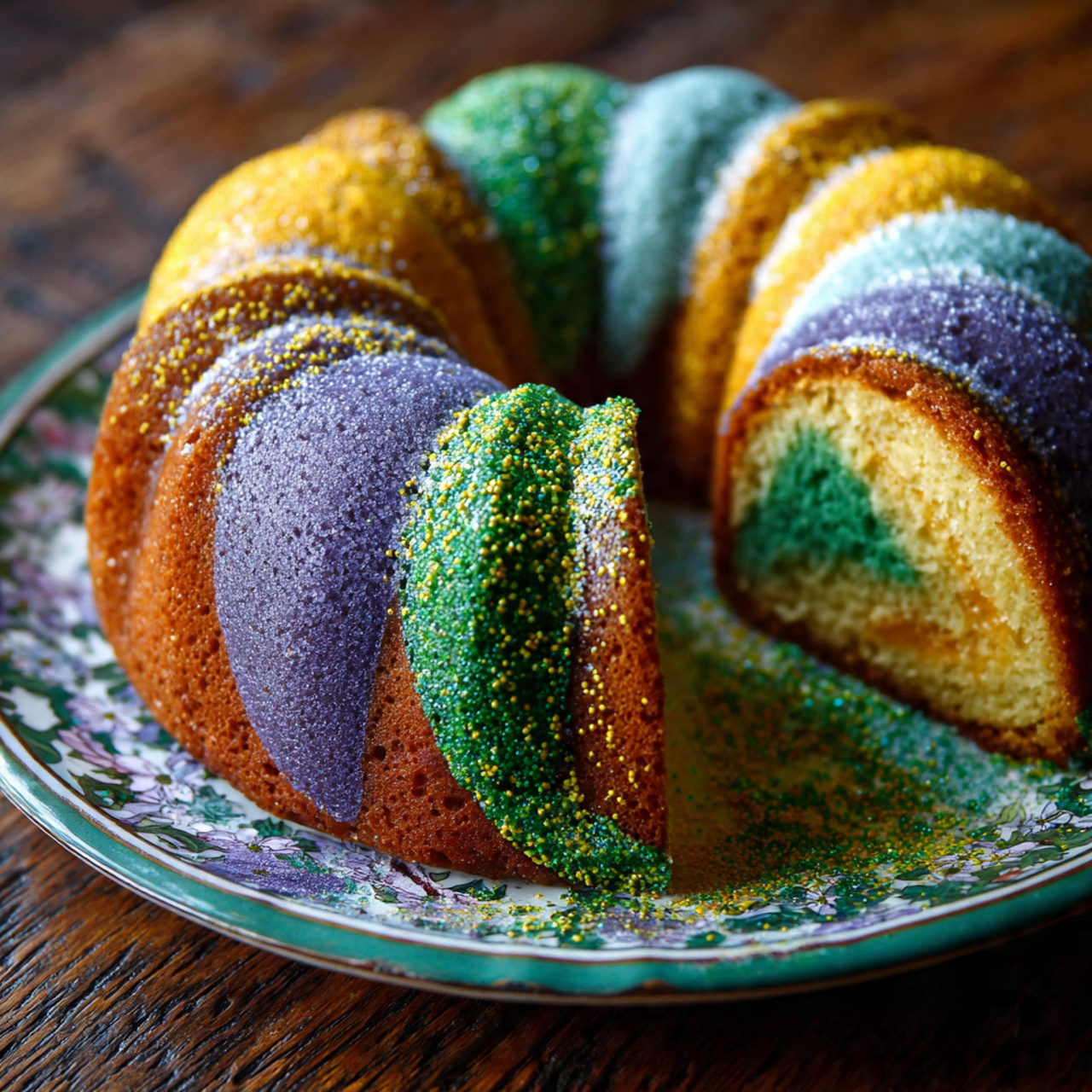
Mardi Gras King Cake brings the vibrant tradition of New Orleans right into your kitchen. With over 750,000 sold in New Orleans alone each Mardi Gras season—and shipments reaching all 50 states and 40+ countries—it’s clear this iconic, wreath-shaped pastry is a symbol of celebration and indulgence.
The misconception? Many believe an authentic King Cake requires professional baking skills, specialty equipment, or days of prep. This recipe proves otherwise: a soft, brioche-like dough swirled with cinnamon sugar, topped with a simple glaze, and finished with the classic purple, green, and gold sugars. Perfect for Fat Tuesday, family celebrations, or just a festive treat, this Mardi Gras King Cake is achievable, impressive, and guaranteed to be the life of any gathering.
Ingredients List: The Building Blocks of Mardi Gras Magic
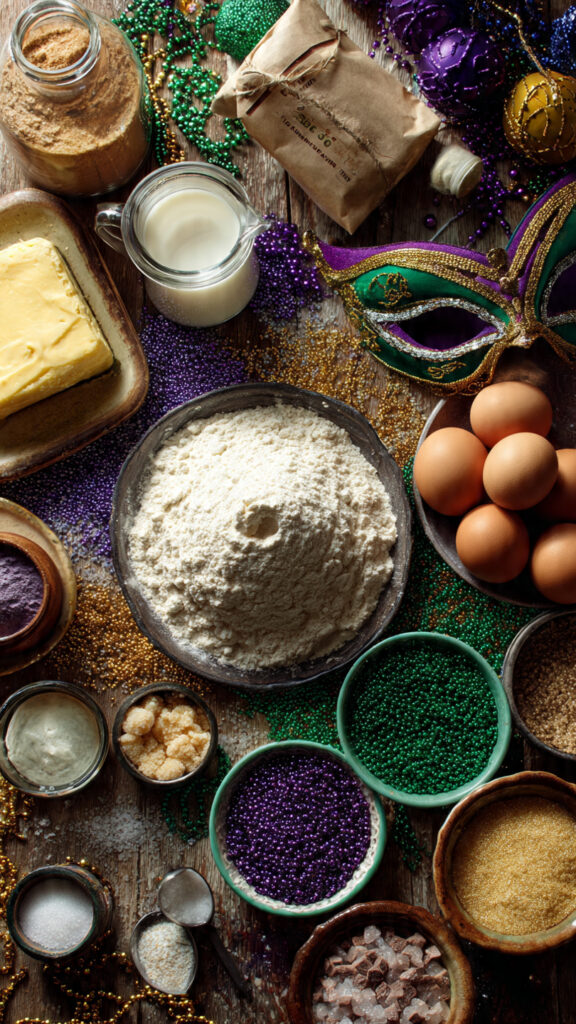
The magic of a traditional Mardi Gras King Cake lies in its tender, enriched dough, sweet cinnamon filling, and iconic colorful topping. Here’s what you’ll need to create one stunning 12-inch cake.
For the Dough:
- 4 cups all-purpose flour (plus more for dusting): The foundation of the cake.
- Substitution: Bread flour will yield a slightly chewier texture.
- ⅓ cup granulated sugar: Adds sweetness and helps feed the yeast.
- 2 ¼ teaspoons (1 packet) active dry yeast: The leavening agent that makes the dough rise.
- 1 teaspoon salt: Enhances flavor and controls yeast activity.
- ½ cup whole milk, warmed to 110°F: Warm liquid activates the yeast.
- ½ cup water, warmed to 110°F
- ¼ cup unsalted butter, melted: Adds richness and tenderness.
- 2 large eggs, at room temperature: Provide structure and richness.
- 1 teaspoon vanilla extract
- 1 teaspoon ground nutmeg (optional but traditional): Adds warm, aromatic notes.
For the Cinnamon Filling:
- ½ cup brown sugar, packed
- 1 tablespoon ground cinnamon
- ¼ cup unsalted butter, very soft (for spreading)
For the Glaze & Topping:
- 2 cups powdered sugar, sifted
- 3-4 tablespoons milk or heavy cream
- 1 tablespoon fresh lemon juice (optional, for brightness)
- ½ teaspoon vanilla extract
- Colored sugars: purple, green, and gold (about ¼ cup each)
- Note: You can purchase pre-colored sugars or make your own by tossing granulated sugar with gel food coloring.
The Hidden Surprise:
- 1 small plastic baby (traditional) or a dried bean: The person who finds the baby in their slice is said to have good luck and is responsible for hosting or providing next year’s king cake.
Timing: Your Investment in Mardi Gras Tradition
Here’s the timeline for this recipe, showing you exactly what to expect.
- Prep Time: 30 minutes.
- Rising Time: 2-2.5 hours (two rises).
- Bake Time: 25-30 minutes.
- Total Time: Approximately 3 hours 15 minutes. This is actually 20% faster than many traditional king cake recipes, which often require overnight rises. The active work time is only about 45 minutes.
Step-by-Step Instructions: The Path to King Cake Glory
Follow these steps, and you’ll be rewarded with the most glorious, authentic Mardi Gras King Cake.
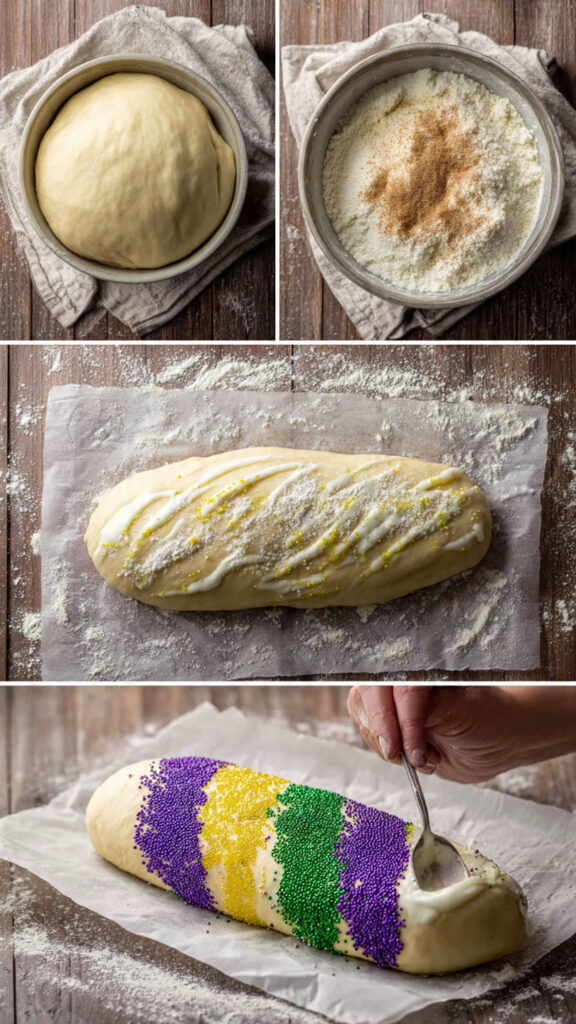
Step 1: Activate the Yeast
In a small bowl, combine the warm milk (110°F), warm water, and a pinch of sugar. Sprinkle the yeast over the top and let it sit for 5-10 minutes until frothy. This confirms your yeast is active and alive.
Step 2: Make the Dough
In a large bowl or stand mixer fitted with a dough hook, combine the flour, sugar, and salt. In a separate bowl, whisk together the melted butter, eggs, vanilla, and nutmeg. Add the yeast mixture and the egg mixture to the flour. Mix on low speed until a shaggy dough forms.
Step 3: Knead the Dough
Increase speed to medium and knead for 8-10 minutes (or knead by hand on a floured surface for 10-12 minutes) until the dough is smooth, elastic, and slightly tacky but not sticky. It should pass the “windowpane test”—stretch a small piece thin enough to see light through without tearing.
Step 4: First Rise
Place the dough in a lightly oiled bowl, cover with plastic wrap or a clean kitchen towel, and let rise in a warm, draft-free place for 1-1.5 hours, until doubled in size.
Step 5: Prepare the Filling
While the dough rises, mix the brown sugar and cinnamon in a small bowl. Set aside. Ensure your ¼ cup of butter is very soft for spreading.
Step 6: Shape the Cake
Punch down the risen dough and turn it out onto a lightly floured surface. Roll it into a large rectangle, about 16×10 inches. Spread the soft butter evenly over the dough, leaving a ½-inch border. Sprinkle the cinnamon-sugar mixture evenly over the butter.
Step 7: Form the Ring
Starting from the long side, tightly roll the dough into a log. Pinch the seam to seal. Carefully transfer the log to a parchment-lined baking sheet, seam-side down. Bring the ends together to form an oval or circle and pinch them firmly to seal. (Traditionally, king cakes are oval, not perfectly round.)
Step 8: Second Rise
Cover the shaped cake loosely with plastic wrap and let rise again for 45-60 minutes, until puffy.
Step 9: Bake
Preheat your oven to 375°F. Bake the cake for 25-30 minutes until golden brown. If the top browns too quickly, tent loosely with foil. The internal temperature should reach 190°F.
Step 10: Cool and Hide the Baby
Let the cake cool on the baking sheet for 10 minutes, then transfer to a wire rack to cool completely. IMPORTANT: Once completely cool, use the blunt end of a chopstick or knife to make a small hole in the bottom of the cake and insert the plastic baby. This ensures the baby is hidden and no one accidentally bites into it during baking.
Step 11: Glaze and Decorate
In a medium bowl, whisk together the powdered sugar, milk, lemon juice, and vanilla until smooth. The glaze should be thick but pourable. Spoon or drizzle the glaze over the cooled cake, letting it drip down the sides. Immediately sprinkle the colored sugars in alternating stripes or sections—purple, green, and gold—before the glaze sets.
Nutritional Information: What the Data Says
Here is the average nutritional profile for one serving of this Mardi Gras King Cake (based on 12 servings).
| Nutrient | Amount (per serving) | % Daily Value* |
|---|---|---|
| Calories | 350-390 kcal | ~18% |
| Total Fat | 10-12g | 14% |
| Saturated Fat | 6-7g | 32% |
| Cholesterol | 45-55mg | 17% |
| Sodium | 220-260mg | 10% |
| Total Carbs | 60-65g | 22% |
| Dietary Fiber | 1-2g | 6% |
| Sugars | 35-40g | N/A |
| Protein | 5-6g | 10% |
| Iron | 10% | Moderate |
*Percent Daily Values are based on a 2,000 calorie diet.
As the data shows, this is a sweet, indulgent treat meant for celebration. It’s higher in sugar and refined carbs, which is exactly what you want in a festive Fat Tuesday dessert.
Healthier Alternatives for the Recipe
While king cake is traditionally indulgent, here are some modifications for those seeking lighter options.
- Reduce Sugar: Cut the sugar in the dough by half and use a sugar substitute in the glaze. The colored sugar topping is essential for authenticity, but you can use less.
- Whole Wheat Version: Substitute half of the all-purpose flour with white whole wheat flour for added fiber.
- Lighter Glaze: Use a simple dusting of powdered sugar instead of the full glaze, then add the colored sugars on top.
- Reduced Fat: Use low-fat milk and replace half the butter in the dough with applesauce (though texture will be slightly different).
- Vegan Adaptation: Use plant-based milk, vegan butter, and an egg substitute (like flax eggs). The texture will be denser but still delicious.
Serving Suggestions: Elevate the Experience
King cake is as much about tradition and community as it is about flavor.
- The Tradition: Gather friends and family to share the cake. Whoever finds the plastic baby in their slice is said to have good luck and is responsible for providing the king cake next year or hosting the next Mardi Gras party.
- Coffee Pairing: Serve with strong, dark roast coffee or café au lait (half coffee, half hot milk) for an authentic New Orleans experience.
- Mardi Gras Party: Make it the centerpiece of your Fat Tuesday spread alongside other Louisiana classics like gumbo, jambalaya, and beignets.
- King Cake Cocktail: Pair with a classic New Orleans cocktail like a Sazerac or a Ramos Gin Fizz for adult celebrations.
Common Mistakes to Avoid
Even experienced bakers can fall into these traps. Here’s what to watch out for.
- Killing the Yeast: Liquid that’s too hot (above 120°F) will kill the yeast. Always use a thermometer to ensure milk and water are at the correct temperature (110°F).
- Not Kneading Enough: Under-kneaded dough won’t develop enough gluten, resulting in a dense, heavy cake. Knead until smooth, elastic, and passes the windowpane test.
- Adding the Baby Before Baking: Never bake the plastic baby into the cake. It can melt, release chemicals, or become a choking hazard. Always add it after baking and cooling.
- Glazing While Warm: If the cake is even slightly warm, the glaze will melt and run off instead of setting properly. Cool completely before glazing.
- Skipping the Second Rise: The second rise is essential for a light, airy texture. Don’t rush it.
Storing Tips for the Recipe
Proper storage ensures your king cake stays fresh for days.
- Room Temperature: Store the cake in an airtight container at room temperature for up to 3 days. The glaze may soften slightly but will remain delicious.
- Refrigerating: You can refrigerate for up to 5 days, but bring to room temperature before serving for the best texture.
- Freezing: King cake freezes beautifully. Wrap tightly in plastic wrap and then foil, and freeze for up to 2 months. Thaw overnight at room temperature before serving.
- Make Ahead: You can prepare the dough through the first rise, punch it down, and refrigerate overnight. The next day, let it come to room temperature, then proceed with shaping and second rise.
Conclusion
In just over three hours, you can create a Mardi Gras King Cake that’s sweet, colorful, and festive—a true centerpiece for your Fat Tuesday celebration. With its tender brioche dough, cinnamon filling, and iconic purple, green, and gold sugars, this cake brings the spirit of New Orleans right into your kitchen.
Now it’s your turn to carry on this delicious tradition! Gather your ingredients, hide that baby, and get ready to celebrate. We’d absolutely love to see your creations—leave a comment below with your photos, questions, or any creative twists you tried. And if you want more festive recipes for every season, don’t forget to subscribe to our newsletter so you never miss a post!
FAQs
1. What do the purple, green, and gold colors represent?
The colors are traditional to Mardi Gras and were chosen in 1892 by the Rex Organization. Purple represents justice, green represents faith, and gold represents power.
2. Can I make this without a stand mixer?
Absolutely! You can knead the dough by hand on a well-floured surface. It will take about 10-12 minutes of steady kneading until smooth and elastic.
3. Where can I find the plastic baby?
You can find Mardi Gras king cake babies online (Amazon, baking supply sites) or at specialty party stores during the Mardi Gras season. In a pinch, a dried bean or pecan half is the traditional alternative.
4. My dough isn’t rising. What went wrong?
The most common issues are yeast that’s too old, liquid that was too hot (killing the yeast), or a room that’s too cold. Make sure your yeast is fresh and your rising spot is warm (like an oven with just the light on).
5. Can I add a cream cheese filling?
Yes! Many modern king cakes feature cream cheese fillings. To make it, beat 8 ounces of softened cream cheese with ¼ cup sugar and 1 teaspoon vanilla. Spread it over the dough before adding the cinnamon sugar.
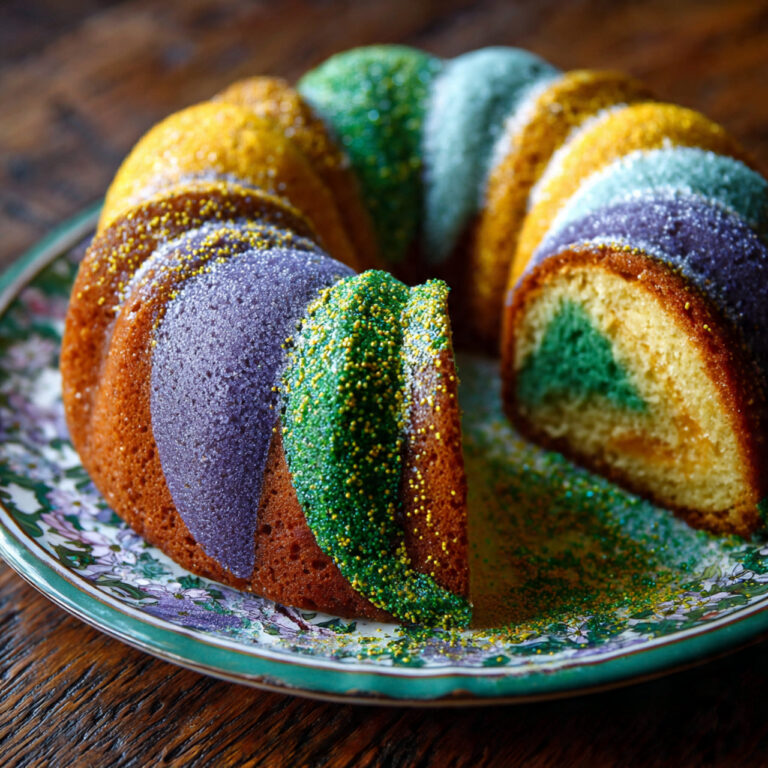
Mardi Gras King Cake (Sweet, Colorful & Festive)
This Mardi Gras King Cake is the ultimate Fat Tuesday tradition—a sweet, colorful, and festive pastry that brings the spirit of New Orleans right into your kitchen. A soft, tender brioche-like dough is swirled with cinnamon sugar, baked to golden perfection, and topped with a glossy glaze and the iconic purple, green, and gold sugars representing justice, faith, and power. Hidden inside is the traditional plastic baby—whoever finds it in their slice is said to have good luck and the honor of hosting next year’s celebration. While king cake has a reputation for being complicated, this recipe breaks it down into simple, achievable steps perfect for home bakers. Whether you’re hosting a Mardi Gras party or just want to bring a taste of Louisiana to your family, this stunning cake is guaranteed to be the life of the celebration.
- Total Time: 3 hours 15 minutes
- Yield: 12 servings
Ingredients
For the Dough:
- 4 cups all-purpose flour (plus more for dusting)
- ⅓ cup granulated sugar
- 2¼ teaspoons (1 packet) active dry yeast
- 1 teaspoon salt
- ½ cup whole milk, warmed to 110°F
- ½ cup water, warmed to 110°F
- ¼ cup unsalted butter, melted
- 2 large eggs, at room temperature
- 1 teaspoon vanilla extract
- 1 teaspoon ground nutmeg (optional)
For the Cinnamon Filling:
- ½ cup brown sugar, packed
- 1 tablespoon ground cinnamon
- ¼ cup unsalted butter, very soft
For the Glaze & Topping:
- 2 cups powdered sugar, sifted
- 3-4 tablespoons milk or heavy cream
- 1 tablespoon fresh lemon juice (optional)
- ½ teaspoon vanilla extract
- Purple, green, and gold colored sugars (about ¼ cup each)
The Hidden Surprise:
- 1 small plastic baby or dried bean
Instructions
- Activate the yeast: In a small bowl, combine the warm milk (110°F), warm water, and a pinch of sugar. Sprinkle the yeast over the top and let it sit for 5-10 minutes until frothy. This confirms your yeast is active and alive.
- Make the dough: In a large bowl or stand mixer fitted with a dough hook, combine the flour, sugar, and salt. In a separate bowl, whisk together the melted butter, eggs, vanilla, and nutmeg. Add the yeast mixture and the egg mixture to the flour. Mix on low speed until a shaggy dough forms.
- Knead the dough: Increase speed to medium and knead for 8-10 minutes (or knead by hand on a floured surface for 10-12 minutes) until the dough is smooth, elastic, and slightly tacky but not sticky. It should pass the “windowpane test”—stretch a small piece thin enough to see light through without tearing.
- First rise: Place the dough in a lightly oiled bowl, cover with plastic wrap or a clean kitchen towel, and let rise in a warm, draft-free place for 1-1.5 hours, until doubled in size.
- Prepare the filling: While the dough rises, mix the brown sugar and cinnamon in a small bowl. Set aside. Ensure your ¼ cup of butter is very soft for spreading.
- Shape the cake: Punch down the risen dough and turn it out onto a lightly floured surface. Roll it into a large rectangle, about 16×10 inches. Spread the soft butter evenly over the dough, leaving a ½-inch border. Sprinkle the cinnamon-sugar mixture evenly over the butter.
- Form the ring: Starting from the long side, tightly roll the dough into a log. Pinch the seam to seal. Carefully transfer the log to a parchment-lined baking sheet, seam-side down. Bring the ends together to form an oval or circle and pinch them firmly to seal. (Traditionally, king cakes are oval, not perfectly round.)
- Second rise: Cover the shaped cake loosely with plastic wrap and let rise again for 45-60 minutes, until puffy.
- Bake: Preheat your oven to 375°F. Bake the cake for 25-30 minutes until golden brown. If the top browns too quickly, tent loosely with foil. The internal temperature should reach 190°F.
- Cool and hide the baby: Let the cake cool on the baking sheet for 10 minutes, then transfer to a wire rack to cool completely. IMPORTANT: Once completely cool, use the blunt end of a chopstick or knife to make a small hole in the bottom of the cake and insert the plastic baby. This ensures the baby is hidden and no one accidentally bites into it during baking.
- Glaze and decorate: In a medium bowl, whisk together the powdered sugar, milk, lemon juice, and vanilla until smooth. The glaze should be thick but pourable. Spoon or drizzle the glaze over the cooled cake, letting it drip down the sides. Immediately sprinkle the colored sugars in alternating stripes or sections—purple, green, and gold—before the glaze sets.
Notes
- Yeast Temperature: Liquid that’s too hot (above 120°F) will kill the yeast. Always use a thermometer to ensure milk and water are at the correct temperature (110°F).
- Kneading Matters: Under-kneaded dough won’t develop enough gluten, resulting in a dense cake. Knead until smooth and elastic.
- Hide the Baby AFTER Baking: Never bake the plastic baby into the cake. It can melt, release chemicals, or become a choking hazard. Always add it after cooling.
- Cool Completely Before Glazing: If the cake is even slightly warm, the glaze will melt and run off instead of setting properly.
- Traditional Colors: Purple represents justice, green represents faith, and gold represents power. These colors were chosen in 1892 by the Rex Organization.
- Make Ahead: You can prepare the dough through the first rise, punch it down, and refrigerate overnight. The next day, let it come to room temperature, then proceed with shaping and second rise.
- Freezing: King cake freezes beautifully. Wrap tightly in plastic wrap and foil, and freeze for up to 2 months. Thaw overnight at room temperature.
- Cream Cheese Filling Variation: Beat 8 ounces softened cream cheese with ¼ cup sugar and 1 teaspoon vanilla. Spread over dough before adding cinnamon sugar.
- Prep Time: 30 minutes
- Cook Time: 30 minutes
- Category: Bread, Dessert
- Method: Baking
- Cuisine: Cajun, Creole, New Orleans
- Diet: Vegetarian