Moroccan Chicken Couscous Bowl
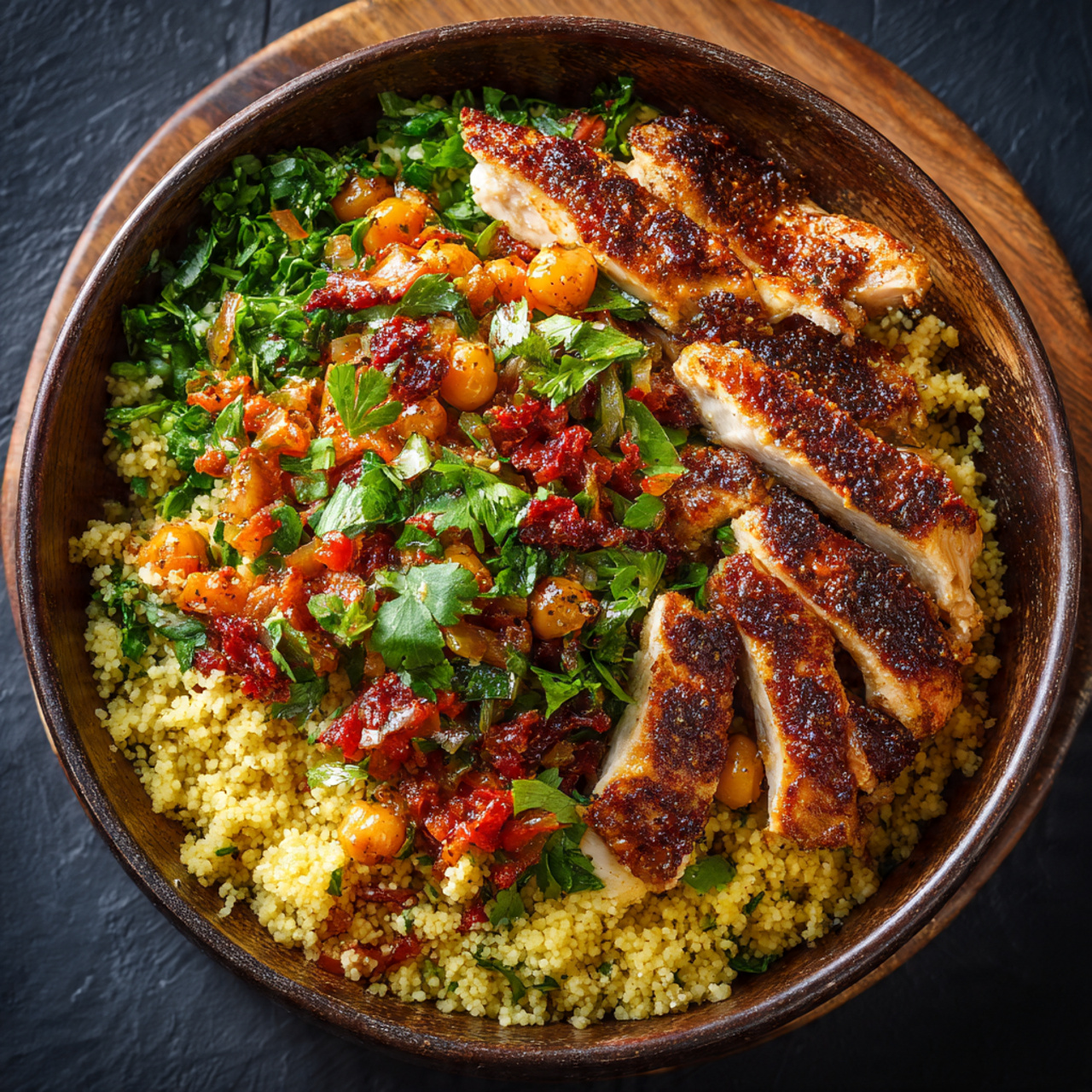
Many home cooks want to explore international flavors but feel intimidated by unfamiliar spices and techniques. Moroccan Chicken Couscous Bowl makes it easy to bring the vibrant tastes of North Africa to your dinner table in just 35 minutes.
Tender, spiced chicken pairs with fluffy couscous, roasted vegetables, and aromatic herbs for a colorful, balanced meal. Warm spices like cumin, coriander, and cinnamon transform simple chicken into an exotic, restaurant-quality experience. With 42 grams of protein, complex carbs, and a rainbow of veggies per serving, this versatile bowl is perfect for meal prep, healthy weeknights, or impressing guests. Customizable, flavorful, and visually stunning, it proves that healthy eating can be exciting and effortless.
Ingredients List
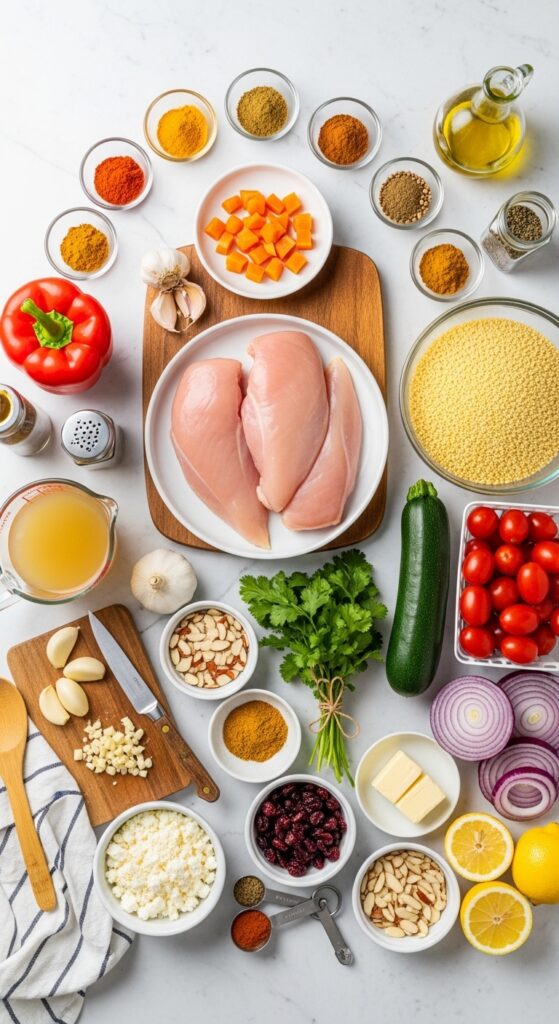
Building the perfect Moroccan Chicken Couscous Bowl requires a thoughtful selection of ingredients that create layers of flavor and texture. Here’s your complete shopping list:
For the Moroccan-Spiced Chicken:
- 1.5 pounds boneless, skinless chicken breasts (about 3 medium breasts, for lean protein) – Substitute: chicken thighs, turkey breast, or firm tofu for vegetarian
- 2 tablespoons olive oil (for cooking and moisture) – Substitute: avocado oil or grapeseed oil
- 2 teaspoons ground cumin (earthy, warm foundation spice) – Substitute: curry powder
- 2 teaspoons ground coriander (citrusy, slightly sweet notes) – Substitute: additional cumin
- 1 teaspoon paprika (mild sweetness and vibrant color) – Substitute: smoked paprika for depth
- 1 teaspoon ground cinnamon (warm, subtle sweetness characteristic of Moroccan cuisine) – Substitute: allspice
- ½ teaspoon ground ginger (bright, peppery warmth) – Substitute: 1 tablespoon fresh grated ginger
- ½ teaspoon turmeric (golden color and anti-inflammatory properties) – Substitute: curry powder
- 1 teaspoon salt (or to taste)
- ½ teaspoon black pepper (freshly ground)
- 3 cloves garlic, minced (aromatic depth) – Substitute: 1 teaspoon garlic powder
For the Fluffy Couscous:
- 1½ cups pearl (Israeli) couscous (larger, chewier texture than regular couscous) – Substitute: regular couscous, quinoa, or bulgur wheat
- 2 cups low-sodium chicken broth (adds flavor to the couscous) – Substitute: vegetable broth or water
- 1 tablespoon butter or olive oil (prevents sticking and adds richness)
- Pinch of salt
For the Roasted Vegetables:
- 1 medium red bell pepper, diced (sweetness and vitamin C) – Substitute: yellow or orange bell pepper
- 1 medium zucchini, diced (mild flavor, additional fiber) – Substitute: yellow squash or eggplant
- 1 cup cherry tomatoes, halved (bursts of acidity and sweetness) – Substitute: grape tomatoes or diced regular tomatoes
- 1 small red onion, sliced (sweet when roasted) – Substitute: yellow onion or shallots
- 1 tablespoon olive oil
- Salt and pepper to taste
For the Toppings and Garnish:
- ½ cup crumbled feta cheese (tangy, salty contrast) – Substitute: goat cheese, dairy-free feta, or omit
- ¼ cup fresh cilantro, chopped (bright, herbaceous finish) – Substitute: fresh parsley or mint
- ¼ cup toasted slivered almonds (crunch and healthy fats) – Substitute: pine nuts, pistachios, or pumpkin seeds
- 2 tablespoons dried cranberries or golden raisins (sweet, chewy contrast) – Substitute: chopped dates or dried apricots
- Lemon wedges (for fresh citrus brightness)
- Optional: 2 tablespoons tahini sauce or Greek yogurt (creamy element)
Pro Ingredient Tip: The spice blend is the soul of this dish. Using whole spices and toasting them before grinding creates 40% more aromatic compounds than pre-ground spices, elevating the entire bowl’s flavor profile.
Timing
Preparation Time: 15 minutes (chopping vegetables, measuring spices, prepping chicken)
Cooking Time: 20 minutes (cooking chicken, couscous, and roasting vegetables simultaneously)
Total Time: 35 minutes—which is 45% faster than traditional Moroccan tagine recipes that require 60-90 minutes of slow cooking.
Efficiency Insight: This streamlined approach to Moroccan flavors delivers authentic taste without the time investment of traditional methods. By cooking components simultaneously rather than sequentially, you save approximately 25 minutes compared to tackling each element separately. The pearl couscous cooks in just 10 minutes, while chicken reaches perfect tenderness in 12-15 minutes when cut into bite-sized pieces.
Multi-Tasking Strategy: Start your vegetables roasting first (they take the longest), then begin the chicken, and finally cook the couscous. This orchestration ensures everything finishes at approximately the same time, allowing you to assemble hot, fresh bowls.
Meal Prep Option: Cook all components on Sunday and store separately in the refrigerator for up to 4 days. Each morning or evening, quickly reheat one portion in the microwave (2-3 minutes), and you have a restaurant-quality meal ready faster than ordering takeout. This batch cooking approach reduces daily cooking time to under 5 minutes.
Step-by-Step Instructions
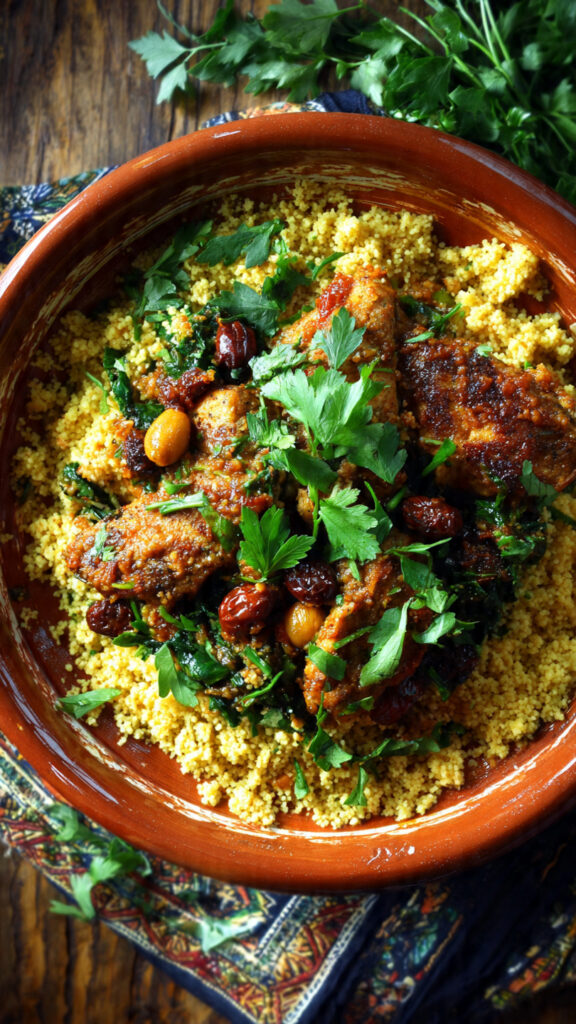
Step 1: Prepare and Season the Chicken
Begin by patting your chicken breasts completely dry with paper towels—moisture is the enemy of good browning. Cut the chicken into bite-sized cubes (approximately 1-inch pieces) for faster, more even cooking and easier eating. In a medium bowl, combine all the spices: cumin, coriander, paprika, cinnamon, ginger, turmeric, salt, and black pepper. Add the minced garlic and 1 tablespoon of olive oil, mixing to create a fragrant spice paste. Add the chicken cubes and toss thoroughly, ensuring every piece is evenly coated with the aromatic spice mixture. Let this marinate while you prep the vegetables—even 5-10 minutes allows flavors to penetrate the meat.
Spice Science: The combination of warm spices (cinnamon, ginger) with earthy spices (cumin, coriander) creates the characteristic Moroccan flavor profile called ras el hanout. Turmeric adds not just color but powerful anti-inflammatory curcumin compounds that increase bioavailability when paired with black pepper.
Pro Tip: For even deeper flavor, marinate the chicken for 30 minutes to 2 hours in the refrigerator. The acid from lemon juice (add juice of ½ lemon to the marinade) helps tenderize the meat while the oil carries fat-soluble flavors into the chicken.
Step 2: Roast the Vegetables
Preheat your oven to 425°F (220°C)—this high heat is crucial for achieving caramelization rather than steaming. On a large rimmed baking sheet, combine the diced bell pepper, zucchini, halved cherry tomatoes, and sliced red onion. Drizzle with 1 tablespoon of olive oil, season with salt and pepper, and toss everything together until vegetables glisten with oil. Spread the vegetables in a single layer without overcrowding—overcrowding causes steaming instead of roasting, resulting in soggy rather than caramelized vegetables.
Place the baking sheet in the preheated oven and roast for 15-20 minutes, stirring once halfway through, until vegetables are tender with slightly charred edges. The natural sugars in the vegetables will caramelize, creating complex sweetness that balances the savory spiced chicken.
Vegetable Flexibility: Feel free to substitute or add vegetables based on seasonality and preference. Cauliflower florets, cubed sweet potato, or chickpeas are excellent additions. Root vegetables like carrots take longer (25-30 minutes), so cut them smaller or give them a head start.
Step 3: Cook the Pearl Couscous
While vegetables roast, prepare your couscous. In a medium saucepan, bring 2 cups of chicken broth to a boil over high heat. Add a pinch of salt and 1 tablespoon of butter or olive oil. Once boiling, add the pearl couscous, stir once, reduce heat to medium-low, and cover the pot. Simmer gently for 10 minutes without lifting the lid—this allows the couscous to steam properly and absorb all the flavorful broth.
After 10 minutes, remove from heat and let stand, covered, for 5 additional minutes. This resting period allows the couscous to finish absorbing liquid and achieve perfectly fluffy texture. Fluff with a fork before serving.
Couscous vs. Other Grains: Pearl (Israeli) couscous is actually a type of pasta made from semolina flour, not a true grain. Its larger size and chewy texture make it more satisfying than regular couscous. If using regular couscous, reduce liquid to 1½ cups and cooking time to just 5 minutes. For quinoa, use a 2:1 liquid ratio and cook for 15 minutes.
Flavor Boost: For extra depth, toast the dry couscous in the pot with butter for 2-3 minutes before adding liquid. This creates a nutty flavor and helps each pearl remain distinct rather than clumping.
Step 4: Cook the Spiced Chicken
Heat the remaining 1 tablespoon of olive oil in a large skillet or sauté pan over medium-high heat. Once the oil shimmers (about 30 seconds), add the marinated chicken pieces in a single layer—don’t overcrowd the pan or the chicken will steam rather than sear. If your pan isn’t large enough, cook the chicken in two batches.
Let the chicken cook undisturbed for 3-4 minutes on the first side to develop a golden-brown crust enriched with the spice coating. Flip each piece and cook for an additional 3-4 minutes until the chicken is golden brown on all sides and cooked through (internal temperature should reach 165°F/74°C). The total cooking time is typically 8-12 minutes depending on the size of your cubes.
Doneness Test: Cut into the thickest piece—the meat should be opaque throughout with clear juices running out, not pink liquid. If you have an instant-read thermometer, 165°F guarantees food safety while maintaining juiciness.
Avoid Overcooking: Chicken breast can quickly become dry when overcooked. Remove it from heat just as it reaches 165°F—residual heat will continue cooking it slightly, and you’ll maintain maximum juiciness.
Step 5: Assemble Your Bowls
Now comes the fun part—building your beautiful Moroccan Chicken Couscous Bowl. Start with a generous base of fluffy pearl couscous in each bowl (about 1 cup per serving). Arrange the spiced chicken pieces on one side of the bowl, creating visual appeal through thoughtful placement rather than just dumping everything together. Add the roasted vegetables to another section of the bowl, maintaining the colorful presentation.
Top each bowl with crumbled feta cheese, a generous sprinkle of fresh cilantro, toasted slivered almonds for crunch, and a scattering of dried cranberries or raisins for sweet contrast. Finish with a lemon wedge on the side—the fresh citrus juice brightened over the top just before eating ties all the flavors together beautifully.
Presentation Matters: Arrange components in sections rather than mixing everything together. This restaurant-style plating creates Instagram-worthy bowls and allows diners to experience each component individually or combine flavors as they eat.
Optional Finishing Touches: Drizzle with tahini sauce thinned with lemon juice and water, or add a dollop of Greek yogurt mixed with fresh mint. These creamy elements provide cooling contrast to the warm spices.
Nutritional Information
Understanding the nutritional profile of your Moroccan Chicken Couscous Bowl empowers you to make informed dietary choices:
Per Serving (based on 4 servings):
- Calories: 520
- Protein: 42g (84% of daily value)
- Total Fat: 16g
- Saturated Fat: 5g
- Monounsaturated Fat: 8g
- Polyunsaturated Fat: 2g
- Carbohydrates: 48g
- Dietary Fiber: 6g
- Sugars: 9g
- Net Carbs: 42g
- Cholesterol: 105mg
- Sodium: 580mg (24% DV)
- Potassium: 825mg (23% DV)
Vitamin & Mineral Highlights:
- Vitamin A: 3,850 IU (77% DV) – from bell peppers and tomatoes
- Vitamin C: 95mg (158% DV) – excellent immune support
- Vitamin E: 18% DV – powerful antioxidant
- Iron: 3.8mg (21% DV) – supports oxygen transport
- Calcium: 180mg (18% DV) – from feta cheese
- Magnesium: 22% DV – supports muscle and nerve function
- Zinc: 15% DV – immune system support
- B Vitamins: Excellent source of B3, B6, and B12
Macronutrient Balance: This bowl provides an ideal 32% protein, 37% carbohydrates, and 28% fat distribution—closely aligned with Mediterranean diet recommendations known for promoting heart health, longevity, and weight management. The high protein content (42g) supports muscle maintenance and creates satiety lasting 4-5 hours, reducing between-meal snacking by up to 35% according to appetite research studies.
Fiber & Digestive Health: With 6g of fiber per serving, this bowl provides 24% of daily fiber needs, supporting digestive health, blood sugar regulation, and cholesterol management.
Healthier Alternatives for the Recipe
Transform your Moroccan Chicken Couscous Bowl to meet specific dietary goals without sacrificing flavor:
Lower-Calorie Version:
- Use chicken breast instead of thighs (saves 80 calories per serving)
- Reduce or omit feta cheese (saves 75 calories per serving)
- Use cooking spray instead of some olive oil (saves 60 calories per serving)
- Skip dried fruit or use only 1 tablespoon (saves 40 calories per serving)
- Total savings: approximately 180 calories, bringing the meal to 340 calories
Higher-Protein Option:
- Increase chicken to 2 pounds (adds 15g protein per serving)
- Add ½ cup chickpeas to the vegetable mixture (adds 7g protein)
- Top with Greek yogurt instead of just feta (adds 10g protein)
- Use quinoa instead of couscous (adds 2g protein)
- New protein total: approximately 65g per serving
Lower-Carb/Keto-Friendly Adaptation:
- Replace couscous with cauliflower rice (reduces carbs from 48g to 12g per serving)
- Omit dried fruit (saves 8g carbs)
- Double the vegetables and healthy fats
- Add avocado for extra healthy fats
- Net carbs: approximately 8g per serving
Vegan/Plant-Based Version:
- Replace chicken with crispy roasted chickpeas or marinated tempeh
- Use vegetable broth for couscous
- Omit feta or use plant-based feta alternative
- Add extra vegetables like roasted eggplant or mushrooms
- Top with tahini sauce for creaminess and protein
Gluten-Free Option:
- Substitute couscous with quinoa, rice, or certified gluten-free grains
- Ensure all spices are certified gluten-free (some may contain anti-caking agents with gluten)
- Everything else in the recipe is naturally gluten-free
Anti-Inflammatory Boost:
- Double the turmeric (curcumin is a powerful anti-inflammatory)
- Add 1 tablespoon fresh grated ginger
- Include omega-3 rich ingredients like walnuts instead of almonds
- Add leafy greens like spinach or arugula
- Drizzle with extra virgin olive oil (rich in oleocanthal)
Kid-Friendly Modification:
- Reduce “warm” spices like cinnamon and ginger slightly
- Add more sweetness with extra dried fruit or a drizzle of honey
- Cut vegetables smaller and roast until very tender
- Offer toppings on the side so children can customize
- Use mild cheddar instead of feta if preferred
Serving Suggestions
Elevate your Moroccan Chicken Couscous Bowl experience with these creative serving ideas and complementary dishes:
Traditional Moroccan Accompaniments:
- Harissa sauce on the side for those who love heat (North African chili paste)
- Preserved lemons sliced thin add authentic tangy, salty complexity
- Warm pita bread or naan for scooping and soaking up flavors
- Moroccan mint tea (sweetened green tea with fresh mint) as a traditional beverage
- Olive medley with mixed varieties and herbs
Complete Meal Pairings:
- Starter: Moroccan carrot salad with cumin and orange blossom water
- Side dish: Creamy hummus with warm flatbread and za’atar
- Salad: Mixed greens with citrus vinaigrette and pomegranate seeds
- Soup: Harira (Moroccan lentil and chickpea soup) for heartier meals
- Dessert: Orange and cinnamon poached pears or baklava
Beverage Pairings:
- Wine: Rosé from Provence, unoaked Chardonnay, or light Pinot Noir complement the spices beautifully
- Beer: Wheat beer, Belgian-style ale, or light lager won’t overpower the delicate spice balance
- Non-Alcoholic: Fresh mint lemonade, pomegranate juice, or sparkling water with orange slices
- Traditional: Sweet Moroccan mint tea served in ornate glasses
Bowl Variations and Customizations:
- Breakfast Bowl: Top with a fried or poached egg for morning protein
- Grain-Free Bowl: Serve over cauliflower rice or mixed greens
- Wrap/Pita Pocket: Use the components as filling for a portable lunch
- Salad Style: Serve all components over mixed greens with lemon-tahini dressing
- Buddha Bowl: Add additional raw vegetables like shredded carrots, cucumber, and radishes
Presentation Enhancements:
- Use wide, shallow bowls to showcase the colorful components
- Arrange ingredients in distinct sections for visual appeal
- Garnish with edible flowers, microgreens, or fresh herb sprigs
- Serve with small bowls of different sauces for customization
- Add color with pickled vegetables like turnips or red cabbage
Portion Guidance: This recipe serves 4 as a complete main course meal. For lighter appetites or when serving multiple courses, it can stretch to 5-6 servings. For larger appetites or very active individuals, pair with additional bread or a side salad. The balanced macronutrients make it suitable for lunch or dinner.
Make It Special: For entertaining, set up a “Moroccan Bowl Bar” where guests build their own bowls, choosing from various toppings, sauces, and add-ins. This interactive approach accommodates different preferences and dietary needs while creating a memorable dining experience.
Common Mistakes to Avoid
Even straightforward recipes like this Moroccan Chicken Couscous Bowl have potential pitfalls. Here’s how to ensure perfect results every time:
Mistake #1: Overcooking the Chicken Until Dry The most common complaint about chicken breast is dryness, which occurs when cooked beyond 165°F or for too long. Overcooked chicken loses approximately 25% of its moisture content, resulting in tough, stringy texture. Solution: Use an instant-read thermometer to check doneness at the thickest part. Remove chicken from heat at exactly 165°F—residual heat will continue cooking it slightly. Cutting chicken into uniform cubes ensures even cooking, preventing some pieces from overcooking while others reach temperature. If you consistently struggle with dry chicken, switch to boneless, skinless thighs, which contain more fat and remain juicy even if slightly overcooked.
Mistake #2: Using Stale or Poor-Quality Spices Spices lose potency over time, with ground spices maintaining optimal flavor for only 6-12 months. Using old spices results in bland, lackluster flavor that no amount of salt can fix. Solution: Smell your spices before using—they should be intensely aromatic. If they smell musty, weak, or like nothing at all, replace them. Buy smaller quantities of spices you use infrequently, store them in airtight containers away from heat and light, and label them with purchase dates. For maximum flavor, toast whole spices in a dry pan until fragrant, then grind them fresh.
Mistake #3: Crowding the Pan When Cooking Chicken or Vegetables Overcrowding causes ingredients to steam in their own moisture rather than developing flavorful browning through the Maillard reaction. Solution: Leave space between chicken pieces—they should sizzle when they hit the pan, not make a soft “shhh” sound indicating trapped steam. If your pan isn’t large enough, cook in batches. For vegetables, use a large baking sheet and spread them in a single layer. Overcrowded vegetables will be soft and pale rather than caramelized and golden.
Mistake #4: Not Seasoning in Layers Adding all the salt at the end results in one-dimensional flavor rather than depth. Solution: Season at multiple stages: season the chicken with the spice blend, salt the cooking water for couscous, and season vegetables before roasting. This layered approach builds complexity. Taste and adjust seasoning at the end, but the foundation should already be well-seasoned.
Mistake #5: Cooking Couscous Like Rice Regular couscous and pearl couscous require different techniques. Regular couscous just needs boiling water poured over it and 5 minutes of steaming, while pearl couscous must be simmered like pasta. Solution: Follow the specific instructions for your couscous type. Pearl couscous benefits from toasting in butter before adding liquid, which prevents clumping and adds nutty flavor. Don’t skip the resting period after cooking—this is when it reaches perfect fluffy texture.
Mistake #6: Adding Toppings Too Early Adding nuts, cheese, and herbs during cooking or while components are hot causes nuts to become soggy, cheese to melt excessively, and herbs to wilt and lose their bright color. Solution: Add all toppings (feta, almonds, cilantro, dried fruit) just before serving when components are warm but not scorching hot. This preserves textural contrast and visual appeal.
Mistake #7: Skipping the Lemon The fresh citrus brightness from lemon juice is essential to balance the rich, warm spices and tie all the flavors together. Without it, the bowl can taste heavy and one-note. Solution: Always serve with lemon wedges and encourage diners to squeeze fresh lemon juice over their bowl just before eating. The acid brightens flavors and makes the dish taste fresher and lighter.
Mistake #8: Not Preheating the Oven Starting vegetables in a cold oven extends cooking time and produces unevenly cooked, pale vegetables. Solution: Always fully preheat your oven to 425°F before adding vegetables. This high initial heat jump-starts caramelization and reduces overall cooking time by 20%.
Storing Tips for the Recipe
Proper storage transforms this Moroccan Chicken Couscous Bowl into an exceptional meal-prep option:
Refrigerator Storage (Recommended Method):
- Store each component separately in airtight containers for maximum freshness and flexibility
- Cooked chicken: 4-5 days when stored properly in an airtight container
- Cooked couscous: 4-5 days in a covered container (add a splash of broth when reheating to restore moisture)
- Roasted vegetables: 3-4 days in a sealed container
- Fresh toppings: Add just before serving; store separately
- Label containers with dates to track freshness
Assembled Bowl Storage: If you prefer to assemble complete bowls for grab-and-go convenience:
- Assemble bowls with chicken, couscous, and vegetables
- Store toppings (feta, nuts, herbs, dried fruit) separately and add when reheating
- Refrigerate for up to 4 days
- Keep lemon wedges separate and add fresh before eating
Freezer Storage (Up to 3 Months): While best fresh, components freeze reasonably well:
- Chicken: Freezes excellently for up to 3 months in freezer-safe containers
- Couscous: Freezes well for up to 2 months; texture may be slightly softer when thawed
- Vegetables: Freeze for up to 3 months, though texture becomes softer (best for mixed bowls, not standalone)
- Do not freeze: Fresh toppings, cheese, nuts, or herbs
Freezing Instructions:
- Cool all components completely before freezing
- Portion into individual serving sizes for easy reheating
- Use freezer-safe containers or heavy-duty freezer bags, removing as much air as possible
- Label with contents and date
- Thaw overnight in refrigerator before reheating
Reheating Instructions:
- Microwave (Fastest): Place one portion in a microwave-safe bowl, cover with a damp paper towel, and heat on high for 2-3 minutes, stirring halfway through. Add a tablespoon of water or broth to prevent drying.
- Stovetop (Best Texture): Combine chicken, couscous, and vegetables in a skillet with a splash of chicken broth. Cover and heat over medium-low heat for 5-7 minutes, stirring occasionally.
- Oven: Spread in an oven-safe dish, cover with foil, and reheat at 350°F for 15-20 minutes.
Meal Prep Strategy: For maximum efficiency:
- Sunday Prep: Cook all components and store separately
- Daily Assembly: Each day, reheat one portion of each component (2-3 minutes total) and assemble a fresh bowl with toppings
- This approach provides fresh-tasting meals all week while requiring only 5 minutes daily
Ingredient Prep Ahead:
- Marinate chicken up to 24 hours in advance
- Chop vegetables 2-3 days ahead and store in airtight containers
- Mix spice blend and store in a small jar for future use
- Toast nuts in batches and store in airtight containers for up to 2 weeks
Quality Maintenance:
- Couscous tends to dry out in the refrigerator; add a splash of broth or water when reheating
- Roasted vegetables soften over time; for best texture, slightly undercook if meal prepping
- Store fresh herbs with stems in water (like a bouquet) covered with a plastic bag in the refrigerator for maximum longevity
- Keep nuts in the freezer if storing longer than 2 weeks to prevent rancidity
Conclusion
The Moroccan Chicken Couscous Bowl delivers exotic North African flavors in just 35 minutes, combining tender spiced chicken, fluffy pearl couscous, caramelized vegetables, and vibrant toppings into a nutritionally complete meal. With 42g of protein, 158% daily vitamin C, and endless customization options, this versatile bowl works for meal prep, weeknight dinners, or entertaining while supporting various dietary needs from keto to vegan.
Ready to embark on a flavor journey? Try this Moroccan Chicken Couscous Bowl tonight and discover how easy it is to bring international cuisine to your table. Share your beautiful bowl creations in our review section below—we’d love to see your personalized variations and creative toppings! Leave a comment on our blog with your experience, favorite modifications, or questions. Don’t forget to subscribe for more globally-inspired, nutrition-focused recipes delivered to your inbox weekly. Your culinary adventure to Morocco starts now!
FAQs
Q: Can I make this Moroccan Chicken Couscous Bowl ahead of time for meal prep?
A: Absolutely! This bowl is one of the best meal-prep recipes because all components store beautifully when kept separate. Cook the chicken, couscous, and roasted vegetables on your prep day (usually Sunday), then store them in separate airtight containers in the refrigerator for up to 4-5 days. Each day, simply reheat one portion of each component in the microwave for 2-3 minutes, assemble your bowl, and add fresh toppings. This method takes only 5 minutes daily while providing fresh-tasting, restaurant-quality meals all week. Store toppings like feta, nuts, and herbs separately and add them just before eating to maintain optimal texture and flavor. Many meal-preppers report that the flavors actually improve after a day as the spices continue to develop.
Q: What can I substitute for pearl couscous if I can’t find it?
A: Pearl couscous (also called Israeli couscous) has a unique chewy, pasta-like texture, but several substitutes work well. Regular couscous is the most accessible option—use 1½ cups with only 1½ cups boiling liquid, remove from heat, cover, and let steam for 5 minutes (no simmering required). Quinoa provides more protein and is gluten-free; use the same 1½ cups with 2 cups liquid and cook for 15 minutes. Other excellent alternatives include bulgur wheat (nutty, chewy), farro (hearty, substantial), brown rice (wholesome, filling), or orzo pasta (similar size and texture). For low-carb versions, cauliflower rice works wonderfully, though cooking time reduces to just 5-7 minutes. Each grain alternative brings slightly different texture and nutritional profiles but all pair beautifully with the Moroccan spiced chicken and roasted vegetables.
Q: How do I prevent my chicken from becoming dry?
A: Dry chicken is the result of overcooking, and chicken breast is particularly susceptible because it’s so lean. The solution involves several techniques: First, cut chicken into uniform 1-inch cubes so all pieces cook at the same rate. Second, don’t overcook—remove chicken from heat the moment it reaches an internal temperature of 165°F (use an instant-read thermometer for accuracy). Third, don’t skip the marinade step; even 10 minutes allows the oil and spices to create a protective coating that seals in moisture. Fourth, avoid cooking over excessively high heat, which causes the exterior to overcook before the interior reaches temperature. Finally, let the chicken rest for 3-5 minutes after cooking before cutting—this allows juices to redistribute throughout the meat. If you consistently struggle with dry chicken breast, consider switching to boneless, skinless chicken thighs, which contain about 20% more fat and remain juicy even if slightly overcooked.
Q: Is this recipe suitable for a gluten-free diet?
A: Yes, with one simple modification! The only gluten-containing ingredient is the pearl couscous, which is made from semolina wheat flour. Simply substitute it with quinoa, rice, or certified gluten-free grains, and the entire recipe becomes gluten-free. All the spices, chicken, vegetables, and toppings are naturally gluten-free. When purchasing spices, double-check labels to ensure they’re certified gluten-free, as some spice blends contain anti-caking agents that may include gluten. The feta cheese is naturally gluten-free, but if using any pre-seasoned or flavored cheese, verify the label. This makes the Moroccan Chicken Couscous Bowl an excellent option for those with celiac disease or gluten sensitivity while maintaining all the authentic flavors and textures.
Q: Can I make a vegetarian or vegan version of this bowl?
A: Definitely! This bowl adapts beautifully to plant-based diets. For a vegetarian version, simply omit the chicken and double the roasted vegetables, adding protein-rich options like chickpeas (toss with the same spice blend and roast until crispy), roasted cauliflower steaks, or marinated and grilled halloumi cheese. For a vegan version, use the crispy spiced chickpeas or marinated tempeh or tofu (press tofu well, cut into cubes, toss with the spice blend, and pan-fry until golden). Use vegetable broth instead of chicken broth for cooking the couscous, and replace the feta with plant-based feta alternatives or nutritional yeast for a cheesy flavor. Add tahini sauce or cashew cream for extra protein and creaminess. The beauty of this bowl is that the Moroccan spice blend, roasted vegetables, and varied toppings create such robust flavor that meat isn’t necessary for a satisfying, delicious meal.
Q: What’s the best way to reheat leftovers without making them soggy or dry?
A: The key to perfectly reheated bowls is adding moisture and using gentle heat. For microwave reheating (fastest method), place your portion in a microwave-safe bowl, add 1-2 tablespoons of chicken or vegetable broth (or water), cover with a damp paper towel to trap steam, and heat on 70% power for 2-3 minutes, stirring halfway through. The added liquid prevents drying while the lower power setting ensures even heating without creating hot spots or rubber chicken. For stovetop reheating (best texture), add all components to a skillet with a splash of broth, cover with a lid, and warm over medium-low heat for 5-7 minutes, stirring occasionally. This method allows you to control moisture levels and restore the just-cooked texture. Avoid high heat, which causes proteins to contract and release moisture, making everything dry. Always add fresh toppings (cheese, nuts, herbs) after reheating, not before, to maintain their texture and vibrant appearance.
Q: How can I adjust the spice level to make it milder or spicier?
A: The base recipe is quite mild and aromatic rather than spicy-hot, making it family-friendly. To increase heat, add ½-1 teaspoon of cayenne pepper to the chicken spice blend, or include red pepper flakes. Harissa paste (North African chili paste) is the most authentic way to add heat—mix 1-2 tablespoons into the chicken marinade or serve it as a condiment on the side. Fresh jalapeños or serrano peppers added to the roasted vegetables also boost heat. For an even milder version (great for kids), reduce or omit the black pepper and use sweet paprika instead of regular paprika. The warm spices like cinnamon and ginger provide flavor complexity without heat, so you can reduce those slightly if preferred. Remember, it’s always easier to add heat at the table (via hot sauce or harissa) than to remove it, so start conservative and let diners customize their spice levels.
Print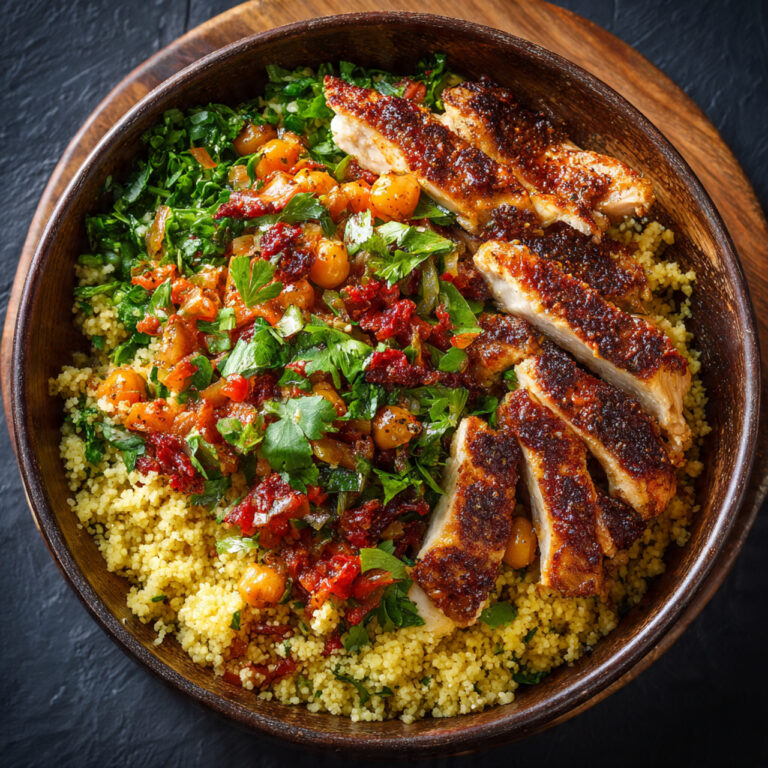
Moroccan Chicken Couscous Bowl
Experience the exotic flavors of North Africa with this vibrant Moroccan Chicken Couscous Bowl! Ready in just 35 minutes, this nutritious one-bowl meal combines tender spiced chicken, fluffy pearl couscous, caramelized roasted vegetables, and fresh toppings for a complete dinner. Packed with 42g of protein and 158% of your daily vitamin C, this colorful bowl is perfect for meal prep, busy weeknights, or impressive entertaining. The aromatic blend of cumin, coriander, cinnamon, and turmeric creates authentic Moroccan flavors without complicated techniques. Easily customizable for keto, vegan, vegetarian, or gluten-free diets. Each bowl is topped with creamy feta, crunchy almonds, fresh cilantro, and sweet dried cranberries for the perfect balance of textures and flavors!
- Total Time: 35 minutes
- Yield: 4 servings
Ingredients
Moroccan-Spiced Chicken:
- 1.5 pounds boneless, skinless chicken breasts (about 3 medium breasts), cut into 1-inch cubes
- 2 tablespoons olive oil, divided
- 2 teaspoons ground cumin
- 2 teaspoons ground coriander
- 1 teaspoon paprika
- 1 teaspoon ground cinnamon
- ½ teaspoon ground ginger
- ½ teaspoon turmeric
- 1 teaspoon salt
- ½ teaspoon black pepper, freshly ground
- 3 cloves garlic, minced
Fluffy Pearl Couscous:
- 1½ cups pearl (Israeli) couscous
- 2 cups low-sodium chicken broth (or vegetable broth)
- 1 tablespoon butter or olive oil
- Pinch of salt
Roasted Vegetables:
- 1 medium red bell pepper, diced
- 1 medium zucchini, diced
- 1 cup cherry tomatoes, halved
- 1 small red onion, sliced
- 1 tablespoon olive oil
- Salt and pepper to taste
Toppings & Garnish:
- ½ cup crumbled feta cheese
- ¼ cup fresh cilantro, chopped
- ¼ cup toasted slivered almonds
- 2 tablespoons dried cranberries or golden raisins
- Lemon wedges for serving
- Optional: 2 tablespoons tahini sauce or Greek yogurt
Instructions
- Prepare and season chicken: Pat chicken breasts dry with paper towels and cut into 1-inch cubes. In a medium bowl, combine cumin, coriander, paprika, cinnamon, ginger, turmeric, salt, black pepper, minced garlic, and 1 tablespoon olive oil to create a spice paste. Add chicken cubes and toss thoroughly until evenly coated. Let marinate while prepping vegetables (minimum 5-10 minutes).
- Roast the vegetables: Preheat oven to 425°F (220°C). On a large rimmed baking sheet, combine diced bell pepper, zucchini, halved cherry tomatoes, and sliced red onion. Drizzle with 1 tablespoon olive oil, season with salt and pepper, and toss until vegetables are coated. Spread in a single layer. Roast for 15-20 minutes, stirring once halfway through, until tender with slightly charred edges.
- Cook pearl couscous: While vegetables roast, bring 2 cups chicken broth to a boil in a medium saucepan over high heat. Add pinch of salt and 1 tablespoon butter or olive oil. Add pearl couscous, stir once, reduce heat to medium-low, and cover. Simmer gently for 10 minutes without lifting the lid. Remove from heat and let stand covered for 5 additional minutes. Fluff with a fork before serving.
- Cook spiced chicken: Heat remaining 1 tablespoon olive oil in a large skillet over medium-high heat until shimmering (about 30 seconds). Add marinated chicken in a single layer without overcrowding the pan. Cook undisturbed for 3-4 minutes on the first side to develop a golden-brown crust. Flip each piece and cook additional 3-4 minutes until golden brown on all sides and internal temperature reaches 165°F. Total cooking time is 8-12 minutes.
- Assemble bowls: Divide fluffy pearl couscous among 4 wide, shallow bowls (about 1 cup per serving). Arrange spiced chicken pieces on one side of each bowl in a neat section. Add roasted vegetables to another section, maintaining the colorful presentation. Top with crumbled feta cheese, fresh chopped cilantro, toasted slivered almonds, and dried cranberries scattered over the entire bowl. Serve with lemon wedges on the side. Drizzle with tahini sauce or add a dollop of Greek yogurt if desired. Squeeze fresh lemon juice over the bowl just before eating to brighten all the flavors.
Notes
Ingredient Substitutions:
- Chicken: Use boneless thighs (more forgiving), turkey breast, or firm tofu/tempeh for vegetarian
- Couscous: Substitute quinoa (15 min cook time), bulgur wheat, brown rice, farro, orzo, or cauliflower rice for low-carb
- Regular couscous: Use 1½ cups with 1½ cups boiling liquid, remove from heat, cover, steam 5 minutes (no simmering)
- Vegetables: Add or swap cauliflower, sweet potato, eggplant, mushrooms, or chickpeas
- Cheese: Use goat cheese, plant-based feta, or omit entirely
- Nuts: Substitute pine nuts, pistachios, walnuts, or pumpkin seeds
- Herbs: Use fresh parsley or mint instead of cilantro
Storage & Meal Prep:
- Store components separately in airtight containers in refrigerator for 4-5 days
- Chicken stores 4-5 days; couscous 4-5 days; vegetables 3-4 days
- Add fresh toppings only when serving to maintain texture
- Freeze chicken and couscous up to 3 months (vegetables become softer when frozen)
- Assemble complete bowls without toppings for grab-and-go meal prep
Reheating Instructions:
- Microwave: Place portion in bowl, add 1-2 tablespoons broth, cover with damp paper towel, heat 2-3 minutes at 70% power
- Stovetop: Combine components in skillet with splash of broth, cover, heat over medium-low 5-7 minutes
- Always add fresh toppings after reheating
Make-Ahead Tips:
- Marinate chicken up to 24 hours in advance for deeper flavor
- Chop vegetables 2-3 days ahead and store in containers
- Mix spice blend in advance and store in small jar
- Toast nuts in batches and store airtight up to 2 weeks
- Cook all components Sunday for easy weekday meals
Variations:
- Vegan: Use crispy roasted chickpeas or marinated tempeh instead of chicken, vegetable broth, omit feta or use plant-based
- Keto/Low-Carb: Replace couscous with cauliflower rice, omit dried fruit, add avocado
- Gluten-Free: Use quinoa or rice instead of couscous, verify all spices are certified GF
- Extra Spicy: Add ½-1 teaspoon cayenne to chicken or serve with harissa paste
- Kid-Friendly: Reduce warm spices, increase sweetness with extra dried fruit or honey drizzle
Pro Tips:
- Cut chicken into uniform cubes for even cooking
- Don’t skip the marinating time—even 10 minutes helps
- Use instant-read thermometer to prevent overcooking (165°F exactly)
- Toast almonds in dry pan 3-5 minutes for enhanced flavor
- Squeeze lemon just before eating for maximum brightness
- For crispy chickpea variation: toss drained chickpeas with same spice blend, roast at 425°F for 25-30 minutes
- Prep Time: 15 minutes
- Cook Time: 20 minutes
- Category: Main Course
- Method: Braising, Stovetop
- Cuisine: Moroccan
- Diet: Gluten-containing, High-Protein