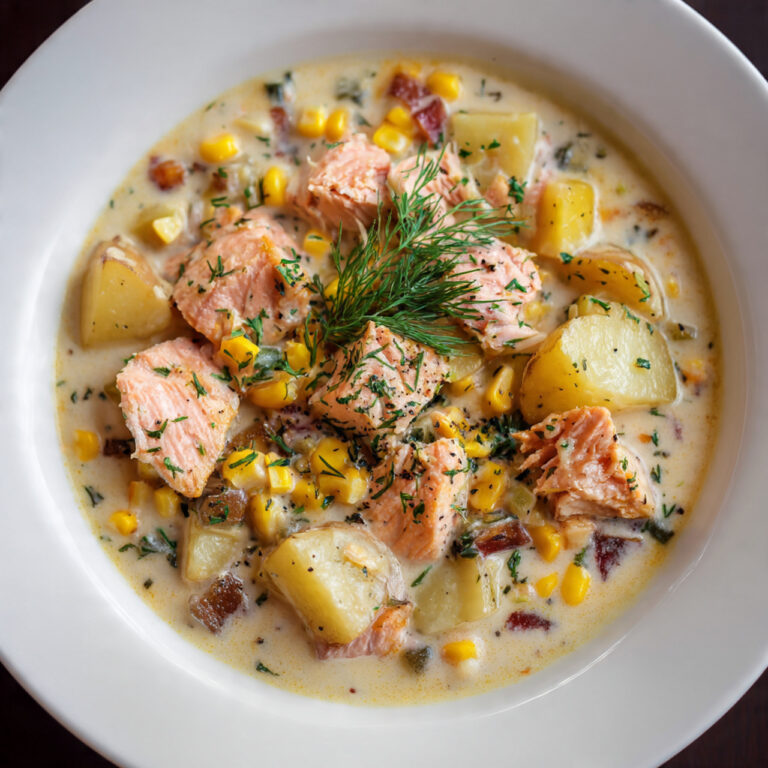
When you think of comfort food, what comes to mind—chicken noodle soup, perhaps, or classic clam chowder? What if I told you that Salmon Chowder with Potatoes and Corn is not only rich and soothing, but also packs omega-3s and wholesome veggies into every creamy spoonful? According to recent Google Trends data, searches for hearty fish soups surge by over 40% during the colder months. If you’re craving a soul-warming, creamy chowder that comes together in less time than most stews, you’ve found your next favorite. In this post, you’ll learn why this Salmon Chowder with Potatoes and Corn isn’t just delicious—it’s a smart, modern comfort food twist you’ll want to make again and again.
Total Time:60 minutes
Yield:6 servings
Ingredients
1 pound skinless salmon fillets, cut into bite-sized cubes
2 large Yukon Gold potatoes, peeled and diced
1½ cups corn kernels (fresh, frozen, or canned)
1 medium yellow onion, finely chopped
2 ribs celery, diced
2 medium carrots, chopped
3 cloves garlic, minced
4 cups low-sodium chicken or seafood broth
1 cup whole milk or half-and-half
2 tablespoons unsalted butter
2 tablespoons all-purpose flour
1 bay leaf
1 teaspoon fresh or dried thyme
Salt and black pepper, to taste
Fresh dill or parsley, for garnish
Lemon wedges, optional for serving
Instructions
Sauté Aromatics
In a Dutch oven or heavy soup pot, melt the butter over medium heat. Add the onion, celery, and carrots. Cook, stirring occasionally, for 5-6 minutes until the onions are translucent and your kitchen smells inviting. Stir in the minced garlic and cook for another minute until fragrant.
Pro tip: Take your time here—well-cooked aromatics give your chowder extra depth.
Build the Base
Sprinkle the flour over the vegetables and stir to coat. Cook for 1-2 minutes (this helps thicken the chowder without any raw flour taste). Gradually whisk in the broth, scraping up any browned bits from the bottom of the pot for maximum flavor.
Simmer the Potatoes
Add the diced potatoes, bay leaf, thyme, salt, and pepper. Bring to a simmer, then partially cover and cook for 15 minutes, or until the potatoes are tender but not falling apart.
Personalized tip: If you love a creamier texture, mash a few potatoes against the side of the pot and stir them in.
Add Corn and Salmon
Stir in the corn kernels and salmon cubes. Simmer gently for 8-10 minutes, just until the salmon is opaque and flakes easily with a fork. Avoid overcooking to keep the fish perfectly tender.
Stir in the Cream
Reduce the heat to low. Stir in the milk or half-and-half and warm through for 2-3 minutes. Do not let the chowder boil, or it may curdle. Taste and adjust seasoning as needed.
Finish & Serve
Remove the bay leaf. Ladle the chowder into bowls and garnish generously with fresh dill or parsley, cracked black pepper, and a squeeze of lemon if desired. Serve with crusty bread or oyster crackers.
Expert twist: Drizzle with a little extra-virgin olive oil or finish with flaky sea salt for gourmet flair.
Notes
Choosing Salmon: Fresh, wild-caught salmon offers bold flavor and rich nutrients, but you can sub in steelhead trout or even canned salmon in a pinch.
Corn Options: Sweet corn brings a pop of color and flavor. Try fire-roasted corn for extra depth.
Substitutions: For a lighter version, use 2% milk or unsweetened non-dairy alternatives like oat milk. Replace Yukon Gold potatoes with russet or red potatoes if needed.
Storage: Refrigerate cooled chowder in an airtight container for up to 3 days. Stir well before reheating gently on the stovetop.
Freezing Note: Dairy-based chowders may separate when frozen. For best results, freeze before adding milk, then add dairy when reheating.
Gluten-Free: Swap all-purpose flour for a gluten-free blend or mix 1 tablespoon cornstarch with 2 tablespoons of milk before adding.