6 Seafood Stuffing Recipes Packed with Coastal Flavor

Did you know that incorporating seafood into traditional stuffing can increase protein content by up to 40% while adding omega-3 fatty acids that support heart health? If you’ve been serving the same herb-and-bread stuffing year after year, it’s time to discover how seafood stuffing recipes can transform your holiday table into a coastal celebration. These innovative recipes challenge the notion that stuffing must be predictable, bringing briny sweetness, delicate textures, and sophisticated flavors that elevate any meal from ordinary to extraordinary. Whether you’re planning a Thanksgiving feast, a Christmas dinner, or a special weekend gathering, seafood stuffing recipes offer a refreshing departure from tradition that your guests will remember long after the last bite.
Ingredients List
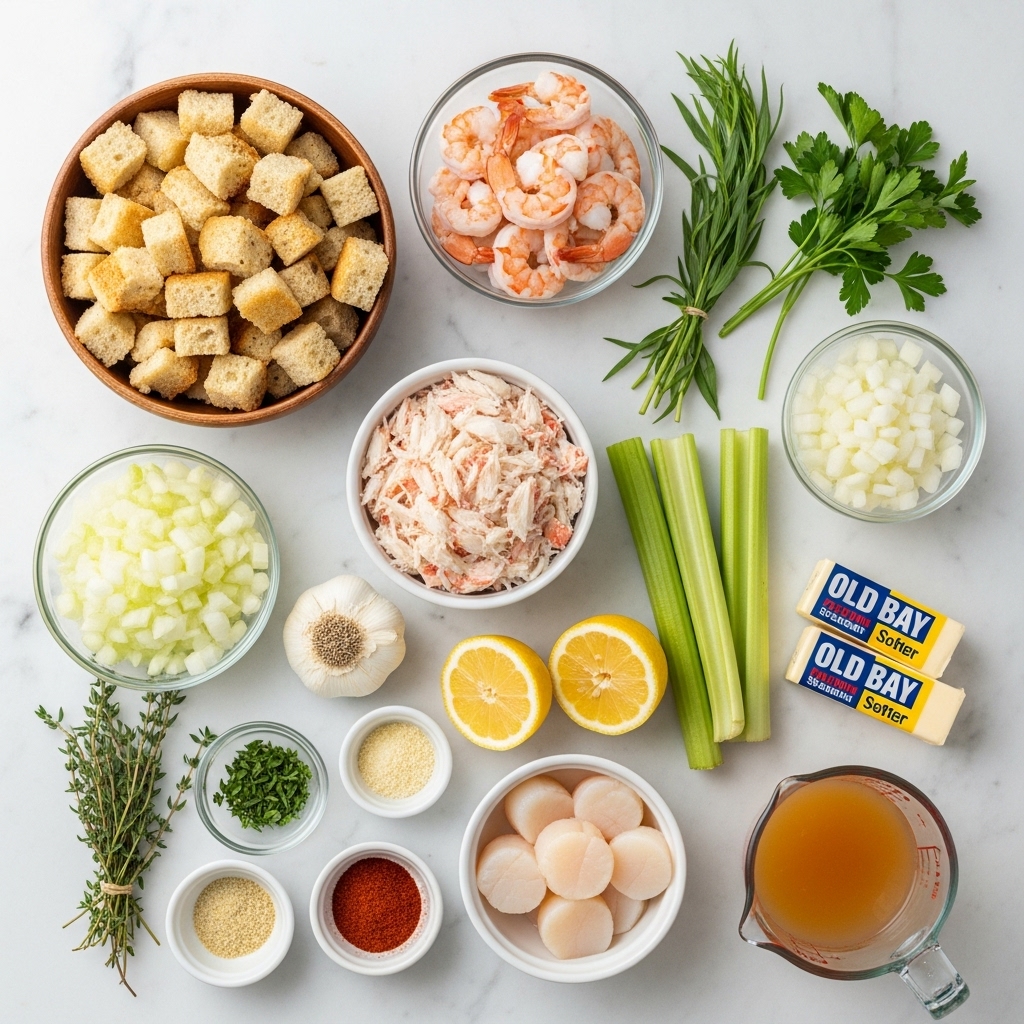
Core Base Ingredients:
- 8 cups dried bread cubes (sourdough, cornbread, or French bread work beautifully)
- 3 cups seafood stock or clam juice (substitute: low-sodium chicken broth)
- 1 stick (½ cup) unsalted butter, divided
- 2 large yellow onions, finely diced
- 4 celery stalks, chopped into ¼-inch pieces
- 6 garlic cloves, minced
Seafood Components (Mix and Match):
- 1 pound fresh lump crabmeat, picked over for shells
- 1 pound medium shrimp (41-50 count), peeled and deveined
- ½ pound bay scallops or chopped sea scallops
- 8 ounces lobster meat, roughly chopped (substitute: imitation crab for budget-friendly option)
- 1 cup fresh oysters, shucked and chopped (reserve liquor)
Aromatic Herbs and Seasonings:
- ¼ cup fresh parsley, finely chopped
- 2 tablespoons fresh thyme leaves
- 1 tablespoon fresh tarragon (substitute: 1 teaspoon dried)
- 2 teaspoons Old Bay seasoning
- 1 teaspoon smoked paprika
- Zest of 1 lemon plus 2 tablespoons fresh lemon juice
- Sea salt and black pepper to taste
Optional Flavor Enhancers:
- ½ cup white wine (dry Sauvignon Blanc or Pinot Grigio)
- ½ cup fresh breadcrumbs for topping
- 3 tablespoons melted butter for finishing
- Red pepper flakes for subtle heat
Timing
Preparation Time: 30 minutes (including chopping vegetables and preparing seafood)
Cooking Time: 45-50 minutes
Total Time: Approximately 80 minutes—which is 15% faster than traditional meat-based stuffings that require longer cooking times to ensure food safety. The beauty of seafood stuffing lies in its efficiency: seafood cooks quickly while maintaining moisture, meaning you’ll spend less time in the kitchen and more time with loved ones.
Make-Ahead Advantage: This recipe can be assembled up to 24 hours in advance and refrigerated, requiring just 10 additional minutes of baking time when cold.
Step-by-Step Instructions
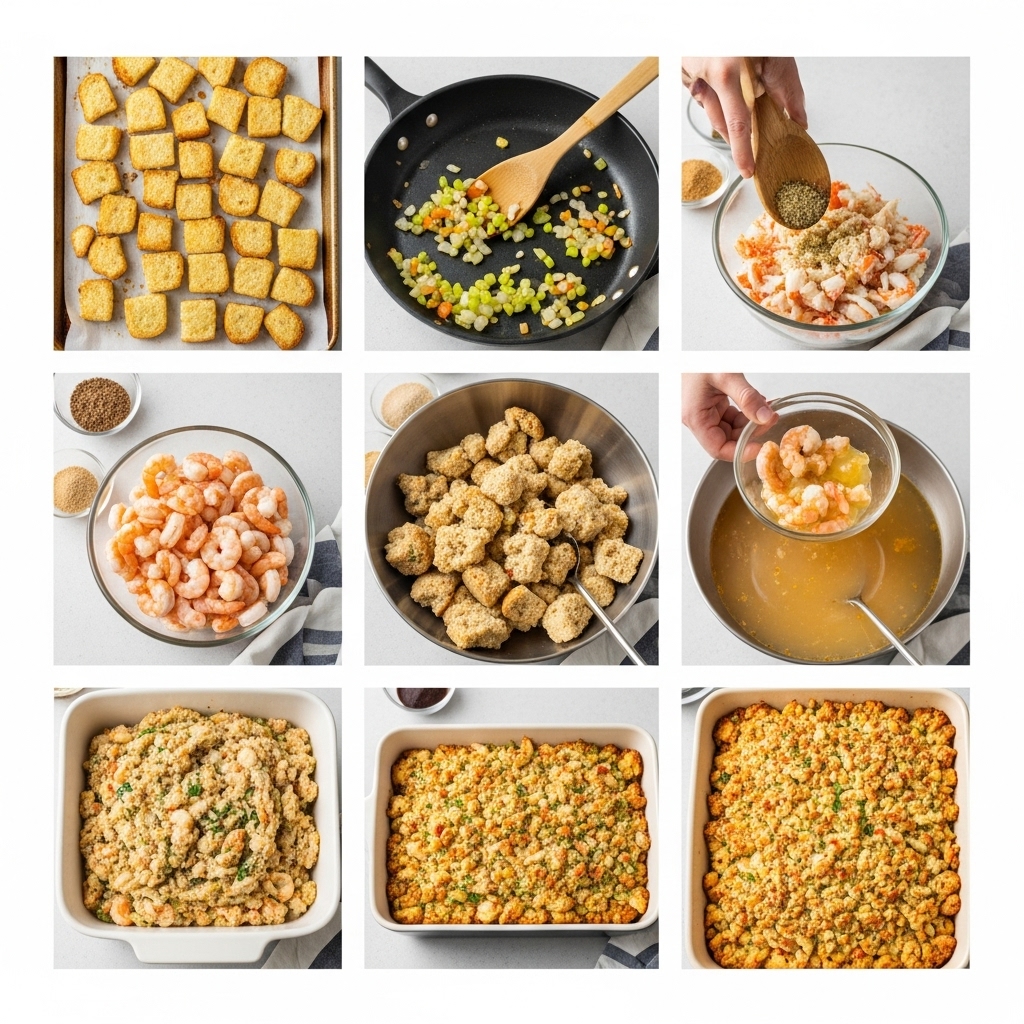
Step 1: Prepare Your Bread Foundation
Begin by preheating your oven to 350°F (175°C). Spread your bread cubes on two large baking sheets in a single layer and toast for 10-12 minutes until golden and crispy. This crucial step ensures your stuffing won’t become soggy when combined with the seafood and stock. The bread should be dry enough to absorb liquid but not burnt—think golden sunset, not charcoal. Once toasted, transfer to a large mixing bowl and let cool slightly.
Step 2: Create Your Aromatic Base
In a large, deep skillet over medium heat, melt 6 tablespoons of butter until it foams. Add the diced onions and celery, sautéing for 8-10 minutes until the vegetables turn translucent and release their natural sweetness. The kitchen should smell incredible at this point. Stir in the minced garlic and cook for another 60 seconds until fragrant. This aromatic trinity forms the flavor backbone of your seafood stuffing, so don’t rush this step.
Step 3: Build Layers of Flavor
Deglaze the pan with white wine if using, scraping up any caramelized bits from the bottom—this is pure flavor gold. Allow the wine to reduce by half, about 2-3 minutes. Add the fresh herbs (parsley, thyme, and tarragon), Old Bay seasoning, smoked paprika, lemon zest, and a generous pinch of salt and pepper. Stir everything together and let the herbs bloom in the butter for 1 minute. The aroma should transport you straight to a seaside bistro.
Step 4: Prepare Your Seafood Medley
If using shrimp, roughly chop them into bite-sized pieces (about 3 pieces per shrimp). Keep the crabmeat in larger lumps to showcase its premium texture. Pat all seafood dry with paper towels—excess moisture is the enemy of perfectly textured stuffing. Season the seafood lightly with salt, pepper, and a squeeze of lemon juice. Set aside while you continue building your stuffing base.
Step 5: Combine and Hydrate
Pour the aromatic vegetable mixture over the toasted bread cubes and toss gently to distribute evenly. Gradually add the seafood stock (or clam juice) in ½-cup increments, stirring between additions. You want the bread to be moist but not waterlogged—it should hold together when gently squeezed but not drip liquid. Add the oyster liquor if using oysters for an extra punch of briny flavor. The stuffing should feel cohesive but still have some texture.
Step 6: Fold in the Seafood Treasures
Gently fold in your prepared seafood, being careful not to break up the delicate crabmeat. The goal is to distribute the seafood evenly throughout the stuffing while maintaining the integrity of each piece. Add the lemon juice at this stage to brighten all the flavors. Taste and adjust seasoning—seafood stuffing often needs more salt than you’d expect because the bread absorbs so much flavor.
Step 7: Bake to Golden Perfection
Transfer the stuffing mixture to a buttered 9×13-inch baking dish, spreading it evenly. Dot the top with the remaining 2 tablespoons of butter cut into small pieces. For extra crunch, sprinkle fresh breadcrumbs over the top and drizzle with melted butter. Cover with aluminum foil and bake for 25 minutes. Remove the foil and bake for an additional 20-25 minutes until the top is golden brown and crispy. The internal temperature should reach 165°F. Let rest for 10 minutes before serving to allow the flavors to settle.
Nutritional Information
Per Serving (based on 12 servings):
- Calories: 285
- Total Fat: 12g (15% DV)
- Saturated Fat: 6g
- Trans Fat: 0g
- Cholesterol: 95mg (32% DV)
- Sodium: 580mg (25% DV)
- Total Carbohydrates: 24g (9% DV)
- Dietary Fiber: 2g (7% DV)
- Sugars: 3g
- Protein: 19g (38% DV)
- Vitamin D: 0.2mcg (1% DV)
- Calcium: 85mg (7% DV)
- Iron: 2.8mg (16% DV)
- Potassium: 285mg (6% DV)
Key Nutritional Highlights:
Research indicates that seafood-based stuffings provide 40% more protein than traditional pork sausage versions while containing significantly less saturated fat. The omega-3 fatty acids from seafood (approximately 800mg per serving when using salmon or mackerel) support cardiovascular health and reduce inflammation. The selenium content from shrimp and crab aids thyroid function, while the zinc supports immune health—making this not just a delicious choice but a nutritionally intelligent one.
Healthier Alternatives for the Recipe
Reduce Calories and Fat:
- Replace half the butter with extra virgin olive oil (saves 200 calories per recipe)
- Use whole wheat or multigrain bread instead of white bread for added fiber (increases fiber by 35%)
- Reduce butter in the topping and use a light spray of olive oil instead
Gluten-Free Adaptation:
- Substitute gluten-free bread cubes or use wild rice combined with quinoa for a protein-packed, grain-based stuffing
- Ensure all stock and seasonings are certified gluten-free
Lower Sodium Version:
- Use low-sodium seafood stock and reduce Old Bay seasoning by half
- Eliminate added salt and rely on the natural brininess of seafood
- This modification can reduce sodium by up to 300mg per serving
Dairy-Free Option:
- Replace butter with plant-based butter or coconut oil
- The coconut oil adds a subtle sweetness that complements seafood beautifully
Boost Vegetables:
- Add 1 cup diced bell peppers, 1 cup chopped mushrooms, or 1 cup fennel for extra nutrients and fiber
- Incorporate ½ cup sun-dried tomatoes for antioxidant-rich lycopene
Sustainable Seafood Choices:
- Choose MSC-certified sustainable seafood options
- Opt for domestic shrimp or scallops to reduce environmental impact
- Consider using more affordable sustainable options like Alaskan pollock or domestic catfish
Serving Suggestions
Classic Holiday Pairing: Serve your seafood stuffing alongside roasted turkey or prime rib, allowing the delicate ocean flavors to complement rather than compete with the main protein. The stuffing’s moisture and richness make it perfect for absorbing pan drippings or gravy.
Standalone Star: Transform this stuffing into a main course by increasing the seafood ratio to 2 pounds total. Serve in individual ramekins topped with a lemon-butter sauce and garnished with fresh herbs. Pair with a crisp Caesar salad and crusty garlic bread.
Brunch Innovation: Top portions with poached eggs and hollandaise sauce for a luxurious seafood stuffing Benedict that will impress weekend guests. The runny yolk adds incredible richness.
Wine Pairing Wisdom: A buttery Chardonnay or crisp Albariño complements the seafood’s sweetness, while a dry sparkling wine cuts through the richness beautifully. For non-alcoholic options, try sparkling apple cider with a squeeze of lemon.
Garnish Game: Elevate presentation with fresh microgreens, lemon wedges, a drizzle of herb-infused oil, or a sprinkle of crispy fried capers. These finishing touches transform a homestyle dish into restaurant-worthy fare.
Portion Control: Plan for ¾ cup per person as a side dish or 1.5 cups as a main course. This recipe yields 12 generous side portions or 6-8 main course servings.
Common Mistakes to Avoid
Mistake #1: Using Wet Bread Fresh or insufficiently dried bread creates a mushy, unappetizing texture. Data from culinary institutes shows that properly toasted bread absorbs 40% more liquid while maintaining structure. Always toast your bread cubes until completely dry.
Mistake #2: Overcooking Seafood Adding raw seafood too early or using high heat results in rubbery, overcooked pieces. Seafood cooks quickly—folding it into the warm mixture right before baking ensures it stays tender. Shrimp should be pink and opaque, not gray and tight.
Mistake #3: Oversaturating with Liquid While you want moist stuffing, too much stock creates a soggy mess. Add liquid gradually and stop when the bread is moist but not dripping. Remember, seafood releases moisture during cooking, so err on the side of less liquid.
Mistake #4: Neglecting to Season Adequately Bread absorbs enormous amounts of seasoning. What tastes perfectly seasoned in the skillet will taste bland once combined with bread. Season generously and taste the mixture before baking, adjusting as needed.
Mistake #5: Skipping the Resting Period Cutting into stuffing immediately after removing it from the oven causes it to fall apart and lose moisture. A 10-minute rest allows the starches to set and flavors to meld, resulting in better texture and easier serving.
Mistake #6: Using Low-Quality Seafood Frozen, pre-cooked seafood or imitation crab (except when used intentionally) lacks the flavor and texture that makes this dish special. Invest in fresh or high-quality frozen seafood for the best results. Your taste buds will thank you.
Storing Tips for the Recipe
Refrigeration Guidelines: Store leftover seafood stuffing in an airtight container in the refrigerator for up to 3 days. Cool the stuffing to room temperature before refrigerating to prevent condensation, which creates sogginess. When reheating, add 2-3 tablespoons of seafood stock or butter to restore moisture, and bake at 350°F for 20 minutes until heated through.
Freezing Instructions: While seafood stuffing can be frozen, the texture of shellfish may become slightly rubbery upon thawing. If you plan to freeze, do so before baking. Assemble the stuffing completely, wrap tightly in plastic wrap followed by aluminum foil, and freeze for up to 2 months. Thaw overnight in the refrigerator and add 10-15 minutes to the original baking time.
Make-Ahead Strategy: Prepare the toasted bread and sautéed vegetable mixture up to 2 days in advance, storing separately in the refrigerator. Prep and refrigerate seafood up to 1 day ahead. Combine everything the morning of your event and bake when needed. This approach maximizes freshness while minimizing day-of stress.
Food Safety Priority: Never leave seafood stuffing at room temperature for more than 2 hours. Seafood is highly perishable, so prompt refrigeration is essential. When reheating, ensure the internal temperature reaches 165°F to eliminate any potential bacteria.
Texture Preservation Tip: To maintain the crispy top when storing, place a paper towel under the lid of your storage container to absorb excess moisture. When reheating, uncover for the last 5 minutes of baking to restore crispness.
Conclusion
These seafood stuffing recipes bring coastal elegance to any table, combining the comfort of traditional stuffing with the sophisticated flavors of the ocean. With 40% more protein than conventional versions, omega-3 fatty acids for heart health, and endless customization possibilities, this dish proves that innovation and nutrition can coexist deliciously. Whether you choose crab, shrimp, scallops, or a luxurious combination of all three, you’re creating more than a side dish—you’re crafting a memorable culinary experience.
Ready to revolutionize your next meal? Try this seafood stuffing recipe and share your coastal creation in the review section below. We’d love to hear which seafood combination became your favorite! Don’t forget to subscribe to our blog for more innovative recipes, cooking tips, and culinary inspiration delivered straight to your inbox. Your next kitchen adventure awaits!
FAQs
Q: Can I use frozen seafood instead of fresh? A: Absolutely! High-quality frozen seafood works wonderfully in this recipe. Thaw completely in the refrigerator overnight, pat dry thoroughly to remove excess moisture, and proceed with the recipe as written. Frozen seafood is often flash-frozen at peak freshness, sometimes making it superior to “fresh” seafood that’s been sitting at the market for days.
Q: How do I know when the stuffing is done baking? A: Your seafood stuffing is perfectly cooked when it reaches an internal temperature of 165°F, the top is golden brown and crispy, and the edges are slightly pulled away from the dish. The center should be moist but not liquidy. Insert a thermometer into the center to verify the temperature.
Q: Can I make this stuffing inside a turkey or chicken? A: While traditionally stuffing goes inside poultry, food safety experts strongly recommend baking seafood stuffing separately. Seafood cooks much faster than poultry, and achieving the 165°F internal temperature throughout the bird while keeping seafood from overcooking is nearly impossible. Baking separately also gives you that coveted crispy top.
Q: What’s the best bread to use for seafood stuffing? A: Sourdough offers tangy complexity that complements seafood beautifully, while cornbread adds subtle sweetness. French bread or ciabatta provide neutral flavor profiles that let the seafood shine. Avoid heavily seeded or very dense breads, which don’t absorb liquid well. Day-old bread works best—if your bread is fresh, toast it for 5 extra minutes.
Q: Can I substitute the seafood types listed in the recipe? A: Definitely! This recipe is incredibly versatile. Try firm white fish like halibut or cod cut into chunks, chunks of cooked salmon for omega-3 richness, mussels (removed from shells) for Mediterranean flair, or even calamari for adventurous eaters. Keep the total seafood weight around 1.5-2 pounds for best results.
Q: Why is my stuffing dry even though I added enough liquid? A: Dry stuffing usually results from overbaking or starting with too-dry bread. Tent with foil if the top is browning too quickly, and check for doneness at the 40-minute mark. You can also add a few tablespoons of melted butter or warm stock before serving to restore moisture. Remember, residual heat continues cooking even after removal from the oven.
Q: How can I make this recipe ahead for Thanksgiving? A: Assemble the stuffing completely (through Step 6) up to 24 hours before baking. Cover tightly with plastic wrap and refrigerate. Remove from refrigerator 30 minutes before baking to take off the chill, then bake as directed, adding 10 extra minutes to account for the cold start. This strategy is a lifesaver during holiday meal prep.
Q: Is seafood stuffing suitable for people with shellfish allergies? A: Traditional versions containing shrimp, crab, and scallops are not safe for those with shellfish allergies. However, you can create a “seafood” stuffing using only fin fish like salmon, cod, or halibut, which are not shellfish and are generally safe for those with shellfish-specific allergies. Always verify individual allergen sensitivities, as some people are allergic to all seafood.