
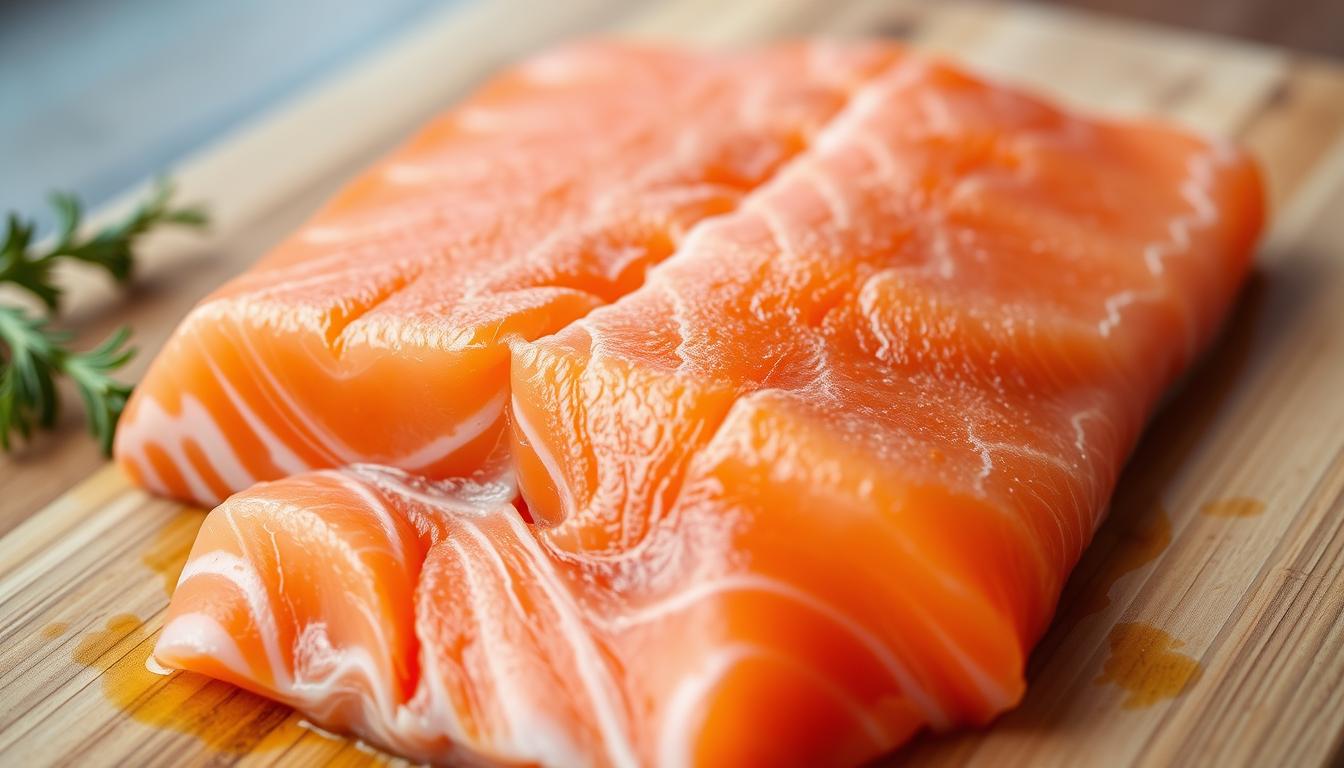
Looking for a simple yet impressive dinner? Can a fresh salmon fillet be the answer to a quick and delicious meal? If you’re eager to explore seafood cooking, you’re in the right place.
Cooking a side of salmon is easy and yields impressive results. With the right techniques and tips, you can make a mouth-watering dish. This article will guide you through an easy recipe and share valuable cooking tips for your salmon cooking experience.
Key Takeaways
- Learn how to prepare a delicious side of salmon with minimal effort.
- Discover the benefits of baking salmon as a healthy dinner option.
- Get helpful tips on cooking salmon to perfection.
- Explore an easy recipe to make your salmon dish a success.
- Understand the importance of using fresh salmon fillet for the best flavor.
What Is a Side of Salmon?
A side of salmon is a favorite among seafood lovers. It’s half a salmon fillet, cut along the spine. This cut is big and easy to cook.
Definition and Cuts
Salmon can be cut in different ways for various recipes. The main cuts are:
- Whole side: Great for big groups or special events.
- Portion-cut: Ideal for serving one person.
- Steaks: Thick slices, perfect for grilling or pan-frying.
Wild-Caught vs. Farm-Raised Salmon
Choosing between wild-caught and farm-raised salmon is key. Wild-caught salmon is often chosen for its better taste and health benefits. It has less fat and more omega-3s.
| Characteristics | Wild-Caught Salmon | Farm-Raised Salmon |
|---|---|---|
| Nutritional Content | Higher in omega-3 fatty acids, lower in fat | Lower in omega-3 fatty acids, higher in fat |
| Flavor Profile | More robust and complex | Milder flavor |
| Sustainability | Varies depending on fishing methods | Can be more sustainable with proper practices |
Popular Salmon Varieties
There are many salmon varieties, each with its own taste and texture. Some top picks are:
- Sockeye: Known for its rich flavor and firm texture.
- King: Offers a rich, buttery taste and is often considered a delicacy.
- Coho: Balances flavor and texture, making it a versatile choice.
Picking the right variety can make your meal better, whether you’re grilling, baking, or poaching.
Benefits of Cooking a Whole Side of Salmon
Cooking a whole side of salmon brings many benefits. It makes a stunning centerpiece for any event. You get the most value from your purchase and ensure the fish is cooked evenly and tastes great.
Impressive Presentation for Gatherings
A whole side of salmon is an impressive presentation that will impress your guests. It’s perfect for dinner parties or special occasions. You can decorate it with fresh herbs, lemon slices, or your favorite sauce for extra elegance.
Cost-Effectiveness
Cooking a whole side of salmon is cost-effective. Buying in bulk saves money compared to individual fillets. It’s great for large groups or events, making it one of the best salmon recipes for a crowd.
Even Cooking and Flavor Distribution
Cooking a whole side of salmon ensures even cooking and flavor distribution. The fish stays moist and flavors spread evenly. This makes every bite delicious.
How to Select the Perfect Side of Salmon
To make your salmon dish stand out, start by picking the best side. The quality of your salmon greatly affects the taste and texture of your meal. When shopping at the market or buying salmon online, consider a few key factors.
Fresh vs. Frozen Options
First, decide between fresh or frozen salmon. Fresh salmon is often chosen for its better texture and taste. But, frozen salmon can be just as good if it’s been frozen right to keep its quality. “Frozen fish is often frozen on the boat, right after it’s been caught, which can make it fresher than ‘fresh’ fish that’s been sitting on ice for days,” say some seafood experts. Think about your recipe and what you like when choosing between fresh and frozen.
Sustainable Salmon Sources
Choosing sustainable salmon sources is good for the planet and can improve your salmon’s quality and taste. Look for MSC (Marine Stewardship Council) or ASC (Aquaculture Stewardship Council) certifications when buying salmon. These groups make sure the salmon is caught or farmed the right way. By supporting sustainable fishing, you’re helping protect our oceans.
“The health of our oceans is directly linked to the choices we make at the grocery store or restaurant. By choosing sustainable seafood, we’re helping to protect the delicate balance of our marine ecosystems.”
Quality Indicators to Look For
When picking a side of salmon, look for certain quality signs. First, check its color and sheen. Fresh salmon should look vibrant and shiny. The flesh should feel firm, and there should be no sliminess or discoloration. Also, fresh salmon should smell mild; a strong fishy smell means lower quality.
If you’re buying salmon online, read reviews and check the seller’s ratings. This ensures you get a high-quality product. By focusing on these factors, you’ll be able to make the best salmon recipes that will wow your loved ones. Whether you’re an experienced cook or just starting, using the right ingredients is crucial for a great dish.
Essential Tools and Ingredients
To make a tasty healthy salmon dish, you need some basic kitchen tools and ingredients. Cooking a side of salmon is easy with the right equipment and seasonings.
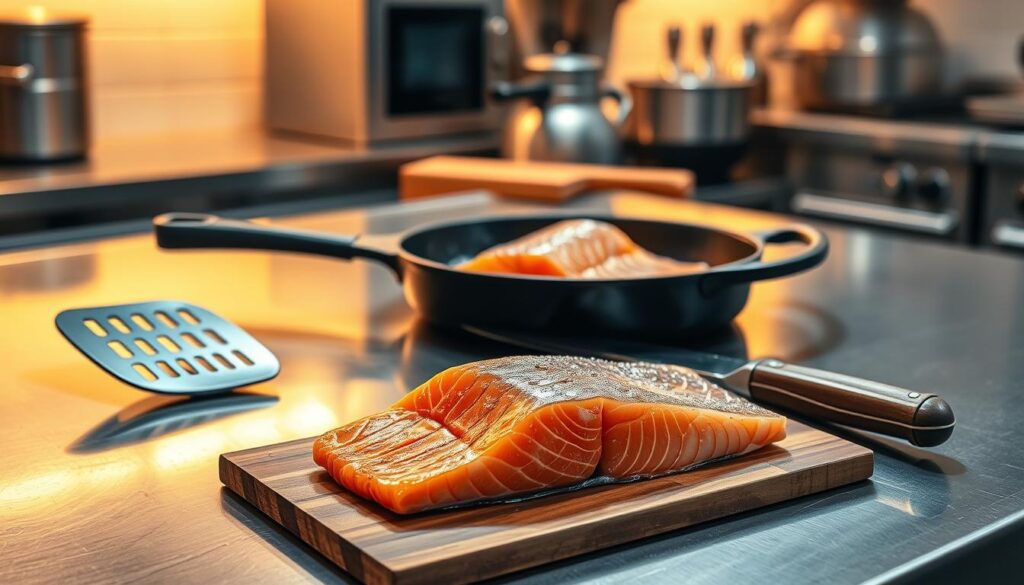
Kitchen Equipment You’ll Need
First, gather a few important kitchen tools. You’ll need:
- A large baking sheet, preferably with a rim to prevent juices from spilling over
- Aluminum foil or parchment paper for easy cleanup and to prevent sticking
- A sharp knife for trimming and portioning the salmon
- A cutting board, preferably one that’s dedicated to fish to prevent cross-contamination
- A meat thermometer to ensure your salmon is cooked to a safe internal temperature
Basic Seasonings and Flavor Enhancers
For ingredients, you’ll need some basic seasonings and flavor enhancers. These include:
- Salt and pepper, the staples for enhancing the natural flavor of the salmon
- Lemon, either in the form of juice or slices, to add a bright, citrusy flavor
- Olive oil or another cooking oil to prevent the salmon from drying out
- Optional herbs and spices, such as dill, thyme, or paprika, to add extra depth to your dish
Optional Specialty Items
For extra flavor, consider some optional specialty items. These can include:
- Marinades or rubs for added flavor
- Cedar planks for grilling or baking, which can impart a smoky flavor
- Fresh herbs, such as parsley or dill, for garnish
With these essential tools and ingredients, you’re ready to cook a delicious side of salmon that will wow your guests.
Preparing Your Side of Salmon
Getting your salmon ready is key to a great meal. Whether it’s fresh or wild-caught, the right prep brings out the best. This ensures a delicious and enjoyable dining experience.
Thawing Techniques
First, thaw your frozen salmon. You can thaw it in the fridge or under cold water. Thawing in the fridge is safer and more even.
For quicker thawing, use cold running water. Change the water every 30 minutes. Never thaw at room temperature to avoid bacterial growth.
Cleaning and Trimming
After thawing, clean and trim your salmon. Rinse it under cold water and pat dry with paper towels. Check for bloodlines or dark spots and trim them off.
Trimming the edges also improves the salmon’s look and feel. Use a sharp knife to remove any ragged edges or skin.
Removing Pin Bones
Removing pin bones is essential. These small bones run along the fish’s lateral line. To remove them, feel for bones with your fingers and use tweezers or pliers to pull them out.
- Locate the pin bones along the lateral line.
- Use tweezers or pliers to grasp the bones.
- Pull the bones out at an angle to avoid breaking them.
Portioning (Optional)
If you want to cook smaller portions, now’s the time. Cut the salmon into even pieces. This is handy for cooking for a crowd or making individual servings.
Remember, portioning changes cooking times. Adjust your cooking schedule accordingly.
Classic Side of Salmon Recipe
Let’s explore a classic recipe for cooking a side of salmon that will wow your guests. This recipe highlights the salmon’s natural flavors with simple yet effective ingredients.
Ingredients List
To make this tasty side of salmon, you’ll need the following:
- 1 side of salmon (about 2 pounds)
- 2 lemons, sliced
- 4 cloves of garlic, minced
- 2 tbsp olive oil
- 2 tbsp chopped fresh dill
- 2 tbsp chopped fresh parsley
- Salt and pepper to taste
Step-by-Step Instructions
Here’s how to prepare your side of salmon:
- Preheat your oven to 375°F (190°C).
- Rinse the salmon under cold water and pat it dry with paper towels.
- Season the salmon with salt and pepper.
- In a small bowl, mix together the minced garlic and olive oil.
- Place the salmon on a baking sheet lined with parchment paper, and brush the garlic-olive oil mixture evenly over the top.
- Arrange the lemon slices on top of the salmon.
- Sprinkle the chopped dill and parsley over the lemon slices.
Cooking Times and Temperatures
The secret to perfectly cooked salmon is the right internal temperature. Here’s a guide:
| Salmon Weight | Cooking Time | Internal Temperature |
|---|---|---|
| 1-1.5 pounds | 12-15 minutes | 145°F |
| 1.5-2 pounds | 15-20 minutes | 145°F |
| 2-2.5 pounds | 20-25 minutes | 145°F |
How to Tell When Salmon Is Perfectly Cooked
To ensure your salmon is cooked just right, look for these signs:
- The salmon should flake easily with a fork.
- It should be opaque and firm to the touch.
- The internal temperature should reach 145°F.
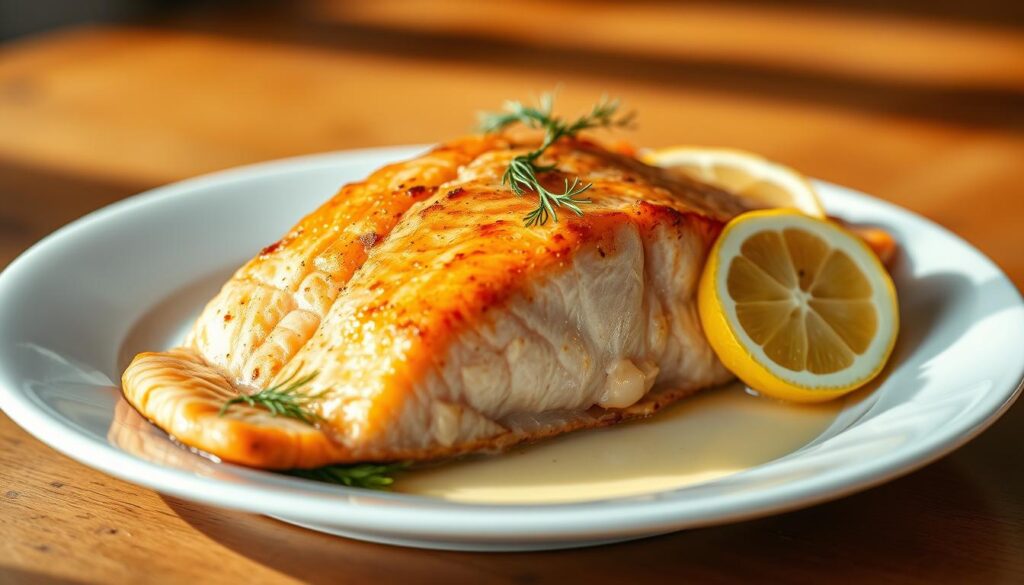
By following these guidelines, you’ll get a deliciously cooked side of salmon. The key is in the preparation and attention to cooking times and temperatures.
Alternative Cooking Methods for Side of Salmon
Cooking a side of salmon can be done in many ways, each bringing its own flavors and textures. The classic recipe is a good start, but trying new methods can lead to new favorites.
Oven-Baked Salmon
Baking salmon in the oven is easy and healthy. Preheat your oven to 400°F (200°C). Season the salmon with herbs and spices, then place it on a baking sheet with parchment paper. Baking keeps the salmon moist and cooks it evenly. Cooking time varies based on the salmon’s thickness, usually 12 to 15 minutes per inch.
As Chef Jacques Pépin once said,
“The key to cooking salmon is to not overcook it. You want it to be moist and flaky.”
This is especially true for oven-baked salmon, where overcooking is a big risk if not watched closely.
Grilled Salmon
Grilling salmon gives it a smoky taste and a nice char. Preheat your grill to medium-high heat. Oil the grates to prevent sticking, then put the salmon on the grill, skin side down if it has skin. Grilling needs attention because it cooks fast and can burn easily. Grill for 4-6 minutes per side, or until it’s fully cooked.
Cedar Plank Salmon
Cooking salmon on a cedar plank adds a special flavor. Soak a cedar plank in water for at least an hour before grilling or baking. Place the salmon on the plank and cook over medium heat if grilling, or bake at 400°F (200°C). This method gives a rich, smoky taste without high heat.
Poached Salmon
Poaching is a moist-heat method that makes salmon tender and flaky. To poach, simmer a liquid (like water or broth with aromatics), then add the salmon gently. Poaching is low-risk for perfectly cooked salmon, as it’s hard to overcook. Cook for 8-12 minutes, or until it flakes easily with a fork.
| Cooking Method | Cooking Time | Flavor Profile |
|---|---|---|
| Oven-Baked | 12-15 minutes/inch | Mild, even flavor |
| Grilled | 4-6 minutes/side | Smoky, charred |
| Cedar Plank | Varies | Aromatic, smoky |
| Poached | 8-12 minutes | Delicate, moist |
Each cooking method offers a unique way to enjoy salmon. Whether you prefer baking’s simplicity, grilling’s smokiness, cedar plank’s aroma, or poaching’s delicacy, there’s a method for every taste.
Flavor Variations and Marinades
Make your salmon dishes more exciting with different flavors and marinades. Trying new tastes can turn a simple dish into a masterpiece.
Herb and Citrus Combinations
Using fresh herbs and citrus is a great way to flavor salmon. Mix parsley, dill, or thyme with lemon zest, garlic, and lemon juice. This adds a bright, refreshing taste that goes well with salmon.
- Mix parsley, lemon zest, and garlic for a classic flavor
- Combine dill with lime juice and a hint of honey for a sweet and tangy taste
- Blend thyme with orange zest and olive oil for a savory and aromatic flavor
Asian-Inspired Glazes
Asian glazes bring a rich flavor to salmon. A mix of soy sauce, honey, ginger, and garlic makes a sweet and savory glaze. Add sesame oil for more depth.
Key ingredients for an Asian-inspired glaze:
- Soy sauce
- Honey
- Grated ginger
- Minced garlic
- Sesame oil (optional)
Mediterranean Flavors
Mediterranean flavors use olive oil, lemon, and herbs like oregano and thyme. A marinade can be made with olive oil, lemon juice, garlic, and oregano. This pairs well with salmon’s richness.
Try this Mediterranean marinade recipe:
- Olive oil
- Lemon juice
- Minced garlic
- Chopped oregano
- Salt and pepper to taste
Spicy Rubs and Seasonings
Spicy rubs add excitement to salmon. A mix of chili powder, cumin, smoked paprika, and cayenne pepper gives a spicy flavor. Adjust the heat by changing the cayenne pepper amount.
Spicy rub recipe:
- Mix chili powder, cumin, smoked paprika, and cayenne pepper
- Rub the mixture all over your salmon fillet
- Let it sit for at least 30 minutes before cooking
Try these flavor variations and marinades to make delicious and healthy salmon dishes. Whether buying salmon online or cooking with fresh salmon, these tips will improve your dishes.
Serving Suggestions and Side Dishes
Now that you’ve mastered cooking a side of salmon, let’s explore some tasty serving suggestions and side dishes that will elevate your meal.
Complementary Vegetables
Vegetables are a natural pairing with salmon. Consider steaming asparagus or roasting Brussels sprouts with a drizzle of olive oil and a sprinkle of salt. These options not only taste great but also add a pop of color to your plate.
Grain and Starch Pairings
Grains and starches provide a satisfying complement to the richness of salmon. Quinoa is a nutritious option that pairs well, while roasted potatoes offer a hearty alternative. You can also consider serving your salmon with a side of garlic bread or grilled bread for a more rustic feel.
Sauce Recommendations
The right sauce can enhance the flavor of your salmon. A lemon-dill sauce is a classic choice, while an Asian-inspired glaze made with soy sauce and ginger can add an exciting twist. For a simpler option, a drizzle of extra virgin olive oil and a sprinkle of fresh herbs can be just as effective.
Presentation Tips
Presentation is key to making your meal visually appealing. Consider arranging your side dishes around the salmon in a balanced composition. Use fresh herbs as garnishes and add a slice of lemon or lime on the side. For a more elegant touch, serve your salmon on a decorative platter or individual plates.
Troubleshooting Common Salmon Cooking Problems
Cooking salmon can be tricky, but with the right techniques, you can avoid common pitfalls. Whether you’re preparing a wild-caught salmon or a premium salmon cut, understanding how to overcome cooking challenges is key to a delicious meal.
Preventing Dry, Overcooked Salmon
One of the most common issues when cooking salmon is ending up with a dry, overcooked piece of fish. To prevent this, it’s crucial to not overcook your salmon. Using a thermometer can help you achieve the perfect doneness. For most salmon cuts, the internal temperature should reach 145°F (63°C).
Another technique is to cook the salmon on a lower heat for a longer period, which helps retain moisture. Keeping an eye on the cooking time and using a gentle cooking method, such as poaching or baking, can help prevent overcooking. For a premium salmon cut, you might also consider using a marinade or a glaze to add extra moisture and flavor.
Dealing with Skin Sticking Issues
Sometimes, the skin of the salmon can stick to the cooking surface, whether you’re grilling, baking, or pan-frying. To minimize this issue, make sure your cooking surface is well-oiled or non-stick. For grilling or baking, you can place the salmon on a piece of aluminum foil or a silicone mat to prevent sticking.
If you’re cooking with the skin on, scoring the skin lightly can also help prevent it from curling up and sticking to the pan. For wild-caught salmon, which might have a slightly firmer texture, ensuring the pan is hot before adding the fish can help sear the skin and prevent sticking.
Fixing Seasoning Mistakes
If you find that your salmon is under-seasoned, you can often fix this during the last few minutes of cooking. For example, you can brush on a glaze or sprinkle additional seasonings on top. However, if you’ve over-seasoned your salmon, it can be more challenging to fix.
One approach is to serve the salmon with a sauce or side dish that can help balance out the flavors. For premium salmon cuts, using a delicate seasoning approach can help avoid overpowering the natural flavor of the fish. Consider using herbs and citrus to add flavor without overwhelming the salmon.
Salvaging Undercooked Salmon Safely
If you discover that your salmon is undercooked, it’s essential to return it to the heat source immediately to avoid foodborne illness. The safest way to salvage undercooked salmon is to cook it to the recommended internal temperature of 145°F (63°C).
| Cooking Method | Additional Cooking Time | Internal Temperature |
|---|---|---|
| Baking | 2-4 minutes | 145°F (63°C) |
| Grilling | 1-3 minutes per side | 145°F (63°C) |
| Pan-frying | 1-2 minutes per side | 145°F (63°C) |
By following these troubleshooting tips, you can overcome common salmon cooking problems and enjoy a perfectly cooked piece of fish every time.
Conclusion
Cooking a side of salmon is a fun culinary journey. With the right techniques and recipes, you can make a tasty and healthy meal. It’s perfect for any occasion, whether you’re hosting a party or just want a good dinner.
Choosing sustainable salmon makes your meal feel good too. This article guides you from picking the best salmon to trying new flavors. Now, you’re ready to start cooking and enjoy your culinary adventure.
Try out different cooking methods and recipes to find your favorite. As you get better, your dishes will impress everyone. You’ll enjoy making and sharing delicious, sustainable salmon with your loved ones.
FAQ
What is the best way to cook a side of salmon?
Cooking a side of salmon can be done in many ways. You might like baking, grilling, or poaching. For a simple recipe, bake it in the oven with some basic seasonings.
How do I choose the right side of salmon?
Choose between wild-caught or farm-raised salmon. Look for firm flesh and a nice smell. You can find it online or in stores from a trusted source.
What are the benefits of cooking a whole side of salmon?
Cooking a whole side of salmon is impressive and cost-effective. It ensures even cooking and flavor. It’s perfect for big gatherings and special events.
How do I prevent dry, overcooked salmon?
To avoid dry salmon, cook it to the right temperature. Don’t overcook it. Try a marinade or glaze to add moisture and flavor.
Can I use frozen salmon for cooking?
Yes, frozen salmon works well if thawed properly. It can be as tasty as fresh salmon if cooked right.
What are some popular flavor variations for salmon?
Try herb and citrus, Asian glazes, Mediterranean, or spicy rubs. Experiment with marinades and seasonings to find your favorite.
How do I know when my salmon is perfectly cooked?
Check the internal temperature, which should be at least 145°F. Also, look for flakiness and opacity. Cooked salmon should flake easily.
What are some good side dishes to serve with salmon?
Serve it with vegetables, grains, or sauces. Roasted veggies, quinoa, or citrus-herb sauce are great options. They make a complete meal.
How can I buy sustainable salmon?
Look for MSC or ASC certifications. Choose wild-caught or farm-raised from sources that care about the environment.
Can I cook a side of salmon in advance?
While best served fresh, you can prep it ahead. Season and marinate it early. Just cook it to the right temperature for safety.