
Grilling a sirloin steak is truly special. The sizzle and aroma fill the air. The first bite is full of flavor, making it a joy to share with others.
When you grill, you’re making memories. The secret to a great sirloin steak is in the grilling tips. Whether you’re experienced or new, you can master grilling a sirloin steak.
Key Takeaways
- Mastering the grill for a perfect steak
- Understanding the importance of marinating
- Tips for achieving those perfect grill marks
- The art of cooking sirloin to your desired doneness
- Pairing your grilled sirloin with the right sides
What Makes Sirloin the Perfect Grilling Steak
Sirloin steak is a top choice for grilling. It’s known for its rich flavor and versatility. Grill lovers love it for its balance of tenderness and taste.
The Unique Characteristics of Sirloin
Sirloin steak is leaner than other cuts. This makes it a healthier option for grilling. Yet, it still has enough marbling to stay tender and flavorful.
Different Types of Sirloin Cuts
There are many sirloin cuts, each with its own traits. The most well-known are:
- Top Sirloin: Known for its firm texture and rich flavor.
- Bottom Sirloin: Often more tender than top sirloin, with a slightly different texture.
- Sirloin Tip: A leaner cut, ideal for those looking for less fat.
USDA Grades and Their Impact on Flavor
The USDA grade of your sirloin steak greatly affects its flavor and quality. The main grades are:
- Prime: High marbling content, making it tender and flavorful.
- Choice: Less marbling than Prime, but still offers great taste and tenderness.
- Select: Leaner with less marbling, potentially less tender but still a good option.
As Chef Gordon Ramsay once said, “The quality of the meat is paramount. You can’t cook a bad piece of meat into being good.” Choosing the right USDA grade is crucial for achieving the best grilling results.
Selecting the Best Sirloin Steak at the Butcher
To grill sirloin to perfection, you first need to know what to look for when buying it. At the butcher, several factors are key to getting a high-quality sirloin steak.
Visual Indicators of Quality Sirloin
A good sirloin steak should have a rich red color, showing it’s fresh. The meat should feel firm and have a fine texture. Look for marbling – the fat that’s spread throughout the meat. Marbling makes the steak tender and flavorful.
Ideal Thickness for Grilling
The thickness of your sirloin steak is crucial for grilling. Aim for a steak that’s about 1 to 1.5 inches thick. This thickness ensures even cooking and prevents the steak from getting too charred before it’s fully cooked.
Fresh vs. Aged Sirloin Considerations
You’ll also need to decide between fresh and aged sirloin. Dry-aging can make the flavors more intense and tenderize the meat, but it’s pricier. Fresh sirloin is more affordable and still delicious if handled right.
Essential Tools for Grilling the Perfect Sirloin
To grill a perfect sirloin, you need the right tools. The right grilling tools are key to success.
Grill Types and Their Effect on Flavor
The grill type greatly affects your sirloin’s flavor. Charcoal grills give a smoky taste. Gas grills let you control the heat better. Pellet grills offer smoky flavor and precise heat control.
Must-Have Grilling Accessories
Along with a good grill, you need some essential accessories. A grill brush is vital for cleaning the grates. Tongs or spatulas help flip and handle the steak. A grill mat prevents sticking and makes cleanup simpler.
Temperature Monitoring Tools
Controlling the temperature is crucial for grilling sirloin. A meat thermometer ensures your steak is cooked right. Some use infrared thermometers to check the grill’s temperature.
“The right temperature is key to a perfect grill.”
With the right grill, tools, and temperature control, you’re set to grill a perfect sirloin.
Preparing Your Sirloin for the Grill
Getting your sirloin ready for the grill is key to a great steak. It makes the steak taste good, tender, and juicy.
Trimming and Tenderizing Techniques
First, trim off any extra fat from your sirloin. Too much fat can cause flare-ups. Use a meat mallet or tenderizer to make the meat softer. Chef Gordon Ramsay says, “You can’t cook a bad piece of meat, but you can certainly mess up a good one.”
The Importance of Room Temperature Meat
Make sure your sirloin is at room temperature before grilling. This helps it cook evenly. Just take it out of the fridge and let it sit for 30-45 minutes.
Dry Rubs vs. Marinades for Enhanced Flavor
There’s a debate between dry rubs and marinades. Dry rubs give a flavorful crust, while marinades soak the meat. Try a dry rub with salt, pepper, and herbs for a simple flavor. Or, use olive oil, garlic, and thyme in a marinade for more depth.
“The art of cooking is not just about following a recipe, it’s about understanding the ingredients and the techniques that bring out their best flavors.”
Whether you pick a dry rub or marinade, let the flavors soak in for 30 minutes. Try different mixes to create your own flavor.
Classic Sirloin Seasoning Methods
The right seasoning can turn a simple sirloin into a culinary masterpiece. You have several options to boost the meat’s natural flavor.
Simple Salt and Pepper Approach
Using salt and pepper is a classic and easy method. This combo lets the sirloin’s natural taste shine while adding a bit of flavor. For the best taste, use freshly ground black pepper and flaky sea salt.
Herb and Garlic Combinations
For a richer flavor, mix herbs like thyme or rosemary with garlic. Mince the garlic and blend it with chopped herbs. Rub this mix on your sirloin. It will give your steak a savory and aromatic taste.
Specialty Rubs for Bold Flavors
For bold flavors, try specialty rubs. These blends include spices and herbs that add depth and complexity. Experiment with different rubs to find your favorite.
Mastering the Sirloin Grilling Process
Grilling a sirloin steak to perfection needs both preparation and technique. To get a deliciously grilled sirloin, prepare your grill well. Choose the right heat method and master the timing and flipping techniques.
Preparing Your Grill for Success
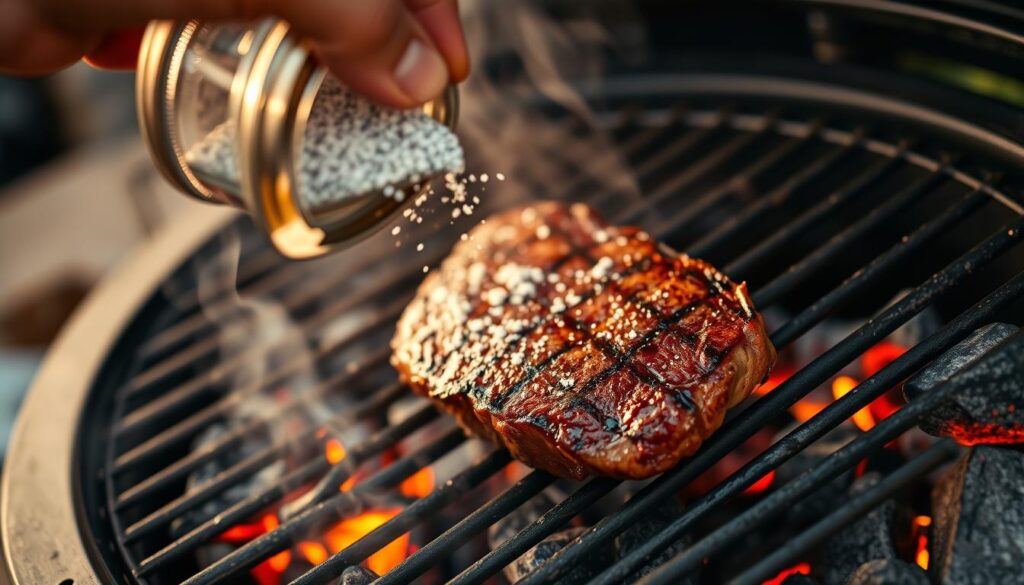
Before grilling, make sure your grill is clean and hot. A clean grill prevents sticking and ensures even cooking. High heat helps get a nice sear on the steak.
Direct vs. Indirect Heat Methods
Knowing when to use direct versus indirect heat is key. Direct heat is best for searing the steak. Indirect heat is better for cooking it to the right doneness without burning the outside. Using both methods often gives the best results.
| Heat Method | Best For |
|---|---|
| Direct Heat | Searing |
| Indirect Heat | Cooking to desired doneness |
Timing and Flipping Techniques
The timing and how often you flip your sirloin steak greatly affect the result. Flipping the steak every minute or so helps get an even crust. Use a thermometer to check for doneness. Adjust your timing based on the steak’s thickness and your grill’s temperature.
Achieving Your Desired Sirloin Doneness
Cooking your sirloin to the perfect doneness is an art. It combines technique and intuition. To get it right, you need to know the different levels of doneness and how to measure them.
Temperature Guide for Different Doneness Levels
The best way to check your sirloin’s doneness is by using internal temperature. Here’s a simple guide:
| Doneness Level | Internal Temperature (°F) |
|---|---|
| Rare | 120-130 |
| Medium Rare | 130-135 |
| Medium | 140-145 |
| Medium Well | 150-155 |
| Well Done | 160+ |
Using a Meat Thermometer Correctly
To use a meat thermometer right, insert the probe into the thickest part of the sirloin. Make sure to avoid fat or bone. Wait a few seconds for the temperature to stabilize for an accurate reading.
The Touch Test Method for Experienced Grillers
If you’re more experienced, the touch test is a good alternative. Press the steak gently to check its doneness. A soft feel means it’s rare, while a firmer feel means it’s more cooked.
The Essential Resting Period for Juicy Sirloin
Resting your sirloin is key to getting that perfect, juicy bite. After grilling it to your liking, it’s tempting to serve it right away. But, letting it rest is vital for spreading juices and relaxing meat fibers.
Why Resting Your Steak Matters
Grilling a sirloin makes proteins contract and juices move to the surface. Resting lets these juices spread evenly through the meat. This makes each bite tender and full of flavor. Without resting, juices spill out, leaving the steak dry.
Optimal Resting Times Based on Thickness
The resting time for your sirloin depends on its thickness. A good rule is to rest it for 5-10 minutes. Here’s a simple guide:
| Steak Thickness | Resting Time |
|---|---|
| 1-1.5 inches | 5 minutes |
| 1.5-2 inches | 7-8 minutes |
| Over 2 inches | 10 minutes or more |
Keeping Your Steak Warm While Resting
To keep your sirloin warm, cover it loosely with aluminum foil. This keeps the heat in without making it soggy.
By following these tips, your sirloin will stay juicy and flavorful. This ensures a great dining experience.
Sirloin Nutrition Facts and Health Benefits
Sirloin steak is a top choice for lean protein. It’s packed with nutrients, making it perfect for a healthy diet.
Protein and Nutrient Content
Sirloin steak is full of protein, vitamins, and minerals. A 3-ounce serving has about 26 grams of protein. This is great for muscle repair and growth.
It’s also rich in iron, zinc, and B vitamins. These are key for our body’s functions.
Calorie and Fat Comparison to Other Cuts
Sirloin is leaner than other steak cuts. It has fewer calories and less fat than cuts like ribeye. For example, a 3-ounce sirloin steak has about 170 calories and 6 grams of fat.
In contrast, the same size of ribeye has up to 300 calories and 20 grams of fat.
Incorporating Sirloin in a Balanced Diet
To add sirloin steak to a balanced diet, pair it with veggies and whole grains. Try grilled sirloin with roasted veggies or a salad for a healthy meal.
Sirloin steak is also versatile. Use it in stir-fries or sandwiches for different meal ideas.
Sirloin vs. Ribeye: Making the Right Choice
When you want to grill the perfect steak, knowing the difference between sirloin and ribeye is key. Each cut has its own special traits that can make your grilling a hit or a miss.
Flavor Profile Comparison
The taste of sirloin and ribeye steaks is quite different. Ribeye’s rich, buttery taste comes from its high fat content. Sirloin, with less fat, has a leaner taste and a firmer texture.
Fat Content and Marbling Differences
Ribeye steaks have more marbling, which makes them juicier and tender. Sirloin steaks, with less marbling, are leaner. They still taste great but need careful cooking to stay moist.
Cost Considerations and Value
Ribeye steaks are pricier because of their tenderness and flavor. Sirloin steaks are more budget-friendly but still pack a punch in taste. They’re a smart choice for those watching their wallet.
When to Choose Each Cut
Choosing between sirloin and ribeye depends on what you prefer, your cooking skills, and the event. For a tender, rich experience, go for ribeye. For a leaner, flavorful steak, sirloin is a great pick.
| Characteristics | Sirloin | Ribeye |
|---|---|---|
| Flavor Profile | Leaner, beefy flavor | Rich, buttery flavor |
| Fat Content | Less marbling | More marbling |
| Cost | Generally more affordable | Typically more expensive |
Delicious Sirloin Serving Suggestions
Make your grilled sirloin a memorable meal with these serving tips. The right sides can turn a simple steak dinner into a special experience.
Classic Steak Sauces and Compound Butters
Boost your sirloin with classic steak sauces like Béarnaise or peppercorn. Or, try compound butters with herbs and garlic for a creamy touch. As Chef Gordon Ramsay said, “A good sauce can make even the simplest dish taste extraordinary.”
“The key to a great sauce is in the balance of flavors.”
Side Dishes That Complement Sirloin
Choose sides that match the bold flavors of sirloin. Roasted veggies, garlic mashed potatoes, or a fresh salad are great choices. For example, grilled asparagus with lemon butter goes well with sirloin’s savory taste.
Wine and Beverage Pairings
Pairing your sirloin with the right drink can enhance your meal. A full-bodied red wine like Cabernet Sauvignon or Malbec pairs well with sirloin. For those who don’t drink wine, a craft beer or a classic cocktail like a Manhattan is a good option.
Plating for Impressive Presentation
The way you present your meal matters. Arrange your sirloin on a plate with care, add fresh herbs, and consider a sauce or compound butter on top. The look of your dish can greatly impact how your guests enjoy it.
Conclusion: Elevating Your Sirloin Grilling Game
Learning to grill sirloin steak is a journey. It takes practice, patience, and the right tips. You’ve learned how to pick the best cut, prepare it, and cook it just right. Grilling sirloin is more than just throwing a steak on the grill. It’s about understanding what makes a steak great.
As you keep improving, remember to experiment and practice. Try new seasonings, different grills, and don’t be scared to try new things. With each try, you’ll get closer to that perfect sirloin.
The fun of grilling sirloin is in the delicious result and the process. So, fire up your grill, use the tips you’ve learned, and enjoy a perfectly grilled sirloin steak. Happy grilling!
FAQ
What is the best way to cook a sirloin steak?
Grilling is a top choice for cooking sirloin steak. It gives a nice char on the outside and keeps the inside juicy. Make sure your grill is hot and use a thermometer to check the steak’s doneness.
How do I choose the right sirloin cut for grilling?
Look for a sirloin cut that’s 1-1.5 inches thick for grilling. Top sirloin is usually more tender than bottom sirloin. Choose USDA Prime or Choice for the best grilling results.
What are some good seasoning methods for sirloin steak?
Season your sirloin steak with salt and pepper for a simple flavor. Or, try herb and garlic combinations or specialty rubs. Dry rubs and marinades can also boost the flavor.
How do I achieve the perfect doneness when grilling sirloin?
Use a meat thermometer to check the steak’s internal temperature. For medium-rare, aim for 130-135°F. Let it rest for a few minutes before serving.
What are the nutritional benefits of sirloin steak?
Sirloin steak is packed with protein and nutrients like iron and zinc. It’s leaner than other cuts, making it a healthy choice in moderation.
How does sirloin compare to ribeye in terms of flavor and fat content?
Sirloin is leaner than ribeye, with less fat. Ribeye is richer and more tender due to its fat content. Your choice depends on flavor, tenderness, and nutritional value.
What are some good side dishes to serve with grilled sirloin?
Grilled vegetables, roasted potatoes, and sautéed greens are great with grilled sirloin. Classic steakhouse sides like creamed spinach or garlic mashed potatoes are also good choices.
How should I store leftover grilled sirloin?
Store cooled leftover grilled sirloin in an airtight container in the fridge. It stays good for 3 to 4 days. Reheat it gently or use it in salads, sandwiches, or other dishes.