
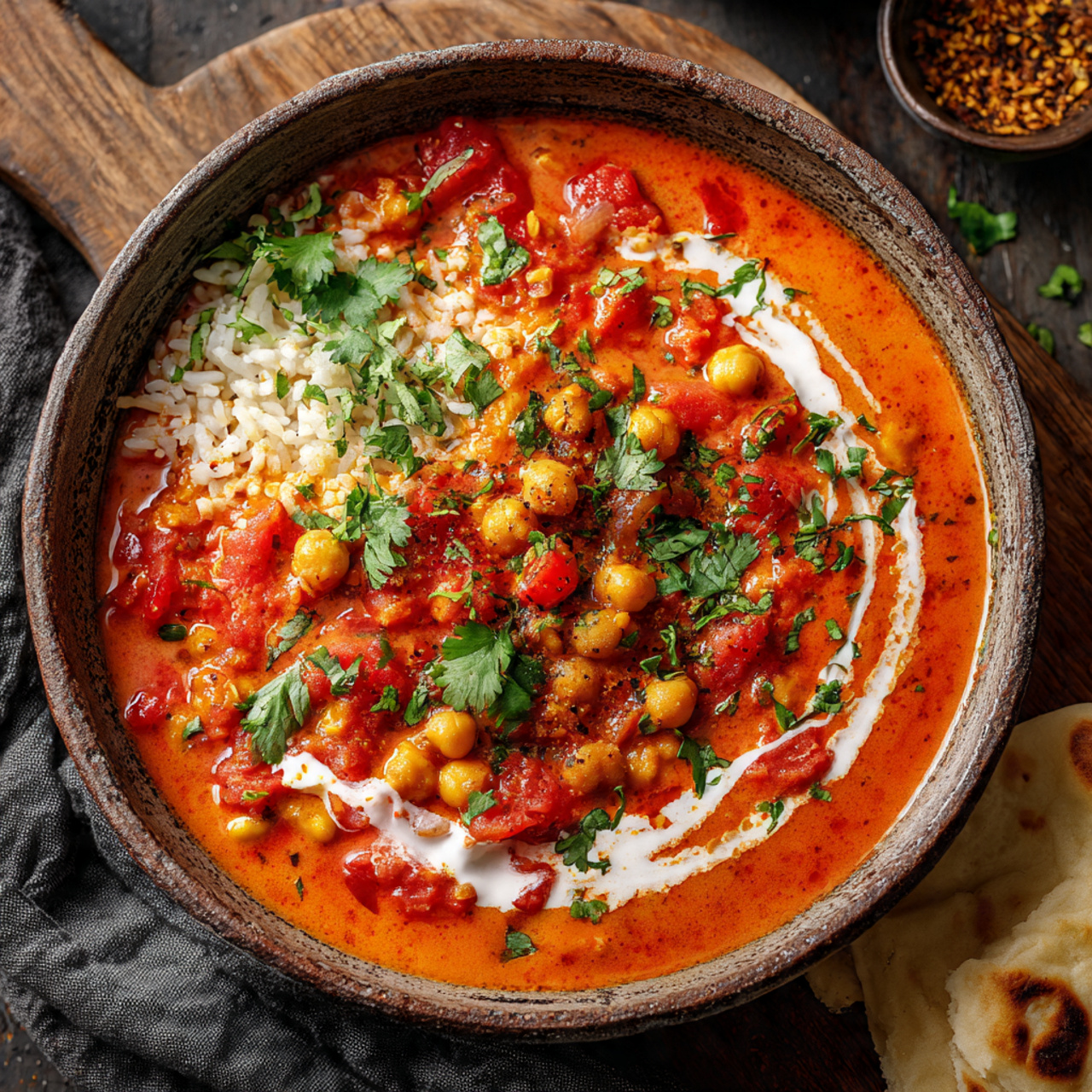
Ever stood in your kitchen at 5 pm, staring blankly into your fridge while your stomach performs its best whale impression? Same here! That’s exactly why this Slow Cooker Tomato Chickpea Curry has become my weeknight superhero. It’s the culinary equivalent of hitting the “easy button” – dump ingredients, walk away, return to deliciousness. No cooking skills required!
Table of Contents
Why This Recipe is Awesome
Let me count the ways this recipe rocks:
1. It practically cooks itself while you’re busy ignoring adulting responsibilities
2. It’s vegetarian but so hearty even dedicated carnivores won’t notice
3. Costs pennies to make (chickpeas = cheap protein heaven)
4. Makes your home smell like a fancy Indian restaurant
5. Leftovers taste BETTER the next day (how many foods can claim that?)
Plus, this Vegan crockpot curry is customizable to whatever level of spice your taste buds can handle. Whether you’re a “mild please” person or a “hurt me” hot sauce enthusiast, I’ve got you covered.
Ingredients You’ll Need
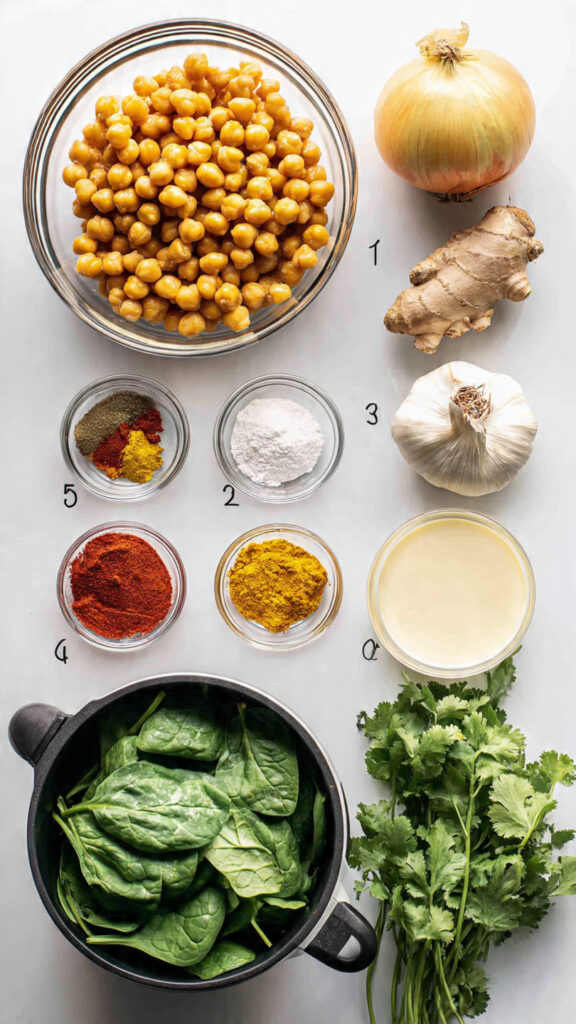
- 2 cans (15 oz each) chickpeas, drained and rinsed (or 3 cups cooked from scratch if you’re feeling ambitious)
- 1 large onion, diced (tears are part of the cooking process, embrace them)
- 4 cloves garlic, minced (vampire protection included at no extra charge)
- 1 tablespoon ginger, freshly grated (the pre-minced stuff in jars works too, no judgment)
- 2 tablespoons curry powder (the workhorse of this recipe)
- 1 teaspoon cumin (because one spice is never enough)
- ½ teaspoon turmeric (warning: will stain everything yellow, including your countertops and possibly your soul)
- ¼ teaspoon cayenne pepper (adjust according to your spice tolerance)
- 1 can (28 oz) crushed tomatoes (the backbone of our curry)
- 1 can (14 oz) coconut milk, full-fat (diet, schmiet)
- 1 cup vegetable broth (homemade if you’re showing off, boxed if you’re normal)
- Salt and pepper to taste (duh)
- 2 cups fresh spinach, added at the end (sneaky greens for the win)
- Fresh cilantro for garnish (or skip if you’re one of those “cilantro tastes like soap” people)
Step-by-Step Instructions
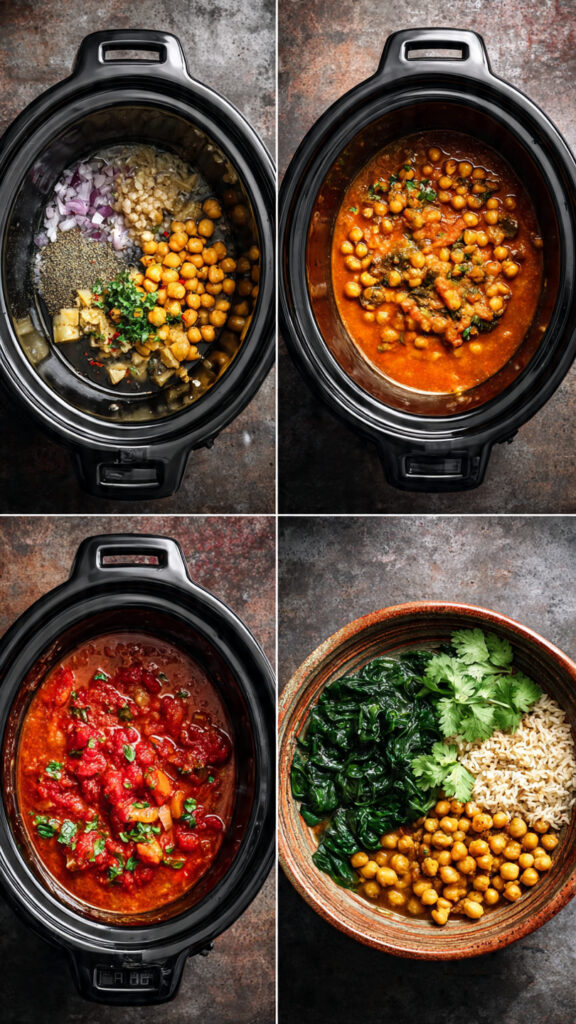
1. Prep your veggies. Dice that onion, mince that garlic, grate that ginger. Feel free to shed a tear or two during onion cutting – I won’t tell anyone.
2. Drain and rinse chickpeas. Give them a good rinse to get rid of that weird can liquid. Nobody wants that in their curry.
3. Throw everything except spinach and cilantro into the slow cooker. Yes, literally everything – chickpeas, onion, garlic, ginger, all spices, crushed tomatoes, coconut milk, and broth. Stir it up like you mean it.
4. Set it and forget it! Cook on low for 6-8 hours or high for 3-4 hours. This is your free time to binge Netflix, take a nap, or pretend to be productive.
5. Add spinach 10 minutes before serving. Stir it in and watch it wilt like my motivation on Monday mornings.
6. Taste and adjust seasoning. More salt? More spice? You’re the boss, applesauce.
7. Serve over rice (basmati is fancy but any rice works) and sprinkle with cilantro if you’re into that kind of thing.
Common Mistakes to Avoid
Not using full-fat coconut milk. Light coconut milk is basically coconut-flavored water. Don’t do that to yourself or this curry.
Being stingy with spices. “Maybe 1/2 tablespoon of curry powder is enough?” No, Sandra, it’s not. Follow the measurements!
Opening the lid constantly. Every time you peek, you add 20 minutes to cooking time. It’s science. Or maybe I made that up. Either way, keep the lid on!
Forgetting to rinse the chickpeas. Unless you want your curry tasting like can juice. Mmm, can juice.
Adding spinach too early. Unless you enjoy brown mush instead of recognizable spinach bits. Timing matters, people!
Alternatives & Substitutions
Protein swap: Not feeling chickpeas? Use lentils, white beans, or add cubed tofu or paneer if you’re not strictly vegan.
Veggie additions: Sweet potatoes, cauliflower, or peas work beautifully in this curry. Just throw them in with everything else.
Coconut milk alternatives: Cashew cream works in a pinch, but honestly, coconut milk makes this dish. Almond milk is NOT an acceptable substitute (trust me on this tragic experience).
Fresh tomatoes: Can use 6-7 fresh tomatoes instead of canned when they’re in season and looking gorgeous.
Spice variations: Garam masala instead of curry powder creates a different but equally delicious flavor profile. Start with 1 tablespoon and adjust to taste.
FAQ (Frequently Asked Questions)
Can I make this in an Instant Pot instead?
Is water wet? Of course! Use the sauté function for onions first, then add everything else and cook on high pressure for 15 minutes with natural release.
How spicy is this curry?
As written, it’s about a 4/10 on the heat scale. Want to crank it up? Add more cayenne or a diced jalapeño. Want to tone it down? Skip the cayenne entirely.
Can I freeze leftovers?
Absolutely! This curry freezes like a dream for up to 3 months. Future-you will thank present-you for this gift of convenience.
Do I really need to add the spinach?
No one’s going to kick down your door if you skip it, but it adds nutrition, color, and helps you pretend this is a “balanced meal.” Your choice!
My curry seems watery. Help!
Leave the lid off and simmer for 20-30 minutes to reduce. Or embrace the sauciness and use extra naan bread for dipping. Problem solved!
Final Thoughts
There you have it – a curry so easy you can make it while half-asleep, yet so delicious people will think you spent hours on it. The beauty of this recipe is in its flexibility and forgiveness. Forgot an ingredient? No worries. Want to add random veggies from your fridge? Go wild!
The slow cooker does all the heavy lifting while you get to take all the credit. It’s the ultimate cooking cheat code, and I’m not even sorry about it. Now go forth and curry on – your taste buds (and whoever you feed) will thank you!
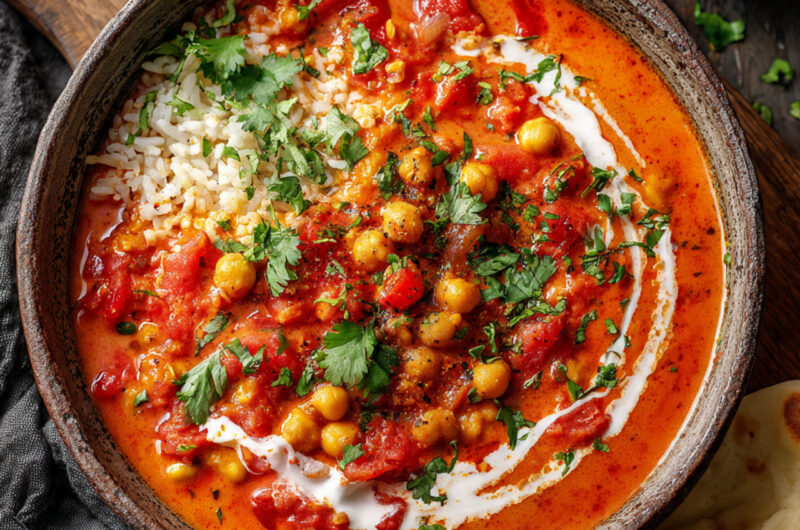
Vegan Slow Cooker Tomato & Chickpea Curry
Course: blog, Main CourseCuisine: IndianDifficulty: Easy6
servings10
minutes6
hours9
minutes320-390
kcalThis slow cooker tomato chickpea curry is the culinary equivalent of hitting the “easy button” – dump ingredients, walk away, return to deliciousness. No cooking skills required! It’s vegetarian, vegan, so hearty even dedicated carnivores won’t notice it’s meat-free, and makes your home smell like a fancy Indian restaurant. Leftovers taste even better the next day!
Ingredients
2 cans (15 oz each) chickpeas, drained and rinsed
1 large onion, diced
4 cloves garlic, minced
1 tablespoon ginger, freshly grated
2 tablespoons curry powder
1 teaspoon ground cumin
1/2 teaspoon turmeric
1/4 teaspoon cayenne pepper (adjust to taste)
1 can (28 oz) crushed tomatoes
1 can (14 oz) full-fat coconut milk
1 cup vegetable broth
Salt and pepper to taste
2 cups fresh spinach
Fresh cilantro for garnish
Directions
- Step 1: Prep Ingredients
- Dice onion, mince garlic, grate ginger. Drain and rinse chickpeas.
- Step 2: Add to Slow Cooker
- Place chickpeas, onion, garlic, ginger, curry powder, cumin, turmeric, cayenne, crushed tomatoes, coconut milk, and vegetable broth into slow cooker. Stir to combine.
- Step 3: Cook
- Cover and cook on LOW for 6-8 hours or HIGH for 3-4 hours.
- Step 4: Add Spinach
- About 10 minutes before serving, stir in fresh spinach until wilted.
- Step 5: Season
- Taste and adjust salt, pepper, and spice levels.
- Step 6: Serve
- Serve over rice, garnished with fresh cilantro.
Notes
- Use full-fat coconut milk: Light coconut milk = coconut-flavored water. Don’t do that to yourself.
Don’t be stingy with spices: Measurements matter! This is not the time for shyness.
Don’t open the lid: Every time you peek, you add cooking time. Trust the process!
Don’t skip rinsing chickpeas: Can juice does not belong in curry.
Don’t add spinach too early: Adds brown mush instead of recognizable greens.
Storage: Refrigerate up to 5 days. Freezes beautifully up to 3 months.