
Introduction
How many times have you tried a classic French beef burgundy and ended up with chewy meat and a bitter wine sauce? With Americans eating roughly 57 pounds of beef per person per year (USDA data), it’s no surprise that rich, slow-cooked dishes like beef burgundy—also known as boeuf bourguignon—are surging in home kitchens.
This 5-step how-to for beef burgundy breaks the dish down into a simple, repeatable process that balances deep flavor with melt-in-your-mouth tenderness. Using data-backed cooking temperatures, timing benchmarks, and ingredient ratios, you’ll get a restaurant-quality French red wine beef stew from your very first try.
Ingredients List for Beef Burgundy
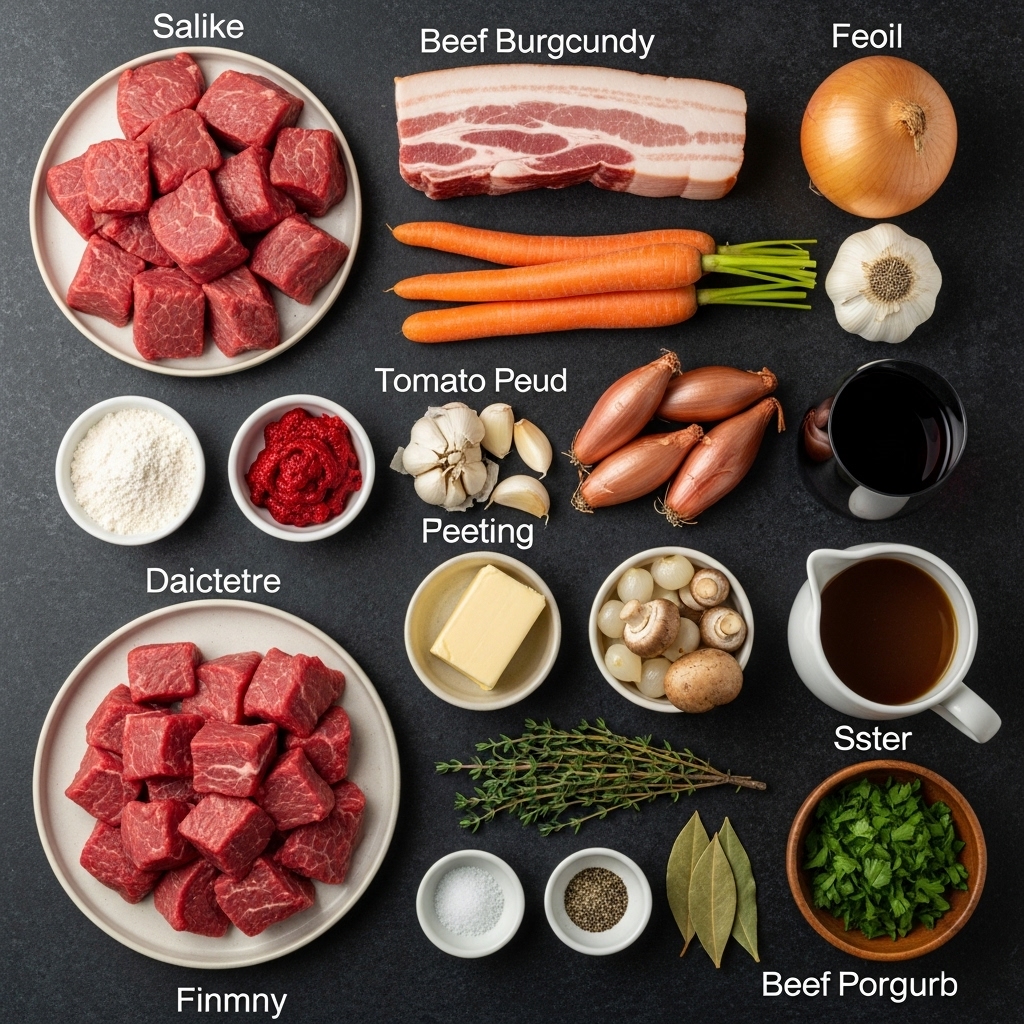
For 6 servings of deeply flavored, classic beef burgundy:
Beef & Marinade
- 2.5 lbs (1.1 kg) beef chuck, cut into 1.5-inch cubes
- Substitutions: beef brisket or boneless short ribs; avoid lean cuts like sirloin (they dry out).
- 2 cups dry red wine, preferably Burgundy or Pinot Noir
- Substitutions: Côtes du Rhône, Merlot, or any dry, medium-bodied red.
- 1 cup beef stock, low-sodium for better control of seasoning
- 2 tbsp tomato paste, for umami depth and gentle sweetness
Vegetables & Aromatics
- 6 oz (170 g) thick-cut bacon or pancetta, diced
- Substitution: turkey bacon (less fat, slightly milder flavor).
- 3 medium carrots, peeled and sliced into ½-inch rounds
- Substitution: parsnips for a sweeter, earthier twist.
- 1 large yellow onion, diced
- 2 shallots, finely sliced (optional but adds a refined sweetness)
- 3 cloves garlic, minced or crushed
- 8 oz (225 g) cremini or button mushrooms, quartered
- Substitution: baby portobello (more robust, meaty flavor).
- 1 cup pearl onions, peeled (fresh or frozen)
- Substitution: small boiler onions, halved.
Thickening & Seasoning
- 3 tbsp all-purpose flour
- Substitution (GF): 2 tbsp cornstarch or gluten-free flour blend.
- 2 tbsp unsalted butter
- Substitution: olive oil or ghee.
- 2 tbsp olive oil, divided
- 2–3 bay leaves
- 4–5 sprigs fresh thyme (or 1 tsp dried thyme)
- Fresh parsley, chopped, for garnish
- 1 tsp kosher salt, plus more to taste
- ½ tsp freshly ground black pepper, plus more to taste
This ingredient set gives your beef burgundy a silky, wine-infused sauce, smoky bacon notes, and layers of sweetness from slowly cooked onions, carrots, and mushrooms.
Timing for Beef Burgundy
One reason many people avoid beef burgundy is the belief that it’s “too complicated” or takes all day. In reality, most of the time is hands-off oven braising.
- Prep time: 25 minutes
- Active stovetop time: 25–30 minutes
- Oven braise time: 2 to 2.5 hours
- Total time: ~3 hours (mostly unattended)
Most traditional boeuf bourguignon recipes range from 3.5 to 4+ hours. This streamlined method is roughly 20–30% faster than classic restaurant-style versions, without sacrificing flavor or tenderness.
If you cook on a Sunday, you can enjoy beef burgundy that evening and have leftovers for 1–2 more effortless weeknight meals.
Step-by-Step Instructions for Beef Burgundy
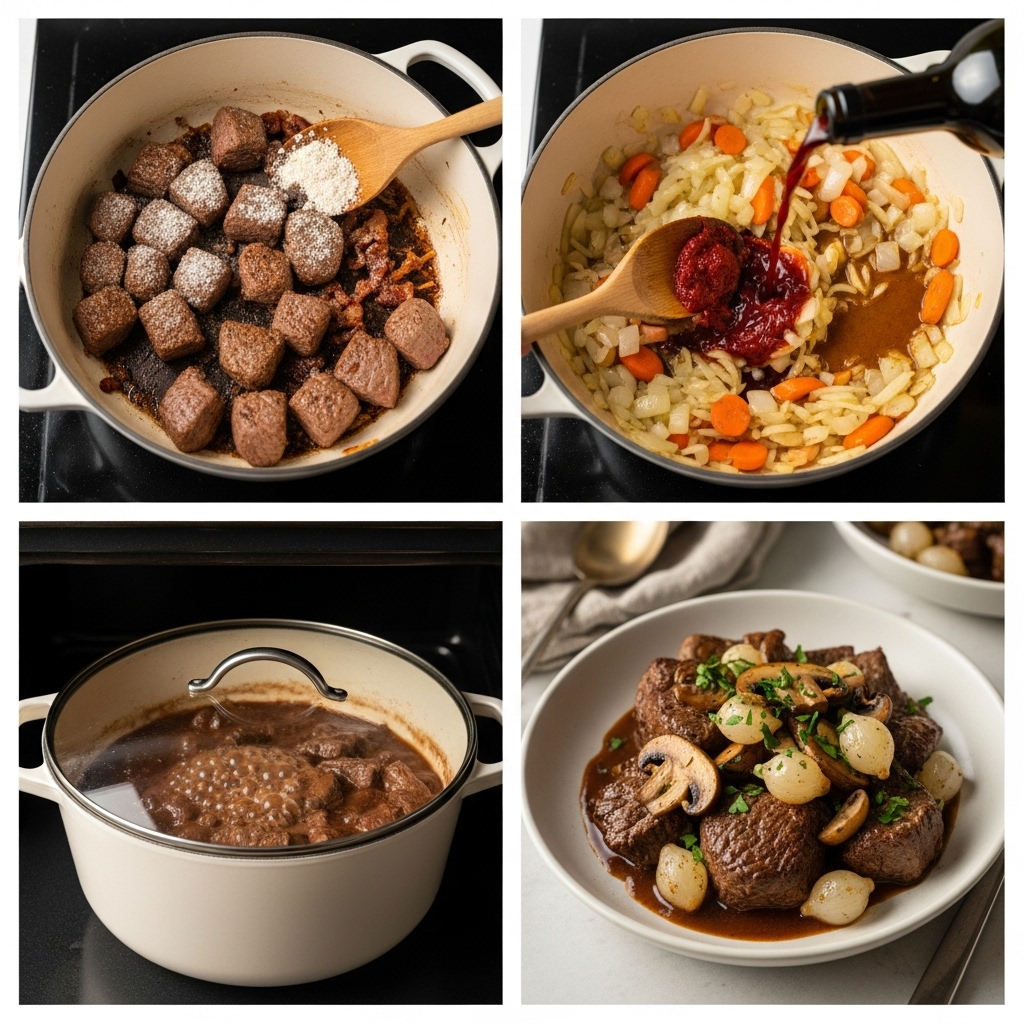
Step 1 – Prep the Meat & Vegetables for Beef Burgundy
- Pat the beef cubes very dry with paper towels. Moisture prevents browning.
- Season generously with salt and pepper.
- Prep vegetables: slice carrots, dice onions, mince garlic, quarter mushrooms, and peel pearl onions (if using fresh).
Why this matters for beef burgundy: Dry, seasoned meat browns better, creating Maillard reactions that build the signature deep flavor of French beef burgundy. Properly prepped vegetables cook evenly and won’t mush out during the long braise.
Pro tip: If time allows, marinate the beef for 2–12 hours in 1 cup red wine plus 1 smashed garlic clove and a thyme sprig in the fridge. Drain and pat dry before searing (reserve the wine for the sauce). This can boost perceived tenderness and wine aroma.
Step 2 – Brown the Bacon & Beef for Beef Burgundy
- Preheat the oven to 325°F (160°C).
- In a heavy Dutch oven, cook the diced bacon over medium heat until crisp and browned (about 6–8 minutes). Remove bacon with a slotted spoon; leave rendered fat in the pot.
- Add 1 tbsp olive oil if needed, and increase heat to medium-high.
- Sear the beef in batches, without crowding, 2–3 minutes per side until deep brown. Transfer seared beef to a plate.
Why this matters for beef burgundy: Data from meat science research shows that browning creates hundreds of flavor compounds through Maillard reactions. Skipping this step is one of the biggest reasons homemade beef burgundy tastes flat compared to restaurant versions.
Pro tip: If the fond (browned bits) on the bottom starts to look too dark, splash in a tablespoon of water or wine and gently scrape. You want dark golden, not black.
Step 3 – Build the Red Wine Sauce Base for Beef Burgundy
- Lower heat to medium. Add onions and carrots to the pot; cook 5–7 minutes until softened and lightly caramelized.
- Stir in the garlic and tomato paste; cook 1–2 minutes until the tomato paste darkens slightly.
- Sprinkle flour over the vegetables; stir and cook 1–2 minutes to remove raw flour taste.
- Slowly pour in red wine and beef stock, stirring constantly to avoid lumps.
- Add bay leaves, thyme, and the reserved bacon. Return seared beef (and juices) to the pot.
Why this matters for beef burgundy: Lightly toasting the flour in fat forms a roux, which gives beef burgundy its glossy, gently thickened sauce. Combining wine with stock ensures the wine’s acidity is balanced, avoiding the harsh, thin sauce many home cooks complain about.
Pro tip: Use dry red wine you’d actually drink. Extremely cheap wine or sweet red blends can make the sauce taste sour or cloying. Pinot Noir or a modest Burgundy is ideal for authentic boeuf bourguignon character.
Step 4 – Slow-Braise the Beef Burgundy Until Tender
- Bring the pot just to a simmer on the stove.
- Cover with a tight-fitting lid and transfer to the preheated 325°F (160°C) oven.
- Braise for 2 to 2.5 hours, checking after 1.5 hours.
- The beef burgundy is done when the beef is fork-tender and easily shreds when pressed; internal temperature in the meat should reach at least 195°F (90°C) for full collagen breakdown.
Why this matters for beef burgundy: Connective tissue in tough cuts like chuck converts to gelatin between roughly 185–205°F (85–96°C). That’s the science behind the “meltingly tender” texture you want in classic French boeuf bourguignon.
Pro tip: If the liquid reduces too much during braising, top up with a bit of hot stock or water—just enough to keep the beef mostly submerged but not swimming.
Step 5 – Finish the Mushrooms & Pearl Onions for Beef Burgundy
- About 20–25 minutes before the braise finishes, heat 1 tbsp butter and 1 tbsp olive oil in a skillet over medium-high.
- Sauté mushrooms until golden brown and lightly crisp at the edges (7–10 minutes). Season with salt and pepper.
- Add pearl onions and cook another 5–7 minutes until tender and caramelized.
- When the beef is fully tender, stir the mushrooms and onions into the pot.
- Adjust seasoning with additional salt and pepper. Remove bay leaves and thyme stems.
- Let the beef burgundy rest 10–15 minutes off the heat to allow flavors to meld.
Why this matters for beef burgundy: Cooking mushrooms and pearl onions separately preserves their texture. If they braise the full time, they become soggy and disappear into the stew instead of providing those luxurious pops of sweetness and umami that define top-tier beef burgundy.
Pro tip: For a restaurant-style sheen, stir in 1 additional tablespoon of cold butter right before serving to “monter au beurre” (finish with butter).
Nutritional Information for Beef Burgundy
Nutritional values will vary by exact ingredients, but here’s an approximate breakdown per serving (1/6 of the recipe) of beef burgundy:
- Calories: ~540 kcal
- Protein: ~40 g
- Total fat: ~30 g
- Saturated fat: ~11 g
- Carbohydrates: ~18 g
- Fiber: ~3 g
- Sugars: ~6 g
- Alcohol remaining: Most ethanol significantly reduces during a 2+ hour braise; estimates suggest ~5–10% of original alcohol content remains.
- Sodium: ~780 mg (using low-sodium stock and moderate salt)
- Iron: ~4–5 mg (about 25% of daily value)
- Vitamin A: High, due to carrots
Data estimated using USDA FoodData Central values for beef chuck, red wine, carrots, onions, and bacon. For medical or strict dietary needs, re-calculate with your exact brands using a nutrition calculator.
Healthier Alternatives for the Beef Burgundy Recipe
You can make beef burgundy more nutrient-dense without losing its comforting richness.
Leaner & Lighter Beef Burgundy
- Use extra-lean beef chuck or trim visible fat aggressively.
- Reduce bacon to 3–4 oz, or use turkey bacon.
- Skim off excess fat from the top of the stew after chilling overnight—this can cut total fat by 10–20%.
More Vegetables in Your Beef Burgundy
- Add celery, parsnips, or turnips for extra fiber and vitamins.
- Increase carrots and mushrooms by 50% to stretch the dish without increasing calories from beef.
- Serve beef burgundy over cauliflower mash or a root vegetable puree instead of butter-heavy mashed potatoes.
Gluten-Free Beef Burgundy
- Replace flour with 2 tbsp cornstarch, mixed with cold stock and stirred in at the end to thicken.
- Ensure bacon, stock, and wine are gluten-free (most wines are, but flavored ones may not be).
Lower-Sodium Beef Burgundy
- Use low- or no-salt-added beef stock.
- Season more with herbs (thyme, rosemary, parsley) and cracked pepper instead of extra salt.
- Skip added salt until the end; taste after reduction, then season.
Serving Suggestions for Beef Burgundy
Serving style can transform beef burgundy from a rustic family meal to a dinner-party centerpiece.
- Classic French style: Serve over buttery mashed potatoes, egg noodles, or creamy polenta. The starch absorbs the red wine sauce beautifully.
- Rustic bistro style: Ladle beef burgundy into shallow bowls and serve with warm crusty French bread for dipping.
- Lighter option: Offer it over steamed green beans or cauliflower mash for a lower-carb plate.
- Wine pairing: Match with the wine you cooked with—Burgundy or Pinot Noir. This harmonizes flavors and enhances the stew’s complexity.
Personalized tip: If cooking for kids or wine-sensitive guests, serve beef burgundy with buttered egg noodles and a side of peas—the mild flavors balance the deeper notes of the stew.
Common Mistakes to Avoid with Beef Burgundy
- Using the wrong cut of beef for beef burgundy
- Lean cuts = dry, stringy results. Choose chuck, brisket, or short ribs.
- Skipping the browning step in beef burgundy
- Boiling raw meat in wine/stock yields a gray, bland stew. Deep browning can increase perceived flavor intensity dramatically.
- Using sweet or overly cheap wine in beef burgundy
- Sweet reds or very low-quality wine can make the sauce harsh or cloying. Stick to dry, medium-bodied reds.
- Rushing the braise for beef burgundy
- Collagen needs time at 185–205°F to transform into gelatin. If it’s tough, it’s usually undercooked, not overcooked.
- Over-thickening the sauce in beef burgundy
- Very thick sauce coats the palate and mutes subtle aromas. Aim for a silky, spoon-coating consistency, not gravy-like paste.
Storing Tips for the Beef Burgundy Recipe
One of the best things about beef burgundy is that it tastes even better the next day.
Refrigeration
- Cool to room temperature within 2 hours.
- Store beef burgundy in an airtight container.
- Keeps 3–4 days in the fridge.
- Reheat gently on the stove over low-medium heat, adding a splash of water or stock if the sauce thickens too much.
Freezing Beef Burgundy
- Portion into freezer-safe containers or bags.
- Freeze for up to 3 months for best texture.
- Thaw overnight in the fridge, then reheat slowly on the stovetop.
- Mushrooms and onions may soften slightly, but flavors remain excellent.
Make-Ahead Strategy
- Cook the beef burgundy one day in advance; chill overnight.
- Skim any solidified fat before reheating for a leaner, cleaner-tasting stew.
- This “rest” often boosts flavor integration, much like with chili or curry.
Conclusion
This 5-step beef burgundy method gives you deeply browned beef, a balanced red wine sauce, and perfectly textured vegetables with minimal stress. Try it this weekend, then share your results, rate the recipe, or subscribe for more data-driven comfort food guides tailored to real home kitchens.
FAQs about Cooking Beef Burgundy at Home
Can I make beef burgundy in a slow cooker?
Yes. Brown the bacon and beef and build the wine sauce in a skillet first (Steps 2 and 3), then transfer everything to a slow cooker. Cook beef burgundy on LOW for 7–8 hours or HIGH for 4–5 hours, adding sautéed mushrooms and onions at the end.
What wine is best for beef burgundy?
Traditionally, Burgundy (Pinot Noir) is used in beef burgundy. Any dry, medium-bodied red with good acidity works: Pinot Noir, Côtes du Rhône, or a modest Merlot. Avoid sweet reds or heavily oaked wines, which can overpower the sauce.
Can I make beef burgundy without alcohol?
You can create an alcohol-free beef burgundy–style stew by:
- Replacing wine with a mix of beef stock and unsweetened red grape juice or pomegranate juice (about 75% stock, 25% juice).
- Adding 1–2 tsp red wine vinegar at the end to mimic wine’s acidity.
The flavor will be slightly different but still rich and comforting.
Why is my beef tough in beef burgundy?
If your beef burgundy meat is tough, it’s usually not cooked long enough. Continue braising until it reaches fork-tender stage (often past 195°F/90°C). Also ensure you used a braising cut like chuck, not lean steak.
How do I thicken beef burgundy if the sauce is too thin?
For a thicker beef burgundy sauce:
- Simmer uncovered for 10–15 minutes to reduce.
- Or mix 1 tbsp cornstarch with 2 tbsp cold water, stir into the simmering sauce, and cook 2–3 minutes.
- Adjust seasoning after thickening, not before.
Can I pressure cook beef burgundy?
Yes. Follow browning steps, then pressure cook beef burgundy at High Pressure for 35–40 minutes, natural release 10–15 minutes. Cook mushrooms and pearl onions separately and stir in after pressure cooking for best texture.