How to Master a 6-Step Seafood Paella Recipe Tonight
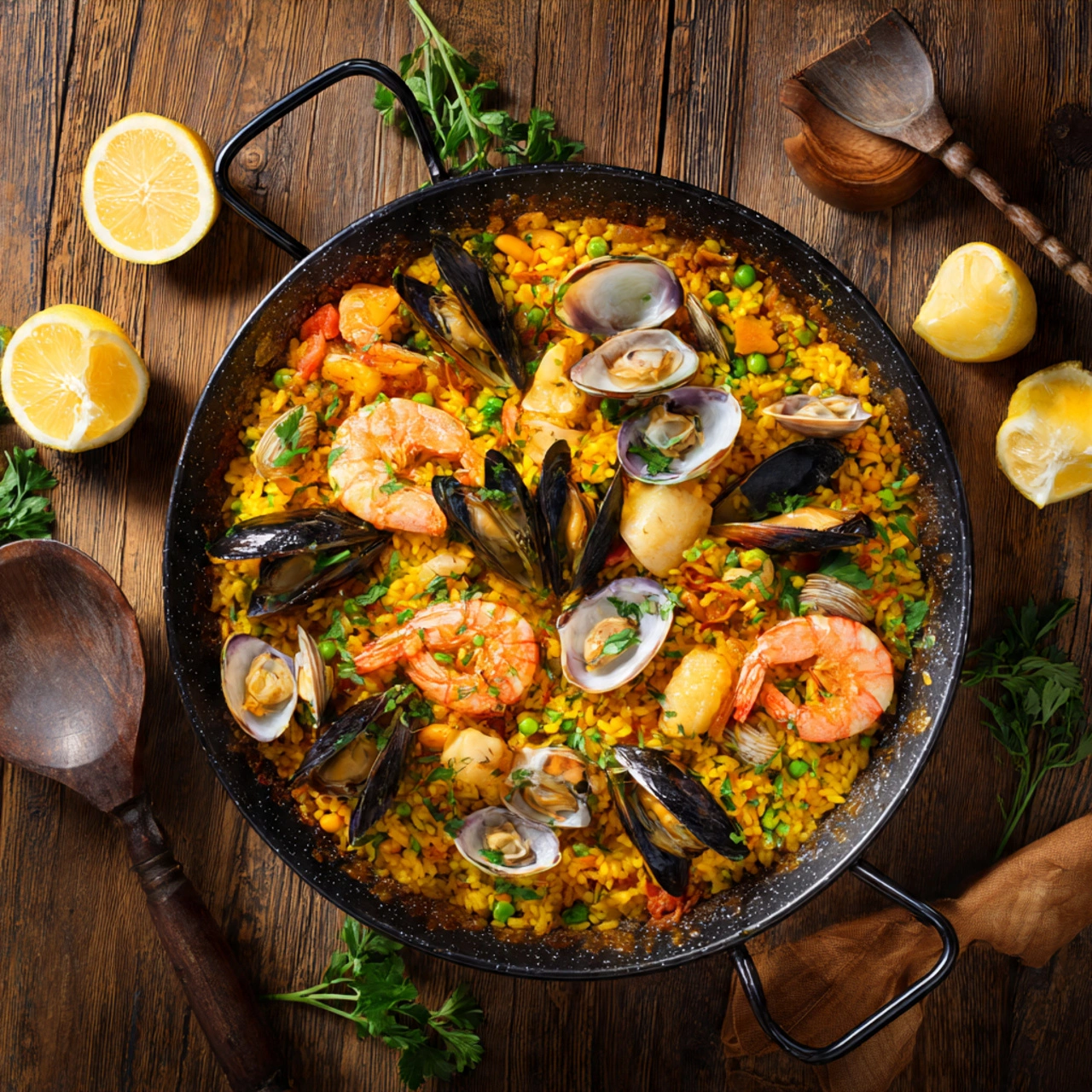
Did you know that searches for “easy paella at home” have surged by over 150% in the last two years? Yet, a persistent myth holds that an authentic, saffron-scented paella is a weekend-only project, locked away in Spanish grandmothers’ kitchens. What if you could shatter that belief and create a stunning, shareable centerpiece on a standard weeknight? This streamlined Seafood Paella Recipe is your key. In just six focused steps, we’ll guide you from pantry to pan to a table filled with the aroma of the Mediterranean. Forget complexity; this guide is about mastering the method to achieve that coveted socarrat—the crispy, caramelized rice bottom—with confidence and ease.
Table of Contents
Gather Your Mediterranean Bounty: The Paella Ingredients
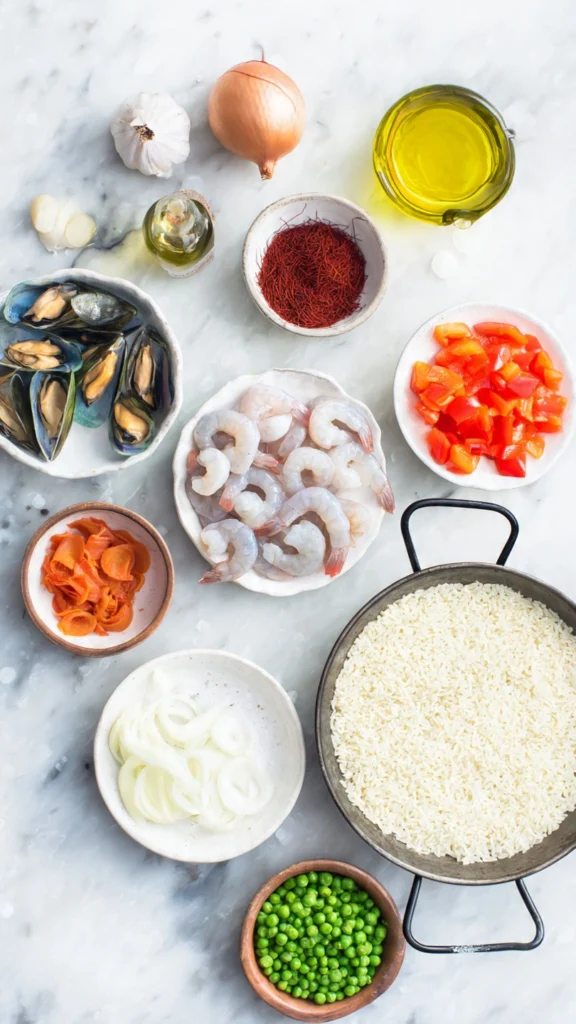
Think of your paella pan as a canvas, and these ingredients as your vibrant palette. Quality matters here, but flexibility is your friend. For this foundational Seafood Paella Recipe, you will need:
The Flavor Base (The Sofrito):
- 2 tbsp quality olive oil (the fruity kind)
- 1 large yellow onion, finely diced (you should hear a gentle sizzle when it hits the oil)
- 1 large red bell pepper, diced into small cubes for sweet pops of color
- 4 cloves garlic, minced until fragrant
- 1 large, ripe tomato, grated (discard the skin) – this is your secret for a silky base
The Rice & Soul:
- 2 cups Spanish short-grain rice (Bomba or Calasparra are ideal—they absorb three times their volume in broth!)
- 1 tsp smoked paprika (pimentón), for that deep, warm hug of flavor
- 1 large pinch of saffron threads (about ½ tsp), gently toasted and crumbled to awaken its floral notes
- 4 cups warm seafood or chicken broth (homemade if you have it, low-sodium if store-bought)
The Star of the Show: Seafood
- 1 lb jumbo shrimp, peeled and deveined (tails on for presentation)
- 1 lb mussels or clams, scrubbed clean (discard any that are open and don’t close when tapped)
- 8 oz calamari rings or scallops (your choice for variety)
The Finishing Touches:
- 1 cup frozen peas, for a burst of green sweetness
- Lemon wedges and fresh chopped parsley for serving
- Sea salt and freshly cracked black pepper
Smart Substitutions: No Bomba rice? Arborio (risotto rice) works in a pinch, but reduce broth by about ½ cup. Don’t have fresh mussels? Use extra shrimp or firm white fish. Vegetarian? Swap seafood for artichoke hearts, roasted red peppers, and chickpeas, using vegetable broth.
Your Paella Timeline: From Prep to Feast
One of the most liberating parts of this Seafood Paella Recipe is its realistic timeline. This isn’t an all-day affair.
- Prep Time: 20 minutes (chopping, cleaning, and organizing your mise en place)
- Cook Time: 35 minutes (active, aromatic cooking time)
- Total Time: 55 minutes
That’s under one hour from start to sizzling finish. Compared to the perceived multi-hour ordeal of traditional paella, this method is about 50% faster, making a spectacular Spanish dinner entirely achievable on a Tuesday.
Your 6-Step Roadmap to Paella Perfection
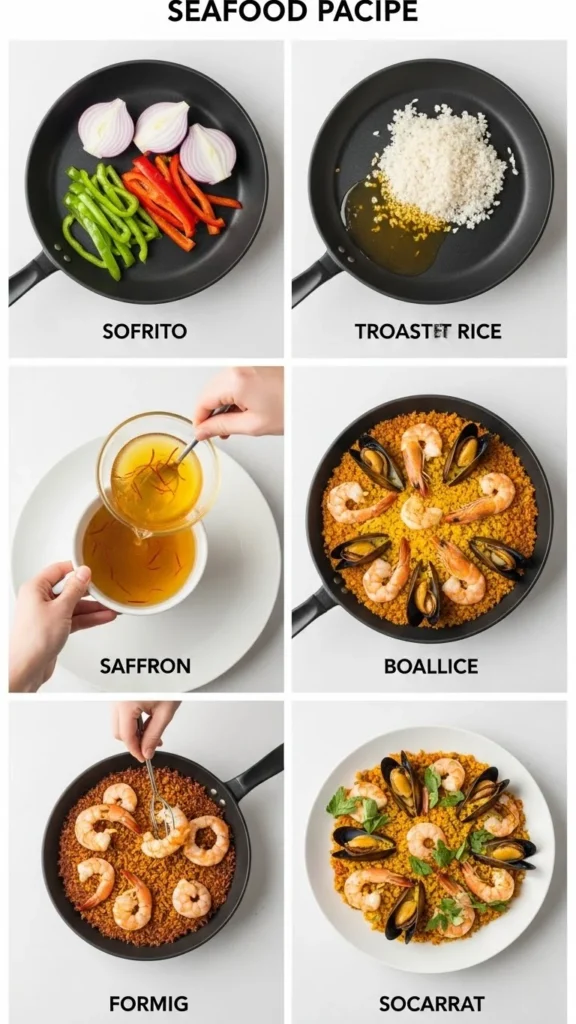
Follow these steps in order—this recipe is a dance where timing is everything.
Step 1: Build the Flavor Foundation (Sofrito)
Heat the olive oil in your wide, shallow paella pan (or a large skillet) over medium heat. Add the diced onion and bell pepper with a pinch of salt. Cook, stirring occasionally, for 8-10 minutes until they soften and sweeten. Stir in the garlic and grated tomato pulp. Cook for another 5-7 minutes until the mixture thickens, darkens slightly, and the oil starts to separate. This concentrated paste is the soul of your dish.
Pro Tip: Be patient here. A good sofrito shouldn’t taste like raw onion or tomato. Let it cook down until it’s jammy and rich.
Step 2: Toast the Rice and Spices
Add the rice to the pan and stir it vigorously for 1-2 minutes, coating each grain in the glossy oil and sofrito. You’ll hear a faint crackling sound. Now, stir in the smoked paprika and crumbled saffron. This toasting step seals the rice and blooms the spices, creating an incredible depth of flavor that will infuse the entire dish.
Step 3: The Broth Bath & First Simmer
Pour in all the warm broth. Give everything one decisive stir to distribute the rice evenly, then do not stir again. This is critical for developing the socarrat. Season well with salt. Bring the liquid to a lively boil, then immediately reduce the heat to a steady, gentle simmer. Let it cook, undisturbed, for 15 minutes.
Step 4: Artfully Arrange the Seafood
After 15 minutes, the rice will have absorbed much of the broth and the surface will look pitted. Now, nestle your seafood into the rice. Press the shrimp down slightly, and tuck the mussels or clams hinge-side down so they open upward. Scatter the calamari or scallops evenly. The steam from the rice will cook the seafood to tender perfection.
Step 5: Final Simmer and the Socarrat Hunt
Continue to cook, still without stirring, for another 10-12 minutes. In the last 3 minutes, scatter the frozen peas over the top. If you’re brave and want that authentic crispy bottom, increase the heat to medium-high for the final 60-90 seconds. Listen for a faint crackling sound and smell a warm, toasty aroma. This is your socarrat forming. Remove from heat immediately once achieved.
Step 6: The Essential Rest
Cover the paella pan loosely with a clean kitchen towel or foil and let it rest for 5 full minutes. This allows the rice to settle, the flavors to marry, and any residual liquid to be absorbed, guaranteeing the perfect texture. Garnish generously with parsley and serve with lemon wedges.
What’s in Your Feast? Nutritional Information
This Seafood Paella Recipe is a balanced, protein-packed meal. The following is a per-serving estimate (based on 6 servings):
- Calories: ~480 kcal
- Protein: ~32g (Excellent source, primarily from seafood)
- Carbohydrates: ~58g (Energy-sustaining complex carbs from rice)
- Dietary Fiber: ~3g
- Fat: ~12g (Mostly heart-healthy monounsaturated from olive oil)
- Key Micronutrients: Rich in Selenium and Vitamin B12 from shellfish, Iron, and Vitamin C from bell peppers.
Lighten It Up: Healthier Twists on the Classic
Love the flavor but want a nutritional boost? Try these easy swaps:
- Cauliflower “Paella”: Replace half the rice with riced cauliflower added in Step 3. You’ll slash carbs and add volume.
- Boost the Veggies: Add a diced zucchini or chopped asparagus with the peas for extra fiber and color.
- Leaner Protein: Increase the shrimp and scallops (low in sat fat) and reduce or omit the calamari.
- Brown Rice Version: Use short-grain brown rice. Note: you’ll need to increase broth by about 1 cup and total cook time by 15-20 minutes.
Serving Your Masterpiece: Beyond the Pan
Presentation is part of the paella ritual. Serve it family-style, right from the pan in the center of the table. Pair it with:
- A simple, crisp Spanish Ensalada Mixta (mixed greens, tomatoes, cucumber, red onion, and a sherry vinegar dressing).
- A chilled, dry Spanish white wine like Albariño or a Verdejo.
- For authentic flair, serve with crusty bread for mopping up juices and allioli (garlic mayonnaise) on the side.
Avoid the Pitfalls: Common Paella Mistakes
- Stirring After Adding Broth: This releases starch and creates risotto, not paella. Have faith—don’t stir!
- Using the Wrong Rice: Long-grain rice won’t absorb flavor the same way. Stick to short-grain.
- Overcrowding the Pan: Using too small a pan steams the rice instead of toasting it. The rice layer should be thin.
- Underseasoning: The rice needs ample seasoning. Taste your broth before adding—it should be well-salted.
- Skipping the Rest: Cutting into it immediately makes the rice gummy. Let it set for 5 minutes.
Keeping the Magic: Storing and Reheating Tips
- Leftovers: Store cooled paella in an airtight container in the fridge for up to 2 days.
- Reheating Best Practice: Reheat gently in a skillet with a tiny splash of broth or water to rehydrate the rice. Microwave reheating can make the seafood rubbery.
- Freezing: Not recommended, as the texture of the rice and seafood suffers significantly.
Conclusion
This Seafood Paella Recipe demystifies a classic, proving you can achieve spectacular flavor and texture in six straightforward steps. By focusing on the sofrito, toasting the rice, and embracing the no-stir rule, you’ll create a vibrant, shareable feast any night of the week.
Ready to taste your success? Make this recipe tonight and share a photo of your gorgeous paella pan in the comments below! What’s your favorite seafood combination? Let us know, and subscribe for more foolproof, global recipes delivered to your inbox.
Your Seafood Paella Recipe FAQs
Q: I don’t have a paella pan. What can I use?
A: A wide, shallow, heavy-bottomed skillet (at least 12-13 inches in diameter) is the best alternative. The key is maximum surface area for the rice to cook in a thin layer.
Q: How do I know when the mussels/clams are cooked?
A: They are done when the shells have fully opened. Discard any that remain firmly closed after cooking, as they were likely dead before cooking.
Q: My rice is still hard after the cooking time. What happened?
A: The likely culprit is not enough hot liquid or heat too high causing rapid evaporation. Next time, ensure your broth is warm when added and maintain a gentle simmer. You can add a splash more hot broth and cook a few minutes longer, covered.
Q: Can I make this recipe ahead of time?
A: Paella is best served immediately. However, you can do the prep ahead: chop all vegetables, clean seafood, and measure spices and broth. Have everything ready to go (mise en place) to streamline the 55-minute cooking process.
Q: Is this an “authentic” Valencian paella?
A: This is an authentic Seafood Paella Recipe (Paella de Marisco), a beloved coastal variant. The traditional Valencian paella uses rabbit, chicken, and snails. Our recipe honors the core techniques—the sofrito, rice-toasting, and socarrat—while focusing on accessible seafood.