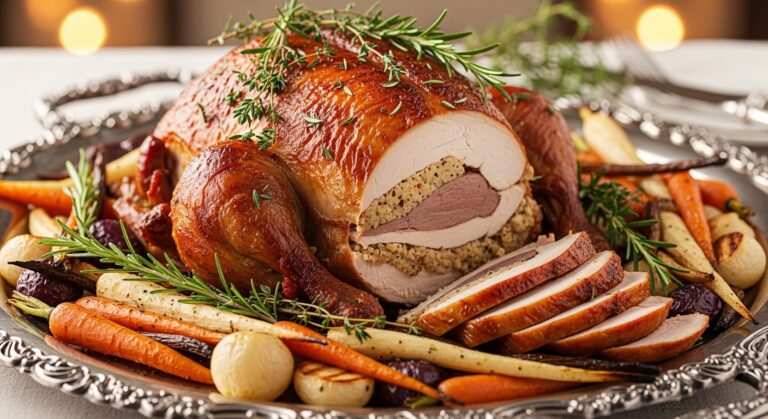
Turkey Gravy Recipe: 5 Easy Steps for Perfect Holiday Flavor
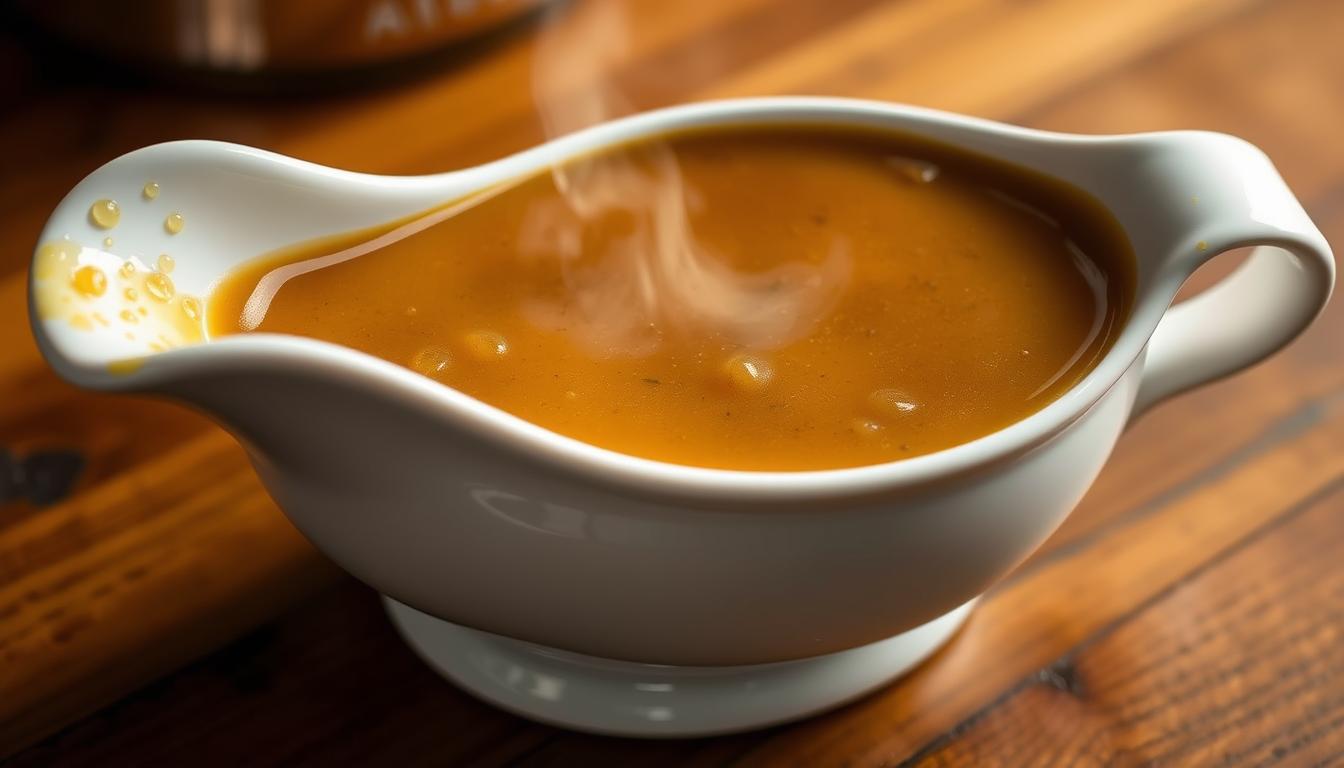
Make holiday serving simple and memorable by turning pan drippings into a silky sauce that steals the show.
In just about 12 minutes, you can whisk equal parts fat and flour into a roux, then thin with stock or milk and season to taste.
Quality drippings deliver true liquid gold flavor that beats packets and cans. Save your drippings, separate the fat, and measure so you can scale for a crowd.
Serve warm alongside roasted meat and mashed potatoes. You’ll learn to adjust thickness on the fly so the sauce coats well and never feels pasty.
Plan to refrigerate leftovers for 2–3 days or freeze up to 4 months, then reheat gently and thin with stock if needed. These small steps save you time on the big day.
Key Takeaways
- You can make a reliable turkey gravy in about 12 minutes using a simple roux method.
- Keep a 1:1 fat-to-flour ratio to scale volume without changing texture.
- Prefer stock over broth when drippings are already seasoned.
- Adjust thickness by adding liquid slowly and whisking to avoid lumps.
- Store chilled for 2–3 days or freeze up to 4 months; reheat gently and thin before serving.
Why This Turkey Gravy Works for Your Thanksgiving Table
Using drippings turns leftover juices into a rich, layered sauce in moments. You build flavor on flavor because the pan captures aromatics, herbs, and whatever seasonings you added to the roast.
The quick roux method gives you control of texture and time. In under 15 minutes while the bird rests, you can make a smooth sauce that matches the meal’s pace.
“Homemade sauces beat packets—friends remember the fresh taste more than the fuss.”
- Smart ingredients: use unsalted stock so you can balance salt from drippings.
- Fast and flexible: finish and taste, then tweak with herbs, butter, or a splash of spirit.
- Reliable technique: the roux and slow whisking prevent lumps and grease.
| Benefit | Why it matters | Result |
|---|---|---|
| Drippings | Capture roast aromatics | Deep, layered flavor |
| Unsalted stock | Controls salt | Balanced taste |
| Quick method | Fits resting time | Ready in minutes |
Ingredients, Tools, and Pantry Staples You’ll Need
Gathering the right liquids and tools first makes finishing the sauce fast and stress-free. Set out measured cups, a whisk, and a medium saucepan so you can work while the bird rests. Keeping things ready helps you focus on taste, not cleanup.
Core ingredients
Keep your essentials close: reserved drippings, all-purpose flour (or a 1:1 gluten-free swap), and unsalted stock or water. Add milk or cream for richness, and season gently with salt and pepper.
Helpful tools
Use a fat separator to lift off surface fat, and a fine-mesh sieve to strain bits into a measuring cup. A sturdy whisk and a well-heating saucepan make a smooth roux with minimal lumps.
Optional flavor boosters
Brighten the sauce with fresh thyme, sage, or parsley. For deeper notes, stir in a splash of Cognac or brandy, a spoon of poultry seasoning, or a touch of chicken broth or bouillon.
- Quick checklist: drippings, flour, stock or water, saucepan, whisk, fat separator, roasting pan juices.
- Consider giblets: simmer to make broth, then mince (except liver) for a traditional fold-in.
- Use butter for finish; it adds shine and roundness to the roux-based sauce.
Turkey Gravy Recipe
Get clear numbers up front: expected cups, hands-on minutes, and how many people it will serve. This short summary helps you plan while the roast rests.
Yield, time, and serving size at a glance
Yield: About 2 to 2½ cups, enough for 6–8 servings.
Hands-on time: Roughly 10–12 minutes total. Work at medium heat to avoid scorching the roux.
- Use a 1:1 ratio of fat to flour (for example, 3 Tbsp fat and 3 Tbsp flour) to build a stable base.
- Whisk in about 2 cups of defatted drippings and/or chicken broth, then simmer ~5 minutes until it coats the back of a spoon.
- Adjust to your desired consistency by adding a splash of milk, stock, or water slowly—little additions go far.
- Taste before seasoning; drippings can be salty. Keep a cornstarch slurry (1 Tbsp cornstarch + 2 Tbsp cold water) ready if you need extra thickening.
- Scale by keeping the 1:1 fat-to-flour rule and increasing liquid to reach more cups.
| Metric | Amount | Notes |
|---|---|---|
| Yield | 2–2½ cups | Serves 6–8 |
| Fat : Flour | 1 : 1 (e.g., 3 Tbsp each) | Stable roux, reheats well |
| Liquid to add | ~2 cups | Defatted drippings and/or chicken broth |
| Cook time | 10–12 minutes | Simmer ~5 minutes after adding liquid |
Step-by-Step: Make a Silky Roux from Pan Drippings
Start by separating and measuring your liquids so the thickening step is predictable and fast.

Skim the fat and measure drippings for perfect proportions
Pour the roasting pan juices through a fine-mesh sieve into a measuring cup. Let the cup rest so the fat rises to the top.
Skim about 3 Tbsp of fat for your roux. If you don’t have enough, add butter to keep the fat-to-flour ratio steady.
Discard excess fat, then measure roughly 2 cups of drippings and top off with stock if needed.
Toast the flour in fat until golden and nutty
Preheat a saucepan over medium heat and add the skimmed fat. Whisk in equal parts flour until smooth.
Cook while whisking until the roux turns light golden and smells nutty. Watch the color closely so it stays silky and pourable.
Have your measured liquid ready. Gradually whisk it in to prevent lumps and finish the sauce in minimal time.
Build Flavor: Add Stock and Drippings, Then Simmer
Start by adding warm stock slowly so the roux and pan juices marry without clumps. Gradually pour about 2 cups of drippings and broth into the saucepan while you whisk constantly.
Bring the mixture to a light boil to activate thickening, then lower the heat and simmer for roughly five minutes. This gives the flour time to hydrate so there’s no raw taste and the sauce turns glossy.
Technique tips
- Pour liquid in stages to emulsify the roux and keep the texture silk-smooth.
- Once boiling briefly, reduce to a gentle simmer and stir occasionally so nothing sticks to the bottom of the pan.
- If the sauce tightens too much, thin with a splash of chicken broth or water until you reach the right consistency.
“Simmer gently until the sauce coats the back of a spoon — that’s your cue it’s ready.”
| Step | Action | Why it matters |
|---|---|---|
| Stage pour | Whisk in 2 cups slowly | Prevents lumps and ensures smooth texture |
| Light boil | Bring to brief boil | Activates thickening from flour |
| Simmer finish | Lower heat ~5 min | Builds flavor, glossy consistency |
Dial In Consistency and Seasoning to Taste
Small adjustments now decide whether the sauce will coat or run off the spoon. Work at low, steady heat and add any extra liquid in small splashes so you can stop when the desired consistency appears.

How to thin or thicken without overdoing flour
Thin with warm milk, broth, or water, stirring between additions until the sauce drapes from a spoon.
Avoid stirring in more flour late; it can taste raw. If you must thicken quickly, mix 1 Tbsp cornstarch with 2 Tbsp cold water and whisk it in while simmering briefly.
Season smartly at the end
Always taste before adding salt and pepper. Try a small bite of turkey to judge seasoning because pan drippings often carry salt.
Skim excess fat if the sauce looks greasy, and keep the gravy warm on low, whisking occasionally so the gloss and nap stay perfect.
| Action | Why | Tip |
|---|---|---|
| Thin slowly | Prevents over-dilution | Add a little broth at a time |
| Use slurry | Fast thickening without raw flour | Mix cornstarch with cold water |
| Taste with meat | True salt perception | Season last with salt and pepper |
No Drippings? Easy Variations and Flavor Twists
No pan drippings on hand? You can still make a rich sauce in minutes by starting with butter and boxed stock. Sauté shallots or garlic first to add immediate depth, then build a classic roux and whisk in warm liquid.
Make a reliable base
Use 3 Tbsp butter and 3 Tbsp flour to form a light roux. Slowly add chicken broth or water until the texture coats a spoon. Taste and adjust—boxed stock can vary in salt.
Gluten-free and dairy swaps
Go gluten-free with a 1:1 GF flour blend so thickening stays predictable. Skip milk for a lighter finish, or stir in a splash of cream for extra richness.
Giblets, herbs, and finishing touches
For traditional giblet sauce, simmer giblets about an hour, strain the broth, and fold in minced giblet (avoid the liver) at the end. Brighten with thyme, sage, or parsley. Add a small splash of Cognac or brandy for restaurant-level complexity.
“A few smart swaps let you match pantry limits without losing real flavor.”
| Swap | Start | Why |
|---|---|---|
| No drippings | Butter + chicken broth | Recreates fat and stock for balance |
| Gluten-free | 1:1 GF flour | Same thickening power |
| Dairy option | Water or cream | Lighten or enrich |
Troubleshooting: Lumpy, Greasy, or Bland Gravy Fixes
When the sauce goes wrong, quick fixes can restore smooth texture and bold flavor in minutes. Stay calm and work at low heat so you don’t scorch the base.
Fixing lumps fast
Whisk constantly while you add warm liquid to prevent lumps. If clumps form, push the sauce through a fine-mesh sieve or use an immersion blender to make it silky again.
Sift your flour before cooking next time to avoid big clumps from the start.
Removing excess fat
Let the pan sit a few minutes so fat rises, then skim with a spoon. Use a chilled spoon or float a few ice cubes wrapped in a towel to attract grease, or gently blot the surface with a paper towel.
Boosting flavor
If the taste is flat, add a pinch of poultry seasoning, crushed bouillon, or a small sprinkle of onion and garlic powder. A tiny pinch of MSG sharpens umami if you use it.
If the sauce is too salty, thin with unsalted chicken broth or water, bring to a light boil, then reduce and simmer to marry flavors.
“Whisk, skim, and taste—three simple steps that rescue most sauces quickly.”
- Quick checklist: whisk while adding liquid, strain or blitz to remove lumps, skim fat, and add small flavor boosts slowly.
- Finish with a crack of pepper and a taste test so the seasoning complements the turkey and sides.
Make-Ahead, Storage, and Reheating for Stress-Free Holidays
Plan to finish most of the sauce ahead so you only add fresh pan flavor on the big day. Cook a stock-based base up to two days before and chill it, then finish with hot drippings right before serving.
Make-ahead day: substitute drippings, finish later
On your prep day, use chicken or unsalted broth to build the base. Let it cool, then seal in an airtight container.
On service day, reheat and stir in about ½ cup defatted pan drippings for true roasted flavor. This saves you precious minutes on thanksgiving.
Refrigerator and freezer: containers and timing
Cool the sauce quickly and store it in a lidded container. Keep refrigerated for 2–3 days or freeze for up to 4 months.
Label each airtight container with the date and cups inside so you can scale servings without guesswork.
Reheat gently: low heat and small adjustments
Warm the sauce in a saucepan over low heat, whisking until glossy and smooth. You can also revive it in short microwave bursts, stirring between each burst.
If the sauce tightens after chilling, thin with a splash of chicken broth or water in small increments. Skim any fat that rises before reheating for a clean finish.
| Action | Timing | Tip |
|---|---|---|
| Make base | Up to 2 days ahead | Use unsalted broth and cool quickly |
| Store | 2–3 days refrigerated / 4 months frozen | Use labeled airtight container |
| Finish & reheat | Minutes before serving | Warm in saucepan, add ~½ cup drippings |
What to Serve With Your Gravy: Turkey, Mashed Potatoes, and More
A warm sauce ties every plate together, making sides taste like part of one meal.
Start by pouring liberally over roast turkey and mashed potatoes. Let a little spill onto stuffing and dinner rolls for that classic holiday plate. You’ll find the roasted drippings deepen the overall flavor and invite second helpings—many guests return for more potatoes just to get extra sauce.
Vegetables like Brussels sprouts and green beans soak up the pan juices nicely. If your crowd loves tradition, offer a giblets variation alongside the smooth sauce so everyone can choose.
Keep the sauce warm in a prewarmed gravy boat for easy pouring at the table. That small step preserves the glossy finish and makes it simple for guests to add more as they move through the meal.
“Match herb notes in the sauce—thyme or sage—to the sides so each bite feels balanced.”
| Serve With | Why It Works | Tip |
|---|---|---|
| Roast turkey | Rich meat boosts savory depth | Offer both smooth and giblet options |
| Mashed potatoes | Absorb sauce for comforting bites | Plan extra quantity for seconds |
| Stuffing & rolls | Soaks up drippings from the pan | Warm rolls before serving |
| Brussels sprouts & greens | Contrast roasted notes with brightness | Finish vegetables with a small ladle |
Conclusion
Finish strong: skim fat from the pan drippings, make a butter or drippings roux, then whisk in about a cup to two cups of warm broth or reserved juices until the sauce is silky.
Simmer briefly over gentle heat, then season with salt and pepper and taste with your turkey so the balance is right. Add herbs, a splash of Cognac, or a touch of cream to lift the final flavor.
Make ahead for 2–3 days in the fridge and reheat gently, thinning with chicken broth or water if needed. If you lack pan drippings, start with butter and chicken broth for a reliable base. Use a fat separator and fine-mesh sieve to keep prep fast and tidy.
FAQ
How do I use pan drippings to make a rich sauce?
After roasting, tilt the pan and pour the juices through a fine-mesh sieve into a heatproof container. Let the liquid settle for a few minutes, spoon off most of the fat (or use a fat separator), then measure the remaining drippings. Use equal parts fat and flour to make a roux, then whisk in warm broth a little at a time until you reach the cup amount called for and simmer until silky.
What if I don’t have any drippings — can I still make a flavorful sauce?
Yes. Use about 4 tablespoons of butter in place of pan fat, toast the same amount of flour, then whisk in good chicken stock or water. Boost flavor with poultry seasoning, a splash of Cognac or brandy, or a spoonful of concentrated bouillon to mimic roasting depth.
How do I prevent lumps when combining flour and liquid?
Toast the flour in the hot fat until golden, then add warm liquid gradually while whisking constantly. If lumps form, pass the mixture through a sieve or use an immersion blender briefly to smooth the texture.
My sauce tastes flat — how can I improve the flavor?
Simmer longer to concentrate flavor, then taste and adjust. Add a pinch of salt, fresh cracked pepper, a teaspoon of bouillon, a dash of Worcestershire, or a small knob of butter or splash of cream to round things out. Fresh chopped herbs or pan-fond scraped from the roasting pan also add depth.
How do I fix a greasy finish?
Chill the strained gravy briefly and skim off solidified fat, or float an ice cube wrapped in a paper towel across the surface to attract grease. Alternatively, spoon off excess oil with a ladle or use a fat separator before making the roux.
How can I thin or thicken the sauce to the perfect pourable consistency?
To thin, whisk in warm broth or water a little at a time until you reach the desired pour. To thicken, simmer to reduce or make a slurry of equal parts flour or cornstarch and cold water, whisk it in, and cook until the mixture bubbles and thickens.
Can I make this ahead of time and reheat later?
Absolutely. Cool the sauce quickly, store it in an airtight container in the fridge for up to 3–4 days or freeze for 2–3 months. Reheat gently on low in a saucepan, whisking and thinning with broth if it’s too thick.
What about using giblets — should I include them for more flavor?
Yes. Simmer giblets and neck in water with aromatics for 30–60 minutes, strain, and use that stock in place of or mixed with chicken broth for richer, more traditional flavor.
Are there gluten-free or dairy-free options?
For gluten-free, swap regular flour for a 1:1 gluten-free blend or use a cornstarch slurry to thicken. For dairy-free, use oil or dairy-free margarine for the roux and omit cream; use full-flavored broth and seasoning to maintain richness.
How much salt should I add so the sauce isn’t too salty with the meat?
Add a small amount at a time and taste with a bit of meat or mashed potato to judge balance. Keep in mind that reduced stock and bouillon can be salty, so season gradually and adjust at the end.
Can I use store-bought broth, and which kind is best?
Yes — low-sodium chicken broth or stock gives you the most control. If you need more depth, choose a concentrated bouillon or simmer with onion and herbs briefly to boost flavor before finishing the sauce.
What tools make the process easier?
A fat separator, fine-mesh sieve or chinois, a sturdy whisk, a saucepan, and a roasting pan with a good fond are the most helpful. An immersion blender helps with stubborn lumps and silky texture.
How long does it take to make from drippings to finished sauce?
Plan on about 10–20 minutes to make the roux and whisk in liquids, plus a few minutes to skim and strain drippings. If you include simmering giblets or reducing stock, add another 20–40 minutes.
Any tips for adding a finishing touch before serving?
Finish with a small pat of butter, a splash of cream, or a teaspoon of brandy for gloss and richness. Rest the sauce briefly off heat, then taste for final seasoning and serve warm over mashed potatoes or roasted meat.